William Gladstone, the revered 19th-century British prime minister who this week became a target of the Black Lives Matter movement, would not have objected to having his statues removed - if it were done by democratic process, his family said.
Gladstone, a Liberal statesman, emphasised equality of opportunity and free trade as leader of his country for 12 years in four terms between 1868 and 1894, and was opposed to slavery as a politician.
He has found himself on the hit list of the international human rights campaign because his father was a slave owner.
A statue of him in the grounds of Gladstone’s Library in Wales was included on the “Topple the Racists” list compiled by the Stop Trump Coalition in support of Black Lives Matter on Tuesday.
The interactive map was set up after a statue of Edward Colston, a 17th-century slave trader, was thrown into a river in Bristol on Sunday.
Its removal was part of protests over the death of African-American George Floyd, killed by a police officer in Minneapolis, which spread across the US and beyond.
Other historical figures among the 60 whose statues, plaques or monuments should be taken down so Britain can “finally face the truth about its past” include sea captain Sir Francis Drake, military leader Lord Kitchener and businessman Sir Cecil Rhodes.
The Gladstone entry on the Topple the Racists website says: “In William Gladstone’s maiden speech to Parliament, he defended slavery. He fought for compensation for slave owners.
"His father, John Gladstone, received the largest compensation payment of anyone in the UK, suggesting he owned the most slaves in the country at the time of abolition.”

But on Wednesday evening, Sir Charles Gladstone, the politician’s great-great-grandson, said in a surprising statement that he would not oppose the removal of William's statues if “it is the democratic will, after due process”.
“Nor, we think, would William Gladstone, who worked tirelessly on behalf of democratic change,” he said in a joint statement with the Gladstone’s Library warden, Peter Francis.
“Of course, it is undeniable that William Ewart Gladstone’s father, John Gladstone, in common with many successful British merchants in the early 19th century, owned land in the West Indies and South America that used slave labour.
“He received £106,769 in compensation at the time of the abolition of slavery. William himself received nothing.
"Yes, in 1831 William did speak in the Commons in favour of compensation for slave owners. It was his first speech in the Commons and he was still in thrall to his father."
By 1850, in Parliament, William Gladstone described slavery as ‘by far the foulest crime that taints the history of mankind in any Christian or pagan country’.
He had changed, they argued. Towards the end of his life, he cited the abolition of slavery as one of the great political issues in which the masses had been right and the classes had been wrong.
“He thought it was a taint on the national history and politics,” said Sir Charles, who rarely uses his title and prefers to be known as Charlie.
“His change was a move towards a profound commitment to liberty and perhaps this quote exemplifies his shift: ‘I was brought up to hate and fear liberty. I came to love it. That is the secret of my whole career.’
“Liberty today means countering racism, sexism and intolerance wherever we see it. That is where our energies should be exerted. That would be truly Gladstonian.”
Gladstone was born in Liverpool and died aged 88 in 1898 at Hawarden Castle, in Wales, where his heir, Charlie Gladstone, now lives with his wife Caroline.
He was buried at Westminster Abbey after a state funeral at which his coffin was carried by two pallbearers who would become future kings, Edward VII and George V.
-

A police officers grabs a demonstrator to prevent him from fighting with an abusive passerby during a rally in Parliament Square in London. AP Photo -
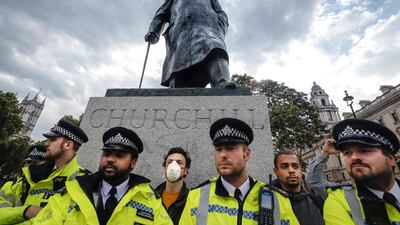
Police officers stand in front of the Winston Churchill statue during a rally in Parliament Square in London. AP Photo -

People look over the plinth of the Edward Colston statue in Bristol, Britain. EPA -
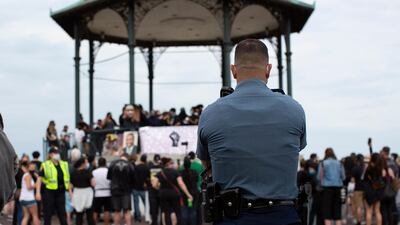
A Massachusetts State Trooper watches a group of protesters, in Revere, Massachusetts, US. EPA -
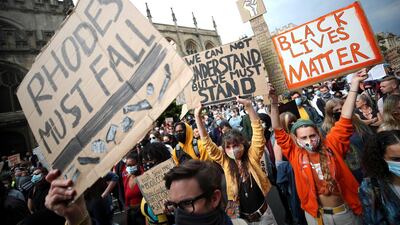
Demonstrators hold placards as they protest for the removal of a statue of British imperialist Cecil Rhodes on the outside of Oriel College in Oxford, Britain. Reuters -

A demonstrator clenches her fist as she stands on a statue on the Place de la Republique during a rally against racism in Paris. AP Photo -

A statue of Robert Milligan is seen on the back of lorry after being removed by workers from outside the Museum of London Docklands near Canary Wharf, London, Britain. Reuters -
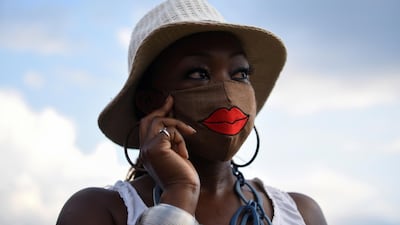
A woman wears a mask as hundreds attend a vigil for George Floyd, whose death in Minneapolis police custody has sparked nationwide protests against racial inequality, at Jack Yates High School in Houston.. Reuters -
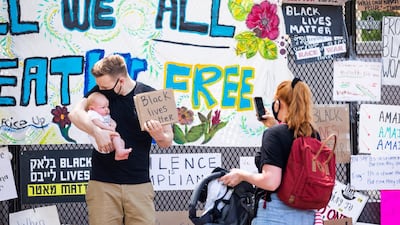
Signs hang along the security fence erected around the White House in response to protests over the death of George Floyd in police custody in Washington DC. EPA -

Uma Sarre, 3, left, and Samson Geller, 2, hold signs as families gather for a children's protest in New York. EPA -

A person holds a parting of George Floyd at the steps of Brooklyn Borough Hall during a Black Lives Matter protest in Brooklyn, New York. EPA


The statement issued by Mr Gladstone and Mr Francis was in part written to address the agreement on Tuesday by the University of Liverpool to rename one of its halls of residence.
The decision came after a group of students called in an open letter to the vice-chancellor for the removal of the Gladstone name “due to his views on slavery”.
A university spokesman said that discussion around Gladstone Hall had been in progress for some time and that choosing an alternative name would be a democratic process.
"We share in the shame that our city feels because its prosperity was significantly based upon a slave economy,” the spokesman said.

But the move has proved divisive, prompting a backlash from some students, academic staff and local politicians who accused the university of trying to rewrite history.
Many took to social media to point to Gladstone’s achievements as a political reformer, saying that instead of erasing the past, signs should be used to put events into context.
Mr Gladstone and Mr Francis said they had not been contacted by the university recently but had read that the decision had been democratic.
What matters, they stressed, was how people live today, the values they hold, and their democratic process and political involvement.
Gladstone’s politics and values were strikingly different from those of his Tory father, the statement said. He was the first British politician to lead a left-leaning government and to institute dramatic democratic changes when he introduced the secret ballot, universal education and a foreign policy based on freedom and liberty, and not the aggrandisement of the Empire.
“So to us, the decision seems right and proper,” they said. “Gladstone stood for change and so do we.”
The Black Lives Matter movement in pictures
-
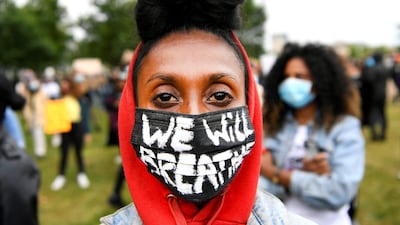
A demonstrator wearing a protective mask attends a Black Lives Matter protest in Amsterdam, Netherlands. REUTERS -
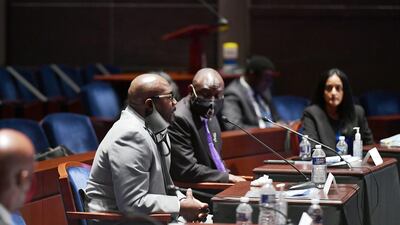
Philonise Floyd, brother of George Floyd, testifies during the US House Judiciary Committee hearing on "Policing Practices and Law Enforcement Accountability" on Capitol Hill in Washington, DC. REUTERS -
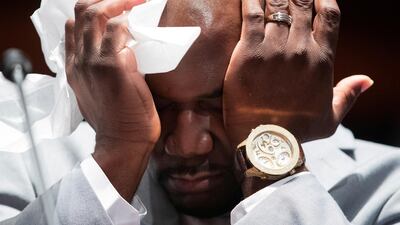
George Floyd's brother, Philonise Floyd, reacts during the US House Judiciary Committee hearing. Reuters -
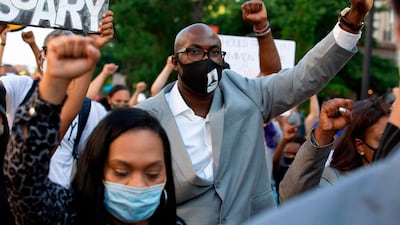
Philonise Floyd marches with other demonstrators near the White House, to protest police brutality and racism, in Washington, DC. AFP -
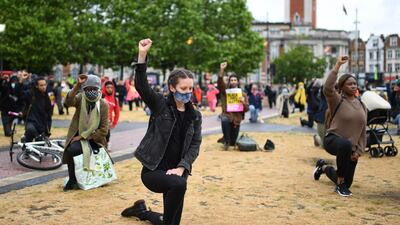
Protestors take part in a Take The Knee demonstration in solidarity with Black Lives Matter in Windrush Square, Brixton, south west London. AFP -
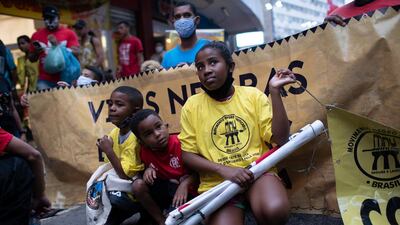
Children take part in a protest against racism and police violence during a "Black Lives Matter" demonstration in Duque de Caxias, Brazil. AP Photo -
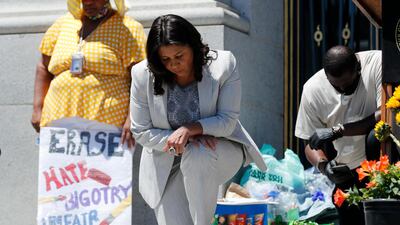
San Francisco Mayor London Breed the first African-American woman mayor in the city's history, takes a knee with protesters for eight minutes and forty-six seconds to participate in a Kneeling for Justice demonstration. EPA -
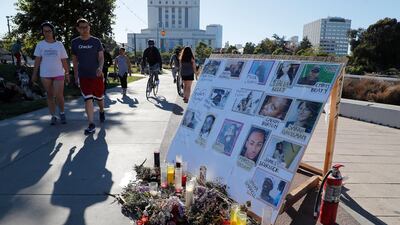
People walk past a make-shift memorial of people who have died in police custody in Oakland, California, USA. EPA -

Demonstrators lie face down with their hands behind their backs during a protest in Oakland, California. EPA -
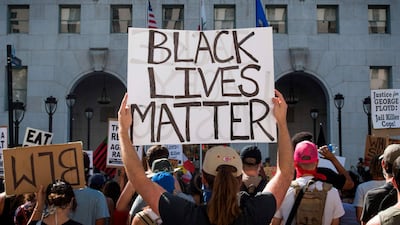
Supporters of Black Lives Matter, hold signs during a protest outside the Hall of Justice in Los Angeles, California. AFP -
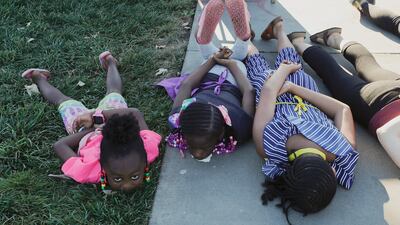
Demonstrators lie face down with their hands behind their backs during a protest following the death of George Floyd, who died in police custody, in Oakland, California. EPA -
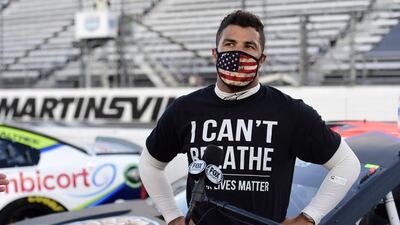
Bubba Wallace, driver of the #43 Richard Petty Motorsports Chevrolet, wears a "I Can't Breathe - Black Lives Matter" t-shirt under his fire suit in solidarity with protesters around the world, speaks to the media prior to the NASCAR Cup Series Blue-Emu Maximum Pain Relief 500 at Martinsville Speedway, Virginia. Getty Images -
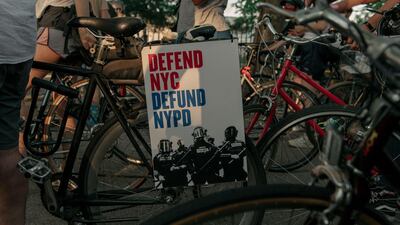
Cyclists gather for a mass ride in protest of systemic racism in policing in Brooklyn, New York City. Getty Images -
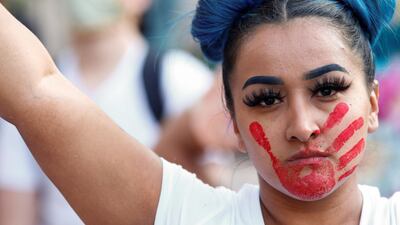
A woman with a red hand painted on her face, which calls attention to the high rates of indigenous women who are murdered or missing, raises a sign in solidarity in Denver, Colorado. Reuters -
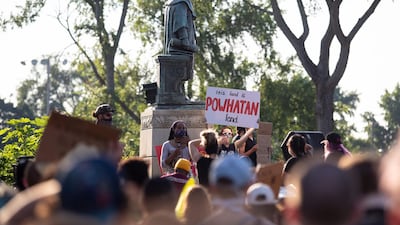
Protesters surround a statue of Christopher Columbus before marching, eventually returning and pulling it down in Richmond, Virginia. Another statue of Christopher Columbus was beheaded in Boston. AFP -
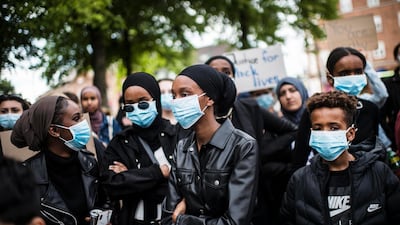
People attend a Black Lives Matter Denmark rally in Odense, Denmark. AP -
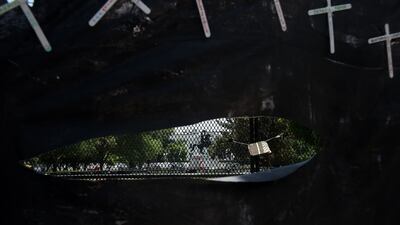
The White House is seen through the hole of a "Black Lives Matter" banner displaying crosses with the names of black victims who died of police brutality in Washington, DC. AFP