A second wave of the coronavirus is expected to hit the United States next winter and could strike much harder than the first because it would likely arrive at the start of influenza season, the director of the Centres for Disease Control and Prevention warned on Tuesday.
"There's a possibility that the assault of the virus on our nation next winter will actually be even more difficult than the one we just went through," CDC Director Robert Redfield told the Washington Post in an interview.
As the current outbreak continues to taper off, as shown by a recent decline in hospitalisation rates and other indicators, authorities need to prepare for a probable resurgence in the months ahead.
"We're going to have the flu epidemic and the coronavirus epidemic at the same time," he said, and the combination would put even greater strain on the nation's healthcare system than the first outbreak.
-
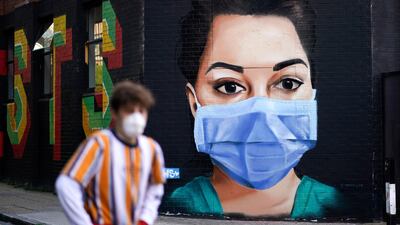
A man wearing a protective mask walks past a mural depicting a nurse in Shoreditch, amid the coronavirus disease (COVID-19) outbreak, in London, Britain. REUTERS -
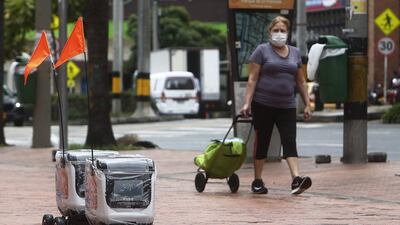
A woman observes two robots that carry home orders, in Medellin, Colombia,. EPA -
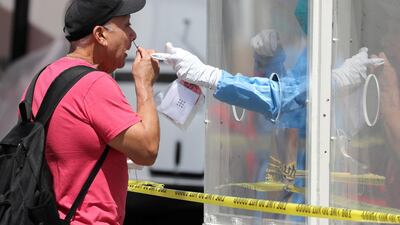
A man is tested for coronavirus disease (COVID-19) at a Los Angeles fire department testing station for the homeless on Skid Row, in Los Angeles, California, U.S. REUTERS -

A man sits next to a fountain at the Sun Yat Sen Memorial Park in Hong Kong on April 21, 2020. Hong Kong has reduced growth of confirmed COVID-19 cases to single digits in recent days, but city authorities say they are not taking any risks. Chief executive Carrie Lam said social distancing measures and some business restrictions would continue for another two weeks until at least May 7. AFP -
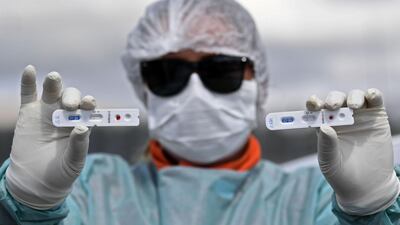
A health worker shows quick tests for COVID-19 with negative results at a drive-through in the parking lot of the Mane Garrincha Stadium in Brasilia, Brazil. The Brazilian government started a mass testing program to improve control of the new coronavirus disease and plan how social isolation will be lifted. AFP -
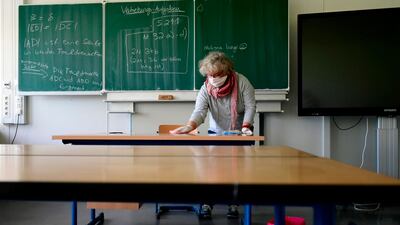
A teacher cleans and disinfects chairs and tables at the the Phoenix Gymnasium secondary school in Dortmund, western Germany. Students preparing for the Abitur high school graduation with exams taking place in May are allowed to turn back to school from April 23, 2020. AFP -
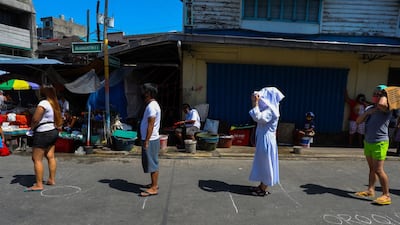
People stand on designated spots to maintain social distancing at a market in Manila. AFP -
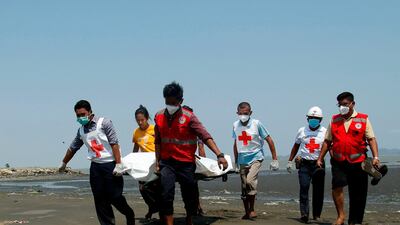
Members of the Myanmar Red Cross carry a dead body of a driver from a boat in Sittwe, Rakhine State killed while delivering test kits for COVID-19 coronavirus. A Myanmar government health worker was injured and his driver killed when their United Nations-marked vehicle was ambushed as they were carrying COVID-19 test samples in conflict-ridden Rakhine state. AFP -
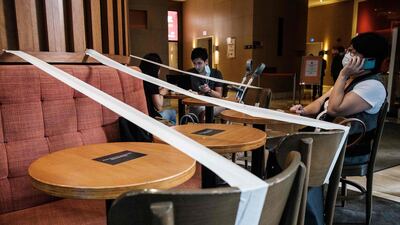
Customers wearing face masks as a precautionary measure against the COVID-19 coronavirus sit in a cafe, which has masking tape on every other table to enforce social distancing, in Hong Kong. AFP -
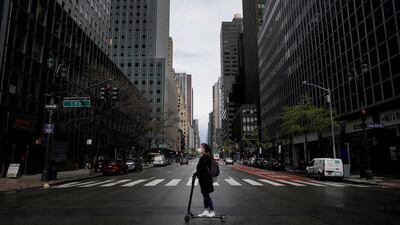
A woman wearing a protective face mask rides a scooter across a nearly empty 3rd Avenue in midtown Manhattan during the outbreak of the coronavirus disease (COVID-19) in New York City, New York, U.S. REUTERS -
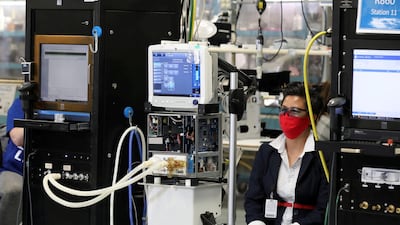
An employee wearing a face mask sits next to a GE Carescape R860 ventilator in an assembly and testing area at a GE Healthcare manufacturing facility during the global coronavirus disease (COVID-19) outbreak in Madison, Wisconsin, U.S. REUTERS -
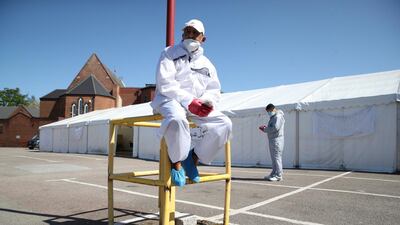
Workers wearing protective equipment are seen on the grounds of the Central Jamia Mosque Ghamkol Sharif, a temporary morgue set up at a Mosque as the spread of the Coronavirus disease (Covid-19) continues, Birmingham, Britain. REUTERS


The virus, which causes a highly contagious and potentially fatal respiratory illness dubbed COVID-19, emerged late last year in central China. The first known US infection, a travel-related case, was diagnosed on January 20 in Washington state near Seattle.
Since then, nearly 810,000 people have tested positive in the United States, and more than 45,000 have died from the disease.
Mr Redfield and other public health authorities credit drastic stay-at-home orders and widespread business and school closings across the country for slowing the spread of infections. But the restrictions have also stifled American commerce while throwing at least 22 million people out of work over the past four weeks.
Even as the lockdown is gradually eased, Mr Redfield stressed the importance of individuals continuing to practice social distancing among one another.
At the same time, he said, public health authorities must vastly ramp up a testing system to identify those who are infected and to locate their close personal interactions through contact tracing.
Asked about the recent flurry of street protests of stay-at-home orders and calls for states to be "liberated" from such restrictions - as President Donald Trump has advocated on Twitter - Mr Redfield told the Post: "It's not helpful."
Building a nationwide contact tracing network, key to preventing newly diagnosed cases from growing into large outbreaks, poses a major challenge because it is so labor intensive, requiring a workforce that by some estimates would require as many as 300,000 personnel.
Mr Redfield said the CDC is discussing with state officials the possibility of enlisting and training workers from the US Census Bureau, and volunteers from Peace Corps and AmeriCorps, to create a new contact tracing workforce.