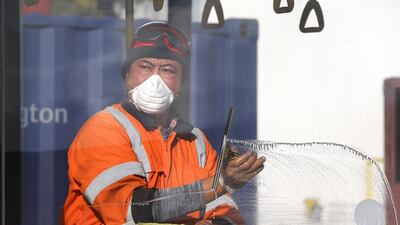
An elderly man wearing a face mask due to the COVID-19 coronavirus pandemic walks with a crutch at the central market in the Tunisian capital Tunis. AFP

Needy Tunisians get food aid via text messages


  • English
  • Arabic

A Tunisian organisation has set up a food bank that dispenses aid by text message to some 300 families left vulnerable by the coronavirus pandemic.

The initiative was launched at the end of April to coincide with the start of the holy month of Ramadan.

It targets families who have lost jobs because of the lockdown imposed by Tunisia to contain the spread of the virus.

"Because of Ramadan and the lockdown I can no longer go out to work," said 49-year-old Messaouda Raouafi, a cleaner. "I cannot clean homes and earn money to feed my seven children."

Her family was among the 300 chosen by the women's affairs ministry and referred to the organisation known as the Banque Alimentaire Durable or "sustainable food bank".

Under the initiative, Ms Raouafi receives a code by text that allows her to spend 40 to 60 Tunisian dinars (around Dh40 to Dh76) weekly at designated grocery stores.

With that, she has been able to buy basic goods such as oil, milk, coffee and flour.

Farah, who runs a grocery store in the working-class district of Kram in Tunis governate, signed up to take part in the project.

"The money is sent to us ahead of time – that way the clients can buy what they want with the funds allocated to them," she said.

Farah said this worked much better than allowing customers to buy on credit, a system that took a toll on her finances.

Women wearing face masks due to the Covid-19 coronavirus pandemic sit in a carriage of the Tunis metro in the centre of the capital Tunis on May 4, 2020 AFP

"In our area there are many poor families and unemployed people," she said, explaining why she decided to embrace the initiative.

A member of the organisation, Aisha Zakraoui, said she hoped the initiative would grow and reach more needy families across Tunisia.

It also aimed to help families become more self-sufficient through training in skills such as growing their own vegetables or baking bread to sell.

"Our objective is to provide food aid to needy people and in exchange they agree to take part in initiatives aimed at integrating them socially and professionally," Ms Zakraoui said.

Even before the virus outbreak, Tunisia struggled with economic and social hardship that has worsened since the country went into lockdown in March to battle the pandemic.

The government estimated that two million of Tunisia's 11.5 million population were in need of financial assistance during that time.

In March and April, the government made emergency handouts of 200 dinars to vulnerable families.

Tunisia, which has officially declared 1,032 cases of the novel coronavirus including 45 deaths, began easing its lockdown on May 4.

In the early days of the containment measures, several hundred Tunisians had demonstrated in working class districts of Tunis, the capital, to demand government support and against the lockdown.

Our legal columnist

Name: Yousef Al Bahar

Advocate at Al Bahar & Associate Advocates and Legal Consultants, established in 1994

Education: Mr Al Bahar was born in 1979 and graduated in 2008 from the Judicial Institute. He took after his father, who was one of the first Emirati lawyers

MO
%3Cp%3E%3Cstrong%3ECreators%3A%20%3C%2Fstrong%3EMohammed%20Amer%2C%20Ramy%20Youssef%3C%2Fp%3E%0A%3Cp%3E%3Cstrong%3EStars%3A%20%3C%2Fstrong%3EMohammed%20Amer%2C%20Teresa%20Ruiz%2C%20Omar%20Elba%3C%2Fp%3E%0A%3Cp%3E%3Cstrong%3ERating%3A%3C%2Fstrong%3E%204%2F5%3C%2Fp%3E%0A
Who's who in Yemen conflict

Houthis: Iran-backed rebels who occupy Sanaa and run unrecognised government

Yemeni government: Exiled government in Aden led by eight-member Presidential Leadership Council

Southern Transitional Council: Faction in Yemeni government that seeks autonomy for the south

Habrish 'rebels': Tribal-backed forces feuding with STC over control of oil in government territory

COMPANY%20PROFILE%3A
%3Cp%3E%3Cstrong%3EName%3A%3C%2Fstrong%3E%20Envision%3Cbr%3E%3Cstrong%3EStarted%3A%20%3C%2Fstrong%3E2017%3Cbr%3E%3Cstrong%3EFounders%3A%20%3C%2Fstrong%3EKarthik%20Mahadevan%20and%20Karthik%20Kannan%3Cbr%3E%3Cstrong%3EBased%3A%3C%2Fstrong%3E%20The%20Netherlands%3Cbr%3E%3Cstrong%3ESector%3A%3C%2Fstrong%3E%20Technology%2FAssistive%20Technology%3Cbr%3E%3Cstrong%3EInitial%20investment%3A%3C%2Fstrong%3E%20%241.5%20million%3Cbr%3E%3Cstrong%3ECurrent%20number%20of%20staff%3A%3C%2Fstrong%3E%2020%3Cbr%3E%3Cstrong%3EInvestment%20stage%3A%3C%2Fstrong%3E%20Seed%3Cbr%3E%3Cstrong%3EInvestors%3A%3C%2Fstrong%3E%204impact%2C%20ABN%20Amro%2C%20Impact%20Ventures%20and%20group%20of%20angels%3C%2Fp%3E%0A
What is dialysis?

Dialysis is a way of cleaning your blood when your kidneys fail and can no longer do the job.

It gets rid of your body's wastes, extra salt and water, and helps to control your blood pressure. The main cause of kidney failure is diabetes and hypertension.

There are two kinds of dialysis — haemodialysis and peritoneal.

In haemodialysis, blood is pumped out of your body to an artificial kidney machine that filter your blood and returns it to your body by tubes.

In peritoneal dialysis, the inside lining of your own belly acts as a natural filter. Wastes are taken out by means of a cleansing fluid which is washed in and out of your belly in cycles.

It isn’t an option for everyone but if eligible, can be done at home by the patient or caregiver. This, as opposed to home haemodialysis, is covered by insurance in the UAE.

Desert Warrior

Starring: Anthony Mackie, Aiysha Hart, Ben Kingsley

Director: Rupert Wyatt

Rating: 3/5

TYPES%20OF%20ONLINE%20GIG%20WORK
%3Cp%3E%3Cstrong%3EDesign%2C%20multimedia%20and%20creative%20work%3A%20%3C%2Fstrong%3ELogo%20design%2C%20website%20design%2C%20visualisations%3C%2Fp%3E%0A%3Cp%3E%3Cstrong%3EBusiness%20and%20professional%20management%3A%20%3C%2Fstrong%3ELegal%20or%20management%20consulting%2C%20architecture%3C%2Fp%3E%0A%3Cp%3E%3Cstrong%3EBusiness%20and%20professional%20support%3A%20%3C%2Fstrong%3EResearch%20support%2C%20proofreading%2C%20bookkeeping%3C%2Fp%3E%0A%3Cp%3E%3Cstrong%3ESales%20and%20marketing%20support%3A%20%3C%2Fstrong%3ESearch%20engine%20optimisation%2C%20social%20media%20marketing%3C%2Fp%3E%0A%3Cp%3E%3Cstrong%3EData%20entry%2C%20administrative%2C%20and%20clerical%3A%20%3C%2Fstrong%3EData%20entry%20tasks%2C%20virtual%20assistants%3C%2Fp%3E%0A%3Cp%3E%3Cstrong%3EIT%2C%20software%20development%20and%20tech%3A%20%3C%2Fstrong%3EData%20analyst%2C%20back-end%20or%20front-end%20developers%3C%2Fp%3E%0A%3Cp%3E%3Cstrong%3EWriting%20and%20translation%3A%20%3C%2Fstrong%3EContent%20writing%2C%20ghost%20writing%2C%20translation%3C%2Fp%3E%0A%3Cp%3E%3Cstrong%3EOnline%20microtasks%3A%20%3C%2Fstrong%3EImage%20tagging%2C%20surveys%3C%2Fp%3E%0A%3Cp%3E%3Cem%3ESource%3A%20World%20Bank%3C%2Fem%3E%3C%2Fp%3E%0A
Red flags
  • Promises of high, fixed or 'guaranteed' returns.
  • Unregulated structured products or complex investments often used to bypass traditional safeguards.
  • Lack of clear information, vague language, no access to audited financials.
  • Overseas companies targeting investors in other jurisdictions - this can make legal recovery difficult.
  • Hard-selling tactics - creating urgency, offering 'exclusive' deals.

Courtesy: Carol Glynn, founder of Conscious Finance Coaching

Real estate tokenisation project

Dubai launched the pilot phase of its real estate tokenisation project last month.

The initiative focuses on converting real estate assets into digital tokens recorded on blockchain technology and helps in streamlining the process of buying, selling and investing, the Dubai Land Department said.

Dubai’s real estate tokenisation market is projected to reach Dh60 billion ($16.33 billion) by 2033, representing 7 per cent of the emirate’s total property transactions, according to the DLD.

Company Profile

Name: Thndr
Started: 2019
Co-founders: Ahmad Hammouda and Seif Amr
Sector: FinTech
Headquarters: Egypt
UAE base: Hub71, Abu Dhabi
Current number of staff: More than 150
Funds raised: $22 million

UAE currency: the story behind the money in your pockets
COMPANY%20PROFILE
%3Cp%3E%3Cstrong%3ECompany%20name%3A%3C%2Fstrong%3E%203S%20Money%3Cbr%3E%3Cstrong%3EStarted%3A%3C%2Fstrong%3E%202018%3Cbr%3E%3Cstrong%3EBased%3A%3C%2Fstrong%3E%20London%3Cbr%3E%3Cstrong%3EFounders%3A%3C%2Fstrong%3E%20Ivan%20Zhiznevsky%2C%20Eugene%20Dugaev%20and%20Andrei%20Dikouchine%3Cbr%3E%3Cstrong%3ESector%3A%3C%2Fstrong%3E%20FinTech%3Cbr%3E%3Cstrong%3EInvestment%20stage%3A%3C%2Fstrong%3E%20%245.6%20million%20raised%20in%20total%3C%2Fp%3E%0A
The specs
  • Engine: 3.9-litre twin-turbo V8
  • Power: 640hp
  • Torque: 760nm
  • On sale: 2026
  • Price: Not announced yet
Benefits of first-time home buyers' scheme
  • Priority access to new homes from participating developers
  • Discounts on sales price of off-plan units
  • Flexible payment plans from developers
  • Mortgages with better interest rates, faster approval times and reduced fees
  • DLD registration fee can be paid through banks or credit cards at zero interest rates
COMPANY%20PROFILE
%3Cp%3E%0D%3Cbr%3E%3Cstrong%3ECompany%20name%3A%20%3C%2Fstrong%3EClara%0D%3Cbr%3E%3Cstrong%3EStarted%3A%20%3C%2Fstrong%3E2019%0D%3Cbr%3E%3Cstrong%3EFounders%3A%20%3C%2Fstrong%3EPatrick%20Rogers%2C%20Lee%20McMahon%2C%20Arthur%20Guest%2C%20Ahmed%20Arif%0D%3Cbr%3E%3Cstrong%3EBased%3A%20%3C%2Fstrong%3EDubai%0D%3Cbr%3E%3Cstrong%3EIndustry%3A%20%3C%2Fstrong%3ELegalTech%0D%3Cbr%3E%3Cstrong%3EFunding%20size%3A%3C%2Fstrong%3E%20%244%20million%20of%20seed%20financing%0D%3Cbr%3E%3Cstrong%3EInvestors%3A%20%3C%2Fstrong%3EWamda%20Capital%2C%20Shorooq%20Partners%2C%20Techstars%2C%20500%20Global%2C%20OTF%2C%20Venture%20Souq%2C%20Knuru%20Capital%2C%20Plug%20and%20Play%20and%20The%20LegalTech%20Fund%3C%2Fp%3E%0A

Mercer, the investment consulting arm of US services company Marsh & McLennan, expects its wealth division to at least double its assets under management (AUM) in the Middle East as wealth in the region continues to grow despite economic headwinds, a company official said.

Mercer Wealth, which globally has $160 billion in AUM, plans to boost its AUM in the region to $2-$3bn in the next 2-3 years from the present $1bn, said Yasir AbuShaban, a Dubai-based principal with Mercer Wealth.

Within the next two to three years, we are looking at reaching $2 to $3 billion as a conservative estimate and we do see an opportunity to do so,” said Mr AbuShaban.

Mercer does not directly make investments, but allocates clients’ money they have discretion to, to professional asset managers. They also provide advice to clients.

“We have buying power. We can negotiate on their (client’s) behalf with asset managers to provide them lower fees than they otherwise would have to get on their own,” he added.

Mercer Wealth’s clients include sovereign wealth funds, family offices, and insurance companies among others.

From its office in Dubai, Mercer also looks after Africa, India and Turkey, where they also see opportunity for growth.

Wealth creation in Middle East and Africa (MEA) grew 8.5 per cent to $8.1 trillion last year from $7.5tn in 2015, higher than last year’s global average of 6 per cent and the second-highest growth in a region after Asia-Pacific which grew 9.9 per cent, according to consultancy Boston Consulting Group (BCG). In the region, where wealth grew just 1.9 per cent in 2015 compared with 2014, a pickup in oil prices has helped in wealth generation.

BCG is forecasting MEA wealth will rise to $12tn by 2021, growing at an annual average of 8 per cent.

Drivers of wealth generation in the region will be split evenly between new wealth creation and growth of performance of existing assets, according to BCG.

Another general trend in the region is clients’ looking for a comprehensive approach to investing, according to Mr AbuShaban.

“Institutional investors or some of the families are seeing a slowdown in the available capital they have to invest and in that sense they are looking at optimizing the way they manage their portfolios and making sure they are not investing haphazardly and different parts of their investment are working together,” said Mr AbuShaban.

Some clients also have a higher appetite for risk, given the low interest-rate environment that does not provide enough yield for some institutional investors. These clients are keen to invest in illiquid assets, such as private equity and infrastructure.

“What we have seen is a desire for higher returns in what has been a low-return environment specifically in various fixed income or bonds,” he said.

“In this environment, we have seen a de facto increase in the risk that clients are taking in things like illiquid investments, private equity investments, infrastructure and private debt, those kind of investments were higher illiquidity results in incrementally higher returns.”

The Abu Dhabi Investment Authority, one of the largest sovereign wealth funds, said in its 2016 report that has gradually increased its exposure in direct private equity and private credit transactions, mainly in Asian markets and especially in China and India. The authority’s private equity department focused on structured equities owing to “their defensive characteristics.”