

The Iraqi government has approved October 10 as a new date for early elections, a day after the country's electoral commission said it was unable to hold elections in June.
The Cabinet unanimously approved the new date during its weekly meeting on Tuesday, after hosting members of the Independent High Electoral Commission, the government said.
The date requires final parliamentary approval.
Soon after taking office in May last year, Prime Minister Mustafa Al Kadhimi proposed early elections for June 6, 2021 – a year earlier than scheduled – to meet one of the demands of the pro-reform protests that began in October 2019.
However, Mr Al Kadhimi failed to convince political parties and Parliament.
-

Protesters wave national flags during anti-government protests in Basra. AP -
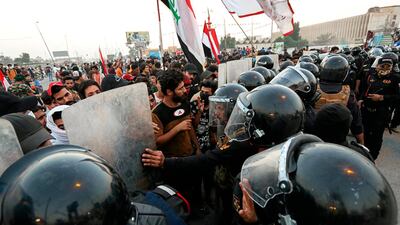
Anti-government protesters gather while Iraqi security prepare to open protesters' site in Basra. AP -
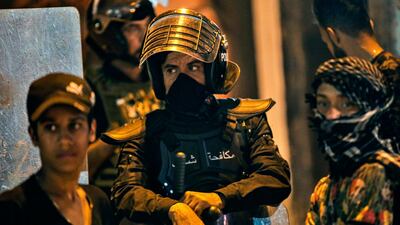
Anti-government protesters gather while Iraqi security forces prepare to open protesters' site in Basra. AP -
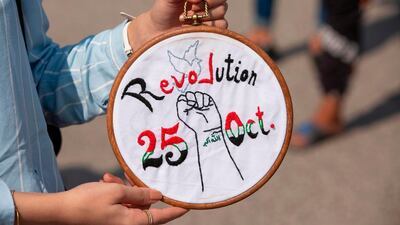
An Iraqi demonstrator displays an embroidery as protesters gather near the local administration building in the southern city of Basra. AFP -
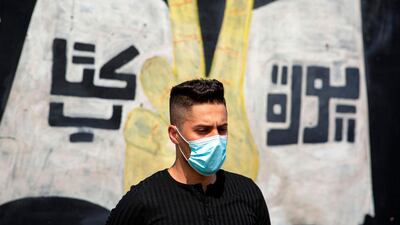
An Iraqi demonstrator arrives to take part in a rally near the local administration building in the southern city of Basra. AFP -
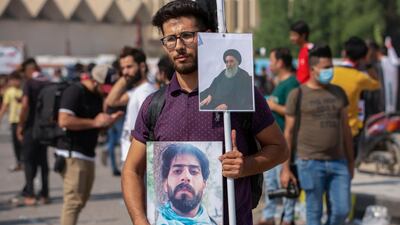
An Iraqi demonstrator lifts placards depicting Shiite cleric Grand Ayatollah Ali Sistani and slain activist Safaa Al Sarai, as protesters gather near the local administration building in the southern city of Basra. AFP -
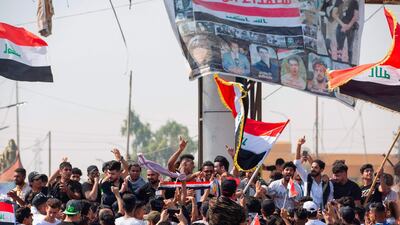
Iraqi demonstrators wave flags as they gather near the local administration building in the southern city of Basra. AFP


In a document leaked to local media late on Sunday, the Independent High Electoral Commission cited technical issues that prevented holding the elections on the proposed date and suggested October 16 instead.
IHEC said it needed to extend the deadline for registering candidates and political coalitions, to give UN experts and international monitors ample time to organise oversight and update voter data.
The removal of the ruling political elite – in place since the 2003 US-led invasion that toppled Saddam Hussein – and holding early elections based on a new electoral law were among the protesters' key demands.
Other demands included improving deteriorated public services, fighting endemic corruption and better job opportunities.
Mr Al Kadhimi took office in May after his predecessor Adel Abdul Mahdi resigned. The new prime minister pledged to address grievances and hold early elections.
The Iraqi government said in July last year that nearly 560 protesters and members of the security forces were killed in months of anti-government unrest. Thousands of protesters were wounded, with some suffering life-changing injuries.
However, Mr Al Kadhimi has so far struggled to hold militias, including those backed by Iran, to account for killing and kidnapping protesters.
Under pressure from ongoing protests, the Iraqi Parliament approved a new election law last year that gives independent candidates the chance to win seats inside the legislative body.
It divides Iraq into multiple constituencies, unlike previous elections in which the country was treated as one constituency and all parties took seats dependent on their share of the national vote.
The new law prevents political parties from running unified lists that in the past allowed them to sweep parliamentary seats. Under this system, parties put their candidates in one list and voters from all areas in Iraq voted for the list as a whole.
Parliament still needs to approve a bill to fill the seats on the Federal Court, which must ratify the results. Political differences on the mechanism of choosing court members have delayed the bill.

