Iraqi security forces killed four protesters in Baghdad on Friday, according to police sources, as the country's top cleric called for electoral reforms to end the unrest.
Security forces opened fire and launched tear gas at protesters on a central Baghdad bridge, police sources said. Two people died from bullet wounds and two from tear gas canisters launched directly at their heads. At least 61 more were injured.
The Prime Minister's military spokesman denied any protesters had been killed on Friday.
In the south, security forces reopened the entrance to Iraq's main port, Umm Qasr, which protesters had blocked since Monday, port sources said. Normal operations had not yet resumed.
At least 330 people have been killed since the start of mass unrest in Baghdad and southern Iraq in early October, the largest demonstrations since the fall of Saddam Hussein in 2003.
Protesters are demanding the overthrow of a political class seen as corrupt and serving foreign powers while many Iraqis languish in poverty without jobs, healthcare or education.
Iraq's top Shia Muslim cleric, Grand Ayatollah Ali al-Sistani, called on Friday for politicians to hurry up in reforming electoral laws because the changes would be the only way to resolve weeks of deadly unrest.
-
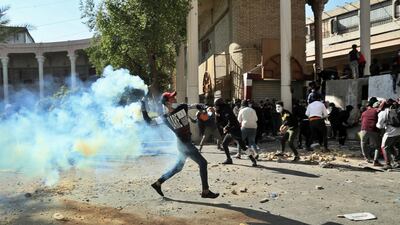
A protester throws back a tear gas canister fired by police during clashes in Baghdad, on Friday. AP Photo -
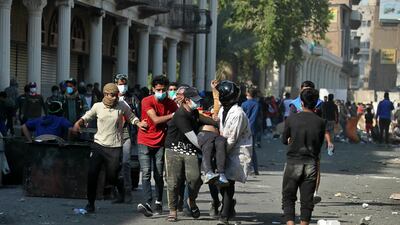
An injured protester is attended to. AP Photo -
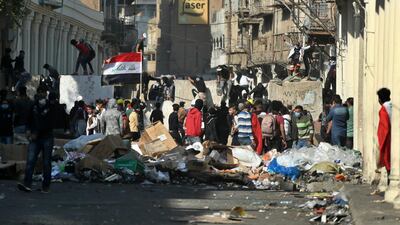
Protesters gather while security forces block Rasheed Street during clashes. AP Photo -

Riot police fire tear gas while blocking Rasheed Street. AP Photo -
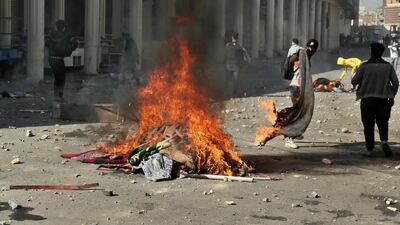
Protesters set fires during clashes between security forces and anti-government protesters. AP Photo -
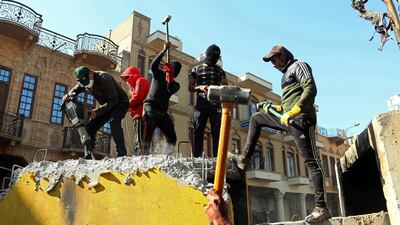
Protesters smash concrete walls that were set by security forces to close Rasheed street on Thursday. AP Photo -
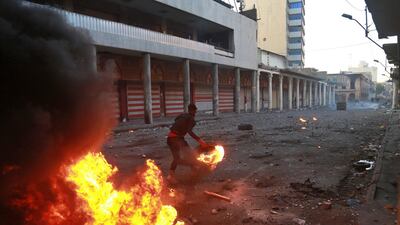
Riot police fire tear gas while protesters set fires during clashes. AP Photo -

Riot police close Rasheed Street during clashes. AP Photo -
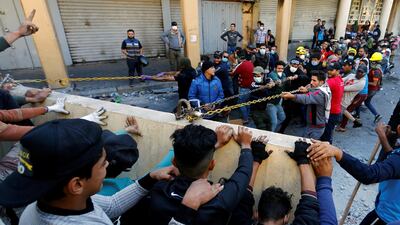
Demonstrators try to push down a concrete wall. Reuters -
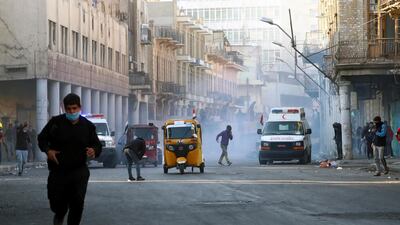
Demonstrators run from tear gas. Reuters -
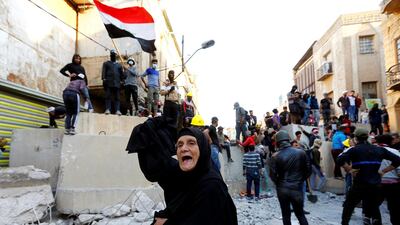
A woman demonstrator takes part in ongoing anti-government protests. Reuters -

Protesters throw back an exploded gas canister toward the anti-riot police forces as they gather near the banks of the Tigris River. EPA -

Protesters run for cover while security forces fire tear gas and live ammunition during clashes. AP Photo -
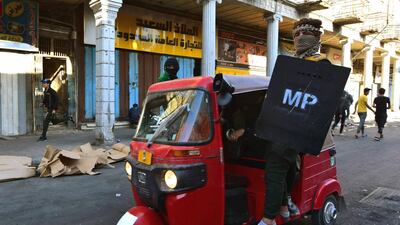
Protesters ride a Tuk-tuk during protests in the Rasheed street. EPA -

Masked protesters take part in a protest near the headquarter of Iraqi central Bank on Rasheed street. EPA -
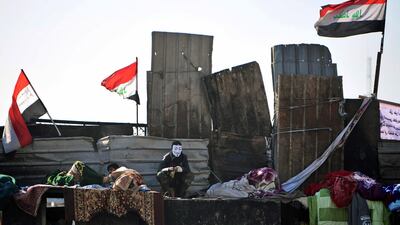
Protesters stand on concrete blocks which are used by security forces to block the Ahrar Bridge (Freemen bridge). EPA


"We affirm the importance of speeding up the passing of the electoral law and the electoral commission law because this represents the country moving past the big crisis," his representative said during a sermon in the holy city of Kerbala.
Reforms proposed by President Barham Salih would have lawmakers elected from individual districts instead of whole provinces, and stand as individuals rather than on party lists, to satisfy demands of protesters to reduce the power of parties and have greater local representation. But a bill proposed this week by Prime Minister Adel Abdul Mahdi omitted those changes.
The United Nations Assistance Mission in Iraq (UNAMI) said on Wednesday the drafts being discussed in parliament required improvement to meet public demands.
"I would like to urge the parliamentarians to act on their constituents' legitimate demands for credible, free and fair elections," said UN mission chief Jeanine Hennis-Plasschaert.
The Grand Ayatollah, who weighs in on politics only in times of crisis, holds wide influence over public opinion in Shia majority Iraq. He met Ms Hennis-Plasschaert last week and endorsed the UN's presented reform recommendations.
On Friday he said it was important politicians reformed electoral laws "in the manner described in last week's sermon" and repeated his view that the protesters had legitimate demands that should not be met with violence.
Unsatisfied by government reform promises they see as meagre, many protesters have turned to civil disobedience tactics in recent weeks.
They had previously blocked Umm Qasr from Oct. 29-Nov. 9, apart from a brief resumption of operations for three days. It receives imports of grain, vegetable oils and sugar shipments that feed a country largely dependent on imported food.
The initial blockage cost Iraq more than $6 billion during just the first week of the closure, a government spokesman said at the time.
Protesters in Baghdad are also disrupting traffic, and are still holding ground, controlling parts of three major bridges which lead to the capital's fortified Green Zone, where government buildings and foreign embassies are located.
On Friday they clashed with security forces who opened fire and lobbed tear gas canisters over a concrete barricade separating them on Ahrar bridge. Tuk-tuks carried scores of injured young men to nearby tents housing medics.
Protesters threw stones and launched makeshift fireworks from behind the barricade, and some with oversized gloves occasionally picked up hot tear gas canisters to send back.
Similar scenes had been ongoing across the capital and many southern provinces since the protests erupted for the first week of October then resumed on October 25.
Off the streets many are also now going on strike, with several labour unions led by teachers in particular joining. Schools and government offices were shut in several southern provinces on Monday.
The government on Thursday restored access to messaging apps and social media websites such as Twitter, Facebook and Instagram, 50 days after blocking them.
The unrest has shattered the relative calm that followed the defeat of Islamic State in 2017.