
Time ticks by slowly as Islam Alkhaldi clutches her phone, waiting at her mother’s dining room table for the maghrib prayer.
Usually, this table would be full as the day’s fast ends, but this year, Ramadan is markedly different. As for so many Muslims around the world, the spread of coronavirus and measures taken to combat it are keeping families apart.
Islam’s mother Nima Alkhaldi, 64, arrived in Gaza last week after spending three months in Jordan for medical treatment. Upon her return, she was sent directly to a quarantine centre for 21 days.
Instead of a shared meal, Islam, her father, son and daughter share a video call with Nima. Nima’s grandchildren wave to the camera and the family talks about their days, punctuated by questions from the children about when their grandmother will be coming back.
Gaza confirmed its first two cases of the virus on March 22, more than three months after the first case was reported in Wuhan, China.
-
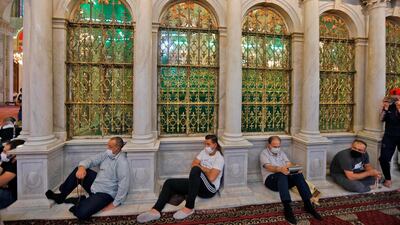
Syrian Muslims wearing face masks listen to the Friday prayer sermon at the Umayyad Mosque in Damascus, following the authorities' decision to allow prayers on Fridays in disinfected mosques with strict social distancing and protection measures to limit the spread of the coronavirus COVID-19 pandemic. President Bashar al-Assad warned earlier this month of a "catastrophe" in war-battered Syria if the easing of lockdown measures against coronavirus is mishandled. AFP -
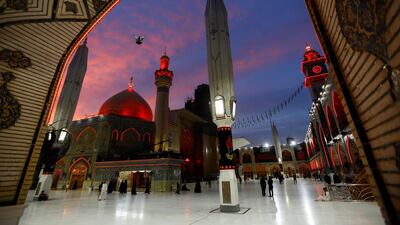
Shi'ite Muslims visit the Imam Ali shrine during the holy month of Ramadan, following the outbreak of the coronavirus disease (COVID-19), in the holy city of Najaf, Iraq. REUTERS -
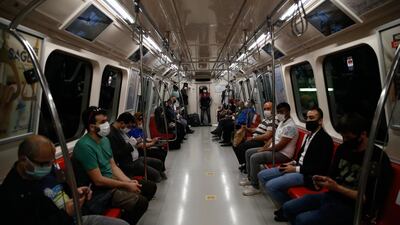
People observe social distancing on a metro carriage in Istanbul, a few hours before the weekend lockdown because of the coronavirus. Teenagers were able to leave their homes for the first time in 42 days on Friday, as their turn came for a few hours of respite from Turkey's coronavirus lockdowns. Turkey has subjected people aged 65 and over and those younger than 20, to a curfew for the past several weeks. AP Photo -
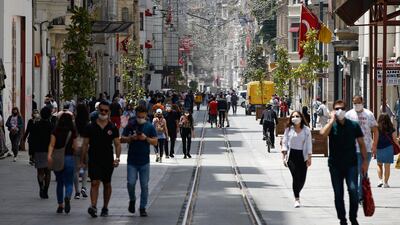
People walk on Istiklal street, the main shopping street in Istanbul, a few hours before the weekend lockdown due to the coronavirus. Teenagers were able to leave their homes for the first time in 42 days on Friday, as their turn came for a few hours of respite from Turkey's coronavirus lockdowns. Turkey has subjected people aged 65 and over and those younger than 20, to a curfew for the past several weeks. AP Photo -

A fighter loyal to Yemen's Huthi rebels acting as security, looks on while wearing a face mask and latex gloves and slinging a Kalashnikov assault rifle as volunteers part of a community-led initiative to prevent the spread of COVID-19 coronavirus disease gather in Yemen's capital Sanaa. AFP -

Algerian Food Bank volunteers, wearing face masks due to the COVID-19 coronavirus pandemic, prepare packages of food aid as part of the "SOLIRAM" solidarity campaign to assist families in need during the Muslim holy month of Ramadan, at the "20 August" (20 Aout 1955) Stadium in the capital Algiers. AFP -
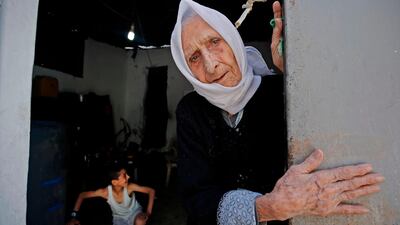
A Palestinian refugee elderly woman, who witnessed the 1948 Nakba, looks out of her house's entrance door at Al-Shati refugee camp in Gaza City, as Palestinians marked the 72nd anniversary of "Nakba" (Day of Catastrophe) inside their homes due to the COVID-19 coronavirus pandemic. The "Nakba" commemorates the mass displacement of more than 700,000 Palestinians who fled or were expelled from their homes in the 1948 war surrounding Israel's creation. AFP -
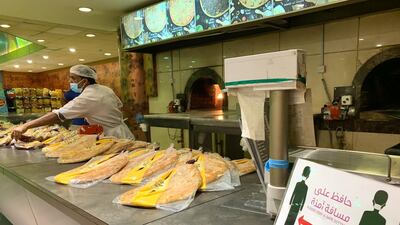
A sign reminds customers to stay at a safe distance from each other at a bakery in the nearly deserted Hayat mall in the Saudi capital Riyadh, after the lockdown measures due to the novel coronavirus were partially eased by the authorities. AFP -
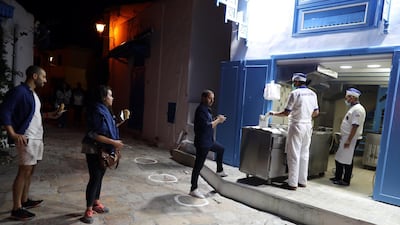
People gather to buy hot sugar drenched 'bomboloni' donut, in the village of Sidi Bou Said near Tunis, Tunisia. After four days in Tunisia without COVID-19 infections, the Tunisian government has decided to ease the curfew from 11 pm to five am. This decision prompted people to leave their homes after breaking their fast. This is the case here in Sidi Bou Saïd, the Tunisians took advantage of the open donut shops to taste this typical pastry from the city. EPA -
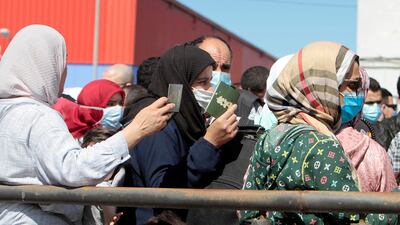
Several people show their passports at the Beni-Enzar border crossing in Melilla, Spain. Some 200 Moroccans have been able to return to their country this Friday after being trapped in Melilla for two months by the border closure that the Alawite authorities decreed on March 13 as a result of the coronavirus health crisis. EPA


On March 15, the government of Gaza began quarantining all travellers coming in through the Rafah border in the south and the Erez crossing in the north. As May approached, it was clear some would be spending Ramadan apart from their families.
"This Ramadan is different. I am spending it alone and it is really hard," Nima told The National.
She is staying with two other women in a room in Al Matahaf hotel in the west of Gaza city, and will spend the rest of Ramadan and Eid in quarantine.
"Ramadan means gathering with families and praying taraweeh. This Ramadan I lost all of this, because of coronavirus,” Nima said.
Without her, Nima’s family said Ramadan has lost its shine.
"Ramadan lost its happiness and joy," said Islam, 23.
"We are speaking with my mother every day at iftar and suhoor time, to let her feel as if she is with us.”

Dr Jadoo Abu Shariaa, a gastroenterologist helping coronavirus patients, is also feeling the strain. He has to stay in quarantine to protect his family.
"It is really hard to spend Ramadan alone without your family," he told The National.
This is the second time Dr Abu Shariaa, 46, has lived apart from his family during the holy month to help patients. The first was in Ramadan 2014, during the war in Gaza, which lasted for 51 days. He was working in Abu Yossif Al Najar hospital in the southern city of Rafah.
"This situation brings back to me the memories of the last war on Gaza, which really affects me negatively," Dr Abu Shariaa said from the Blue Beach Hotel.
"This isolation negatively affects the people who are accommodated here, and really this situation is more difficult than the situation of the war, because you are dealing with an invisible enemy."
The Rafah border with Egypt was opened on Tuesday for three days to allow Gazans to return. Travellers were sent to compulsory quarantine centres set up in hospitals and clinics, hotels and schools, Gaza’s Health Ministry said.
The enclave has 14 confirmed cases, but hundreds more are suspected. On April 9, health ministry spokesman Ashraf Al Qidra said Gaza had run out of tests. The ministry is run by the enclave's rulers, Hamas.
As testing capacity fails to grow and a vaccine looks far off, quarantine is the best chance of halting the spread of the disease. But it is not easy, Dr Abu Shariaa said: "I manage to steal only minutes to contact my family and talk with my children to give them support and try to compensate for my absence."

