The number of medical workers needing mental-health services has risen sharply in Oman as Covid-19 cases continue to rise, a top doctor said.
“The number of medical staff who suffer from anxiety and insomnia and are in need of psychological care has increased recently. There is a limit to what medical staff can deal with,” Dr Faryal Al Lawati, the head of Communicable Diseases at the government-owned Royal Hospital said on Oman state television.
On Wednesday, Oman reported 563 new infections and eight deaths. The total number of infected people has now hit 107,776 and 1,061 have died from the pandemic since the start of the year.
So far, 93,908 people have recovered from the virus.
Coronavirus around the Middle East
-
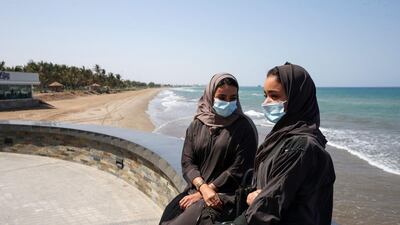
Omanis, wearing protective face masks, sit on the corniche in the capital Muscat, during the coronavirus pandemic. AFP -

Omanis, wearing protective face masks, sit in a seafront cafe in the capital Muscat, during the coronavirus pandemic. AFP -
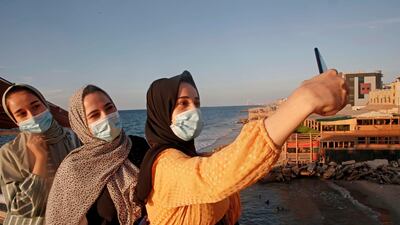
Palestinian women takes a selfie at sunset in Gaza city amid strict restrictions due to the COVID-19 pandemic. AFP -

Women chat while enjoy their time at a beach side cafe in Gaza City. AP Photo -

An Iraqi Kurdish woman is tested for Covid-19 at a hospital in the northeastern city of Sulaymaniyah in Iraq's autonomous Kurdistan region, which has seen the hights death rates from the novel coronavirus. The virus has hit hard Iraq which more than 375,000 people infected and some 9,500 deaths. AFP -

An Iraqi Kurdish medical worker tests samples for Covid-19 at a hospital in the northeastern city of Sulaymaniyah in Iraq's autonomous Kurdistan region, which has seen the hights death rates from the novel coronavirus. The virus has hit hard Iraq which more than 375,000 people infected and some 9,500 deaths. AFP -

Students wearing protective face masks maintain social distancing as they attend a class after some schools reopened amid the coronavirus disease (COVID-19) crisis, in Misrata, Libya. REUTERS -

A man teaches his sons and nephews at home amid the coronavirus disease (COVID-19), in Misrata, Libya. REUTERS -

A teacher sprays disinfectant to sanitize a classroom after some schools reopened amid the coronavirus disease (COVID-19) crisis, in Misrata, Libya. REUTERS -

People wearing protective face masks against the spread of the novel corona virus, Covid-19, as they travel on a public bus in Ankara. AFP -

People wearing masks to help protect against the spread of coronavirus, walk in Ankara, Turkey. Turkey's health minister says the country will start to report its total number of coronavirus cases later this week after Ankara was criticized for only releasing figures for patients showing symptoms of infection. AP Photo


Also on Wednesday, 64 people were admitted to hospital – an increase of 11 compared with a day earlier. The number of Covid-19 patients currently in hospitals is 542, of whom 216 are in intensive care.
Another senior medical officer in the sultanate called on everyone to support the fight against Covid-19 by adhering to the government rules to help reduce stress on medical staff and hospitals.
“The support they need from you is to stop gathering and that would reduce the pressure and anxiety of the medical staff,” said Dr Nawal Al Mahjiri, head of psychosomatic medicine at the Royal Hospital.
Oman imposed a two-week night curfew this week after the number of people infected by the virus hit at an average of 700 a day in the first 10 days of October compared with 450 a day for the same period in September.
The 8pm to 5am curfew started on October 11 and will end on October 24.
“It is sad to hear that medical staff suffer depression from treating patients but unfortunately many people still don’t take the pandemic seriously. They still gather secretly even in the curfew period in private farms or their homes,” said Khamis Al Adawi, 74, a retired doctor.