

Bahrain's latest addition to the fight against Covid-19 is a pair of multilingual, multi-talented robots.
The assistant robots can speak 12 languages, check body temperatures, administer medicines, serve meals and sterilise treatment rooms with beams of ultraviolet light. They will soon roll onto isolation wards to help treat the most vulnerable cases in the kingdom and if all goes to plan hospitals across the country may also get mechanical assistants.
“It is certainly a new medical revolution and we want to see how this benefits patients and staff,” Dr Waleed Al Manea, from Bahrain's Health Ministry, said.
The country has recorded 7,532 cases of the disease with 12 fatalities since the outbreak began and has taken strict measures to curb its spread.
The robots will also aim to limit the interaction of health workers with Covid-19 patients.
“We have started using the robots in the isolation and treatment facilities as part of the experimental phase to use AI in the health sector,” Dr Al Manea, said.
-
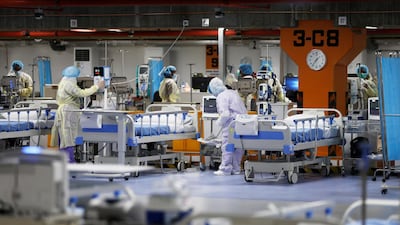
Medical staff are seen in the newly-inaugurated intensive care unit for Covid-19 patients at the Bahrain Defense Force Hospital in Riffa in April, 2020. AFP -

A man wearing protective gloves checks the app "Be Aware", launched by Bahrain's health authorities to contain the coronavirus disease by spreading awareness and sharing updates on the situation. Reuters -
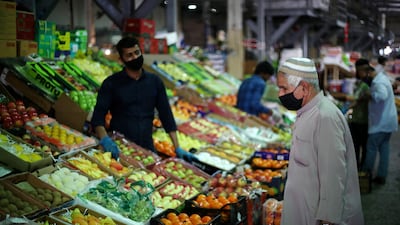
A Bahraini man wears a protective face mask following the outbreak of the coronavirus disease, as he shops at a vegetables market. Reuters -
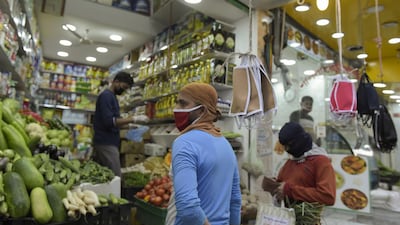
A grocery store displays protective masks for sale amid the Covid-19 pandemic in the old marketplace of the Bahraini capital Manama. AFP -
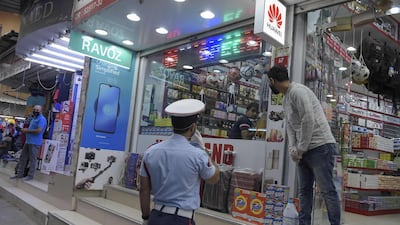
A Bahraini police officer instructs a foreign shop vendor to wear his protective mask amid the Covid-19 pandemic in the old market place of the Bahraini capital Manama. AFP -
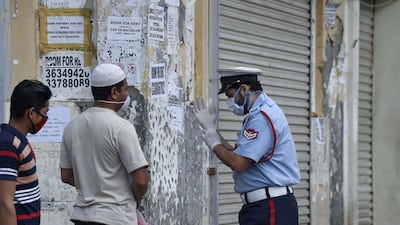
A Bahraini police officer instructs foreign workers on proper self-protection measures amid the Covid-19 pandemic in the old marketplace of the capital Manama. AFP -

A Bahraini police officer instructs foreign workers to wear protective gear amid the Covid-19 pandemic, in the old marketplace of the capital Manama. AFP -

Expatriated workers carrying out road project development sanitise their hands as they shift between work sites in Aali village. AFP -

Expatriated workers have their temperatures checked while carrying out road project development in Aali village south of the Bahraini capital. AFP -
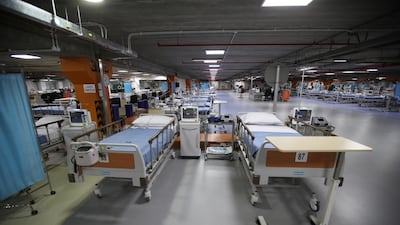
Fully equipped beds are seen in a makeshift ICU dubbed the Field Intensive Care Unit 1 set up by Bahraini authorities to treat the coronavirus disease at a car-park of Bahrain Defence Force Hospital in Riffa. Reuters -

Medical staff are seen in the newly-inaugurated intensive care unit for Covid-19 patients at the Bahrain Defense Force Hospital in Riffa. AFP -
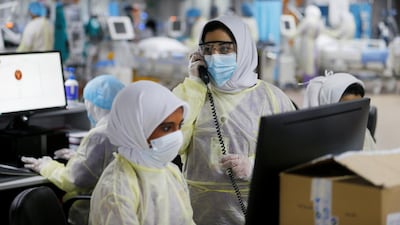
Doctors and nurses are seen doing their final check on the equipment in a makeshift ICU dubbed the Field Intensive Care Unit 1 set up by Bahraini authorities to treat the coronavirus disease. Reuters


The robots are equipped with sensors and cameras and can communicate with staff and patients in 12 different languages.
“This new technology will help doctors and nurses as they can evaluate the effectiveness of the robots and help incorporate them in their daily work,” he said.
Bahrain plans to "roll out" the robots to hospitals nationwide following the initial pilot phase.
In early May, the country opened a 152-bed Covid-19 field hospital intensive care unit on an empty piece of land in Sitra, as part of a plan to create 500 additional ICU beds for critical cases.
Several public buses have also been converted into mobile testing units.
The government launched a tracking application for confirmed cases, who must wear a monitoring bracelet in isolation.
The "BeAware" app automatically alerts users if they come in contact with people who have contracted the disease.
Authorities said that a quarter of the population is now using the application.
Bahrain made a series of early interventions on Covid-19 including screenings at entry points, travel restrictions on high-risk areas as well as swift isolation and testing of suspected cases.
Earlier this month the country eased its coronavirus lockdown measures.
Bahrain closed non-essential shops and businesses in late March and barred entry of foreign visitors, but did not impose a curfew, unlike some other Gulf states.

