
Angela Merkel has imposed new coronavirus restrictions on Germany as she warned another total lockdown must be avoided “at all costs”.
Chancellor Merkel was speaking after an emergency meeting with the governors of the state’s 16 states, where they agreed to restrict the size of gatherings and fine people who flout tracking rules.
The new rules amount to a “traffic light system” whereby new restrictions come into force when an area hits a caseload threshold – avoiding the need for a blanket lockdown.
New cases of coronavirus in Germany have hit the highest levels since April, with more than 2,000 new infections per day on several occasions.
The country reported 1,798 new cases on Wednesday and 2,089 cases yesterday.
Ms Merkel warned the country could see up to 19,200 daily infections by December if it doesn’t change course now.
“That underscores the urgency of our talks,” she said.
Infection rates in Munich and some other cities have recently hovered around the mark of 50 new cases per 100,000 residents a week.
Infection spikes are cropping up elsewhere, such as in the western town of Hamm, where a persistent outbreak has been linked to a wedding party.
To ensure outbreaks can be more easily tracked, fines of at least €50 ($59) per incident will be levied if customers give fake names or contact information to restaurants or other businesses.
Complete school shutdowns are meant to be avoided by keeping class groups apart from one another, so that they can be more easily isolated and tracked if the virus is detected.
Ms Merkel said further restrictions will be aimed at containing local virus hotspots.

“A complete shutdown of the country must be prevented,” she said.
She added: “We want to act regionally, specifically and purposefully, rather than shutting down the whole country again - this must be prevented at all costs.”
Social distancing and mask regulations will remain in effect, and a new two-level plan envisions greater restrictions first being put into place when the level of infection in an area hits 35 new cases per 100,000 per week.
At that level, group gatherings in public or rented facilities will be restricted to 50 people, and individuals will be “urgently recommended” to keep private home gatherings no larger than 25 people to make contact tracing easier if there is an outbreak.
-
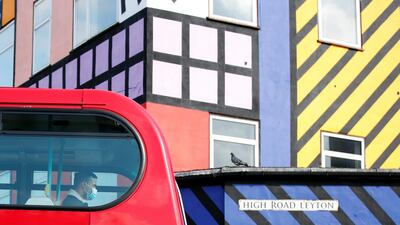
A man wearing a face mask travels on a bus, as it drives past a mural created by artist Camille Walala, amid the spread of the coronavirus disease (Covid-19), in Leyton, London. Reuters -
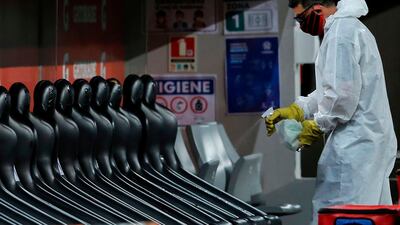
A worker sanitizes the reserve bench during the closed-door Copa Libertadores group phase football match between Brazil's Athletico Paranaense and Bolivia's Jorge Wilstermann at the Arena da Baixada stadium in Curitiba, Brazil. AFP -
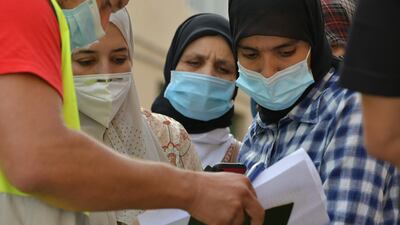
Policemen check passports of Moroccan woman, stranded in Spain since the closure of borders in mid-March to tackle the coronavirus, in the Spanish enclave of Ceuta. Hundreds of Moroccans stranded in the Spanish enclaves of Ceuta and Melilla since the border with Morocco was closed due to coronavirus pandemic, will be repatriated to their country, Spanish authorities announced. AFP -
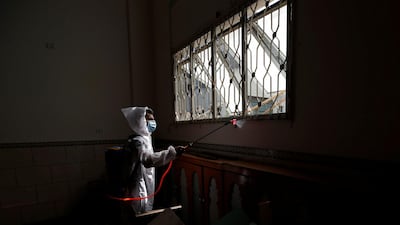
A Palestinian worker sanitizes a mosque amid the coronavirus disease (Covid-19) outbreak in Gaza City. Reuters -
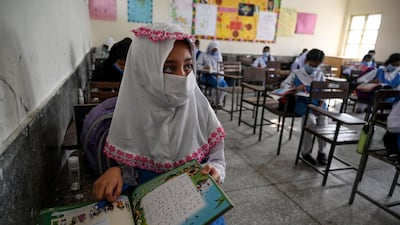
Children wearing facemasks attend a class at a school in Islamabad after the educational institutes reopened primary classes in the third and last phase nearly six months after the spread of the Covid-19 coronavirus. AFP -
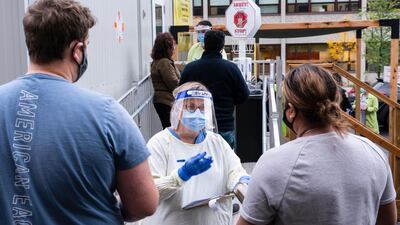
A nurse greets people at a Covid-19 walk-in clinic in Montreal. The Canadian Press via AP -

A woman poses for a photo in front of a flower display dedicated to frontline healthcare workers during the Covid-19 pandemic in celebration for the upcoming National Day of the People's Republic of China, in Beijing. AFP -
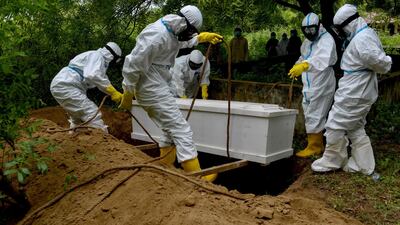
Gravediggers lower a coffin during a funeral for a Covid-19 coronavirus victim at a cemetery in Kajhu, Aceh province. AFP -
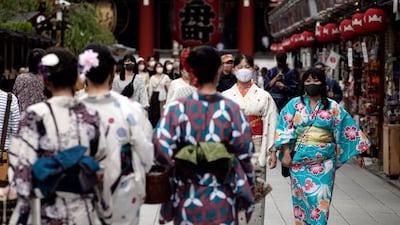
People wearing protective masks to help curb the spread of the coronavirus walk at a shopping arcade at Asakusa district, Tokyo. The Japanese capital confirmed more than 200 coronavirus cases on Tuesday. AP Photo -

Republican challenger and state Rep. Nancy Mace and Democratic US Rep. Joe Cunningham greet each other prior to their debate at the SCETV studios in Beaufort, SC, in South Carolina's 1st Congressional District seat race. The Post And Courier via AP


When infections hit 50 cases per 100,000 people per week, public gatherings will be restricted to no more than 25, and private individuals will be recommended to keep their gatherings to 10.
Bavarian Governor Markus Soeder said the government’s hope is to “motivate, not irritate” people with the restrictions while avoiding a general lockdown.
“For many younger people, common sense means not only common sense for yourselves, but protection for neighbours, for parents, for grandparents, for friends, for the chronically ill or otherwise disabled in our country,” he said.
While Germany has recorded more than 288,000 coronavirus since the pandemic began, with over 9,400 deaths, it is a stand-out performer by European standards.
In Spain, hundreds of doctors yesterday demanded better working conditions as they revealed their struggle against a second wave of the virus.
"We're working up to 80 hours a week and clocking shifts of 24 hours," protester Clara Boter, a 28-year-old medical resident intern, said.
Doctors in her position earn around €960 a month, she said.
Since exiting a strict lockdown in mid-June, coronavirus cases in Spain have soared, with thousands of infections diagnosed every day. Hospitalisations, though lower than the March-April peak, are also on the rise.
The country reported 2,586 new coronavirus cases in the past 24 hours, bringing its total to 758,172. It has the highest infection daily increase in Europe.
The total number of coronavirus deaths rose by 203 to 31,614, data showed. The number of deaths in the last seven days rose to 443 from an increase of 359 on Monday.
In France, health authorities yesterday reported 8,051 new infections, up sharply from Monday's 4,070, while intensive care admissions were also on the rise.
The number of people in France who have died from coronavirus rose by 85 to 31,893, versus 81 on Monday. The cumulative number of cases now totals 550,690.
The government there recently ramped up measures aimed at containing the resurgence of the virus and avoiding a second national lockdown.

