
Hundreds of Pakistanis who were repatriated from the Middle East have tested positive for Covid-19, officials said.
Pakistan has brought about 20,000 nationals home, among them a large number of unskilled workers who lost their jobs in Gulf nations as lockdowns slowed economic activity.
Of the 2,069 Pakistanis returning from the Middle East to the southern province of Sindh, more than 500 tested positive for the coronavirus, Murad Ali Shah, Sindh's chief minister, told a press conference on Friday.
And in the north-western province of Khyber Pakhtunkhwa, a senior government official told AFP that more than 200 of the 1,600 passengers repatriated to the city of Peshawar had tested positive.
_________________
Coronavirus in the Middle East
-

Health workers check passengers and crew who arrived on an Emirates flight from London at Dubai International Airport. AFP -
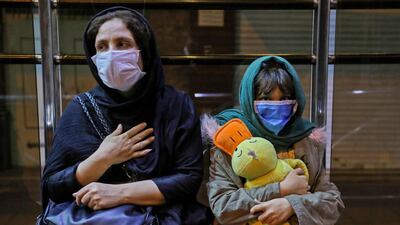
Iranians wearing masks gather outside their buildings after a 5.1-magnitude earthquake was felt in the capital Tehran. AFP / ISNA -
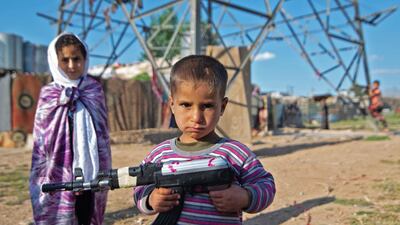
Iraqi children play with a toy gun in the northern city of Mosul, as Iraq eases restrictions put in place for the pandemic. AFP -
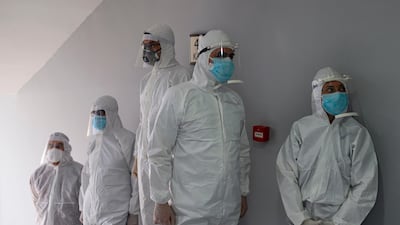
Health officers speak as they prepare to collect swab samples from confined people who are believed to have been in contact with coronavirus patients, in Istanbul. AFP -
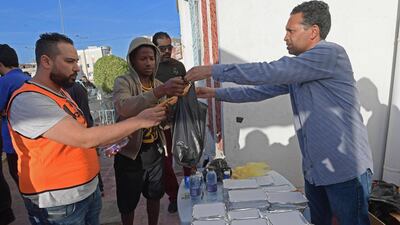
Tunisian volunteers distribute free Iftar meals at the Ariana near Tunis during Ramadan. AFP -
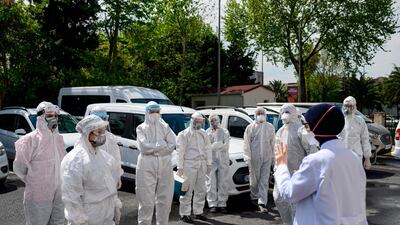
Head of Fatih District Health Department Melek Nr Aslan briefs her staff before they leave to collect swab samples from confined people who are believed to have been in contact with coronavirus patients, in Istanbul. AFP -
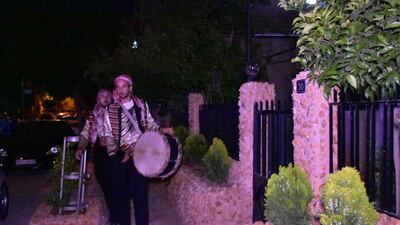
The Mosaharati calls on Muslims to wake up to eat Suhoor, the last meal before a sunrise to sunset fast during Ramadan, in Damascus, Syria. EPA -
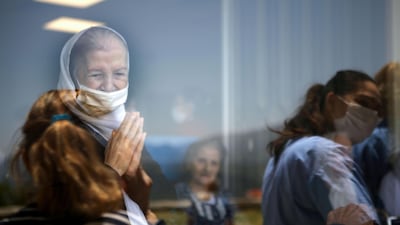
An elderly Lebanese woman shows appreciation to entertainers at a retirement home at Ain Wazein, in the Chouf mountains south-east of the capital Beirut. AFP -
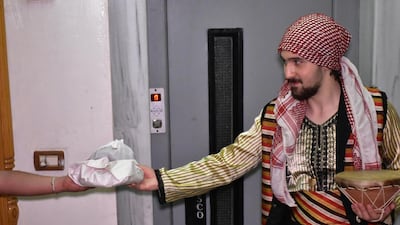
A Syrian man gives food to the Mosaharati in Damascus. Syria has alleviated the curfew imposed on the country to prevent the spread of the coronavirus and reopened religious places for the first time during Ramadan. EPA -
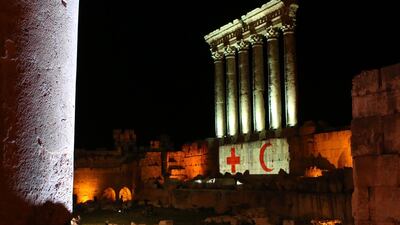
The columns of the Roman Temple of Jupiter in the Lebanese city of Baalbeck in the eastern Bekaa valley are lit with the symbols of the Red Cross and Crescent. AFP -
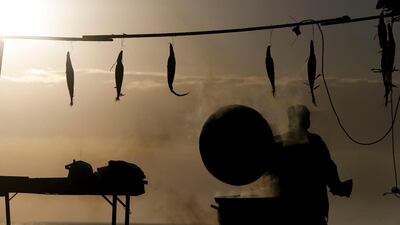
A Palestinian street vendor prepares corn before breaking the fast at sunset during Ramadan, in Gaza City. AFP -
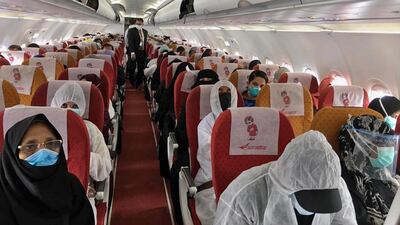
A picture provided by the Embassy of India in Riyadh shows Indian expats inside a plane upon their departure at King Fahad International Airport heading to Kozhikode. Some 150 Indian passengers, mainly consisting of pregnant women and stranded workers, left Riyadh on a special flight amid the Covid-19 pandemic. AFP / Embassy of India in Riyadh -
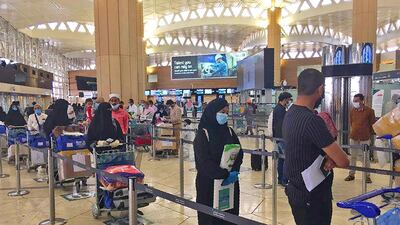
A picture provided by the embassy of India in Riyadh shows Indian expats queuing at departure section in King Fahad International Airport heading to Kozhikode. AFP / Embassy of India in Riyadh -
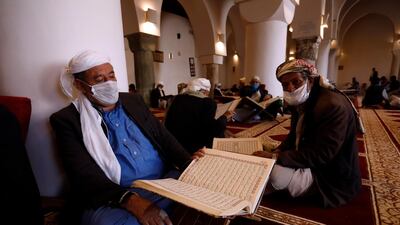
People wearing protective face masks read verses from the holy Quran at a mosque during Ramadan in Sana'a, Yemen. EPA -

A Yemeni child in Sana'a, Yemen, where the World Health Organisation (WHO) has warned coronavirus is spreading fast. EPA -
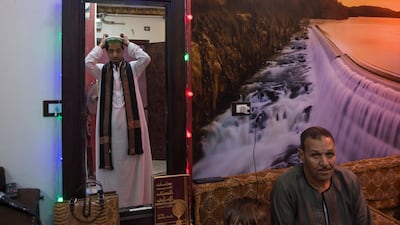
A Muslim singer wears his sufi clothing before singing Islamic songs (Anasheed) at his home in Cairo, Egypt. EPA -
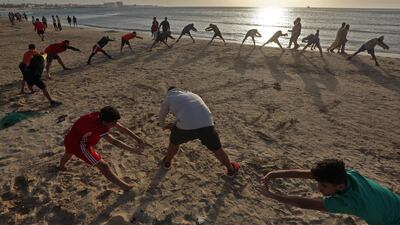
Libyans exercise at the beach before iftar, or breaking the fast, during Ramadan in the capital Tripoli. AFP


_________________
According to the foreign office, about 4.5 million Pakistanis work in the Middle East.
In addition to the 20,000 who have already come back, about 110,000 more overseas Pakistanis have registered a desire to return home.
Pakistan has been chartering flights to bring back stranded nationals, as commercial flights into the country have been halted.
During a briefing Thursday, Moeed Yusuf, the prime minister's special assistant on national security, said that on some flights as many as half the passengers were infected.
"Our ministry of foreign affairs has raised this issue with those countries and we are finding ways so it should not happen again," he said.
Pakistan began easing a nationwide lockdown on Saturday despite reporting another big jump of 1,637 cases, raising the number infections detected so far to 27,474, and 24 new fatalities since Friday that pushed the death toll past 600.
Prime Minister Imran Khan announced his decision to remove restrictions on Thursday, saying the government was unable to financially help the millions of Pakistanis who rely on their daily earnings to survive and feed their families.
Soldiers who manned roadside checkpoints along with police since late March when the lockdown was enforced, were seen leaving for their barracks in the capital, Islamabad, and elsewhere in the country on Saturday.
The government has warned that it will reimpose the lockdown if people do not adhere to social distancing guidelines, which experts say could cause a peak later this month. Although Pakistan has lifted curbs on several economic sectors and allowed business activities to reopen, schools will remain closed until July 15.

