Myanmar's junta chief reduced the prison sentence of ousted leader Aung San Suu Kyi to two years on Monday, after she was sentenced to four years for incitement against the military and breaching Covid rules.
Initially, Suu Kyi “was sentenced to two years' imprisonment under section 505(b) and two years' imprisonment under natural disaster law”, junta spokesman Zaw Min Tun said. But Junta chief Min Aung Hlaing later “pardoned” the sentences she and former president Win Myint were given to “two years imprisonment”, according to a statement read out on state TV.
They would serve their sentences under the house arrest they have been kept under in the capital of Naypyidaw, the statement said, without giving further details.
On Monday evening residents in parts of commercial capital Yangon banged pots and pans — a practice traditionally associated with driving out evil spirits, but which has been used since February to show dissent against the military.
“They will face other charges from the places where they are staying now” in the capital Naypyidaw, the junta spokesman said earlier on Monday, without giving further details.
Suu Kyi, 75, has been detained since generals removed her government in the early hours of February 1, ending Myanmar's brief democratic interlude. The military said it seized power because of widespread election fraud, a claim that independent election observers say lacks evidence.
Aung San Suu Kyi — life in pictures
-

Former US president Barack Obama meeting Myanmar's Aung San Suu Kyi in the Oval Office of the White House in Washington on September 19, 2012. AP -
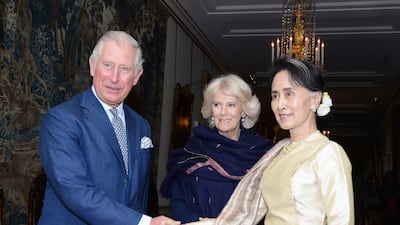
The Prince of Wales and the Duchess of Cornwall greeting Suu Kyi ahead of their meeting at Clarence House in London, in May 2017. PA -
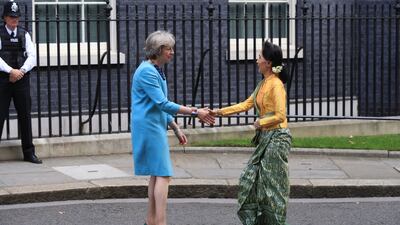
Former UK prime minister Theresa May, left, welcoming Suu Kyi to Downing Street during the Nobel Peace Prize laureate's visit to London, on September 13, 2016. PA -
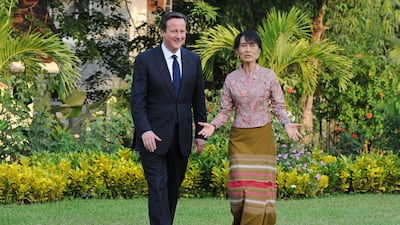
Former UK prime minister David Cameron meeting Suu Kyi at her Lakeside Villa in Rangoon, on April 13, 2012. PA -
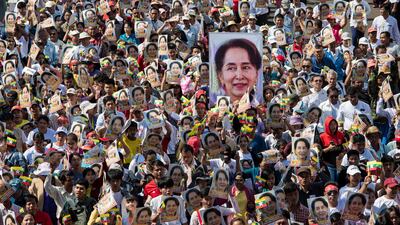
A rally in December 2019 in support of Suu Kyi, then Myanmar's State Counsellor, as she prepares to defend Myanmar at the International Court of Justice in The Hague against accusations of genocide against Rohingya Muslims, in Yangon. AFP -
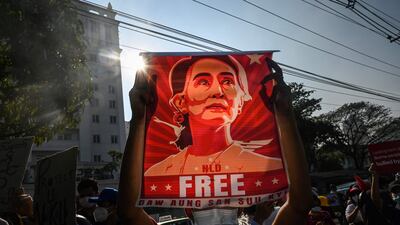
A protester holds up a poster featuring Suu Kyi on February 15 at a demonstration against the military coup, in front of the Central Bank of Myanmar in Yangon. AFP -
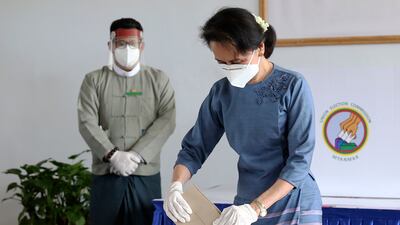
Suu Kyi is pictured voting early ahead of the November 8 general election at the Union Election Commission office in Naypyitaw, Myanmar, on October 29, 2020. AP -
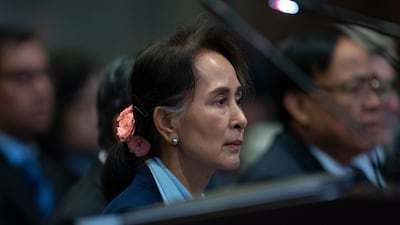
Suu Kyi waits to address judges at the International Court of Justice on the second day of three days of hearings in The Hague, Netherlands on December 11, 2019. AP -
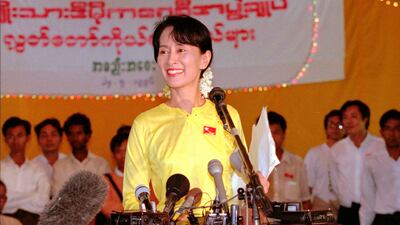
Suu Kyi shares a lighter moment with journalists at the conclusion of the National League for Democracy (NLD) party conference in Rangoon on May 28, 1996. AP -
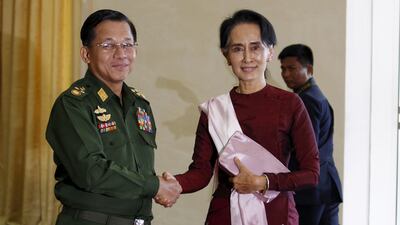
Myanmar's Commander-in-Chief Min Aung Hlaing, left, shakes hands with Suu Kyi before their meeting in Naypyitaw on December 2, 2015. Reuters -
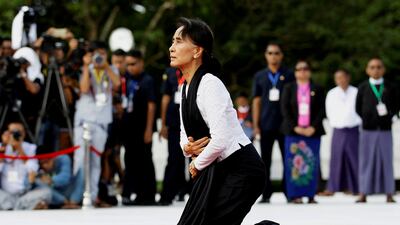
As Myanmar's State Counsellor Suu Kyi attends an event marking the 69th anniversary of Martyrs' Day at the Martyrs' Mausoleum, dedicated to independence heroes, in Yangon on July 19, 2016. Reuters -
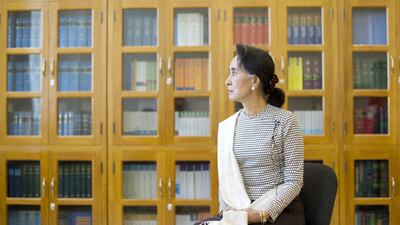
Suu Kyi listens during an interview at parliament in Naypyidaw, on August 25, 2015. AFP


The junta has since added a number of other indictments, including breaching the official secrets act, corruption and electoral fraud.
US Secretary of State Antony Blinken condemned the conviction and called for the Nobel laureate's release.
“The Burmese military regime’s unjust conviction of Aung San Suu Kyi and the repression of other democratically elected officials are yet further affronts to democracy and justice in Burma,” Mr Blinken said in a statement.
“The regime’s continued disregard for the rule of law and its widespread use of violence against the Burmese people underscore the urgency of restoring Burma’s path to democracy.”
The sentencing was the first in a series of cases that Suu Kyi is being prosecuted for since the army seized power, preventing her National League for Democracy party from starting a second five-year term in office. The verdict in another case against her is expected next week.
If found guilty in all the cases, she could face a sentence of more than 100 years. In her long struggle for democracy, she has suffered 15 years of house arrest, starting in 1989.
The incitement case involved statements posted on her party’s Facebook page after she and other party leaders had already been detained by the military, while the coronavirus charge involved a campaign appearance before elections in November last year which her party won overwhelmingly.
Journalists have been barred from proceedings in the special court in the capital, and Suu Kyi's lawyers were recently banned from speaking to the media.
There were protest marches on Sunday against the military government and calls for the release of Suu Kyi and other detained members of her government. An Army lorry deliberately sped into a march of about 30 young people in Yangon, the country’s biggest city, and at least three of the protesters may have been killed, according to unconfirmed reports.
In total, more than 1,300 people have been killed and more than 10,000 arrested in a crackdown on dissent since the coup, a local monitoring group said.