-
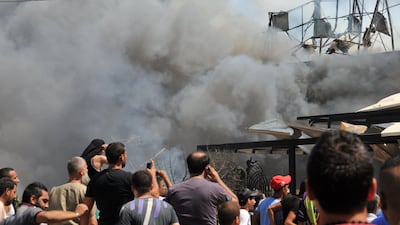
Smoke rises above people gathering near al-taqwa mosque on the site of a powerful explosion in the northern Lebanese city of Tripoli on August 23, 2013. Two powerful explosions killed several people: one rocked the city centre near a mosque and the home of outgoing Prime Minister Najib Mikati, the second one struck near the port of the restive city with a Sunni Muslim majority. The explosions come a week after a suicide car bombing killed 27 people in a Beirut stronghold of the Lebanese Shiite movement Hezbollah, which is fighting alongside Assad's forces. AFP PHOTO IBRAHIM CHALHOUB *** Local Caption *** 789757-01-08.jpg -
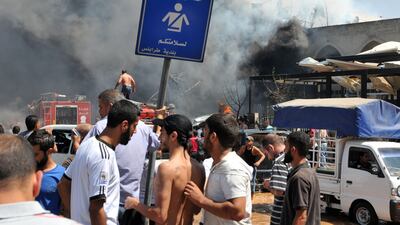
The first blast rocked the city centre near the home of outgoing prime minister Najib Mikati, although his office said he was not in Tripoli at the time. Ibrahim Chalhoub / AFP Photo -
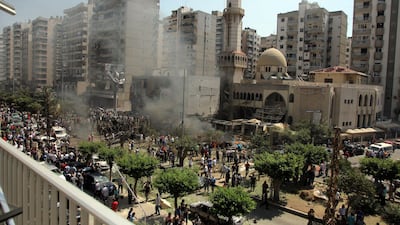
Both explosions were also near mosques on what is the weekly Muslim day of prayer. Ibrahim Chalhoub / AFP Photo -

Tripoli, on the Mediterranean coast, has been marred by deadly violence between Sunnis, who support the armed uprising in neighbouring Syria, and Alawites who support President Bashar Al Assad. -
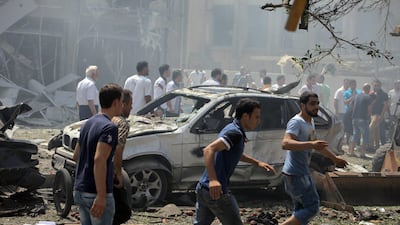
Lebanese television channels aired footage of the dead, of buildings with their fronts blown in and vehicles ablaze, as bystanders rushed to help the wounded. AFP Photo -
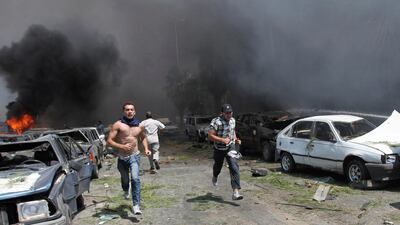
The explosions come a week after a suicide car bombing killed 27 people in a Beirut stronghold of the Lebanese Shiite movement Hizbollah, which is fighting alongside Assad's forces. Omar Ibrahim / Reuters -

The second struck near the port of the restive city with a Sunni Muslim majority, close to the home of former police chief Ashraf Rifi, a security source said. Omar Ibrahim / Reuters -
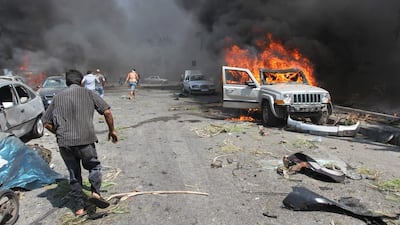
On Wednesday, army chief General Jean Kahwaji said his forces were fighting a "total war" against terrorism whose aim is "to provoke sectarian strife" in the country. Omar Ibrahim / Reuters


In pictures: Twin blast rock Tripoli
Most popular today