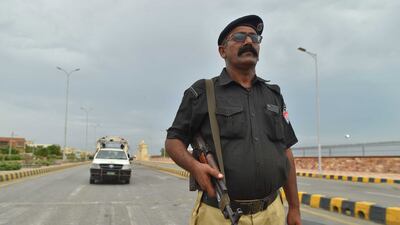
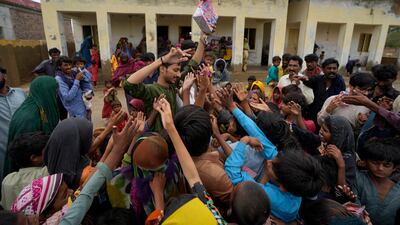
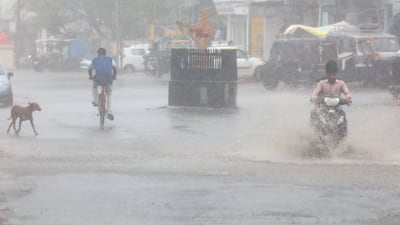
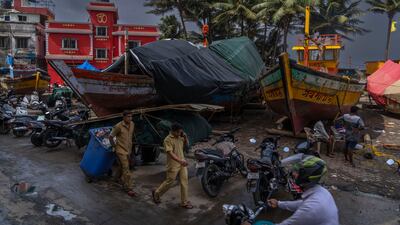
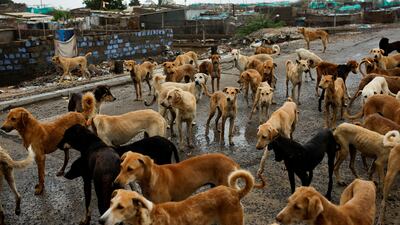
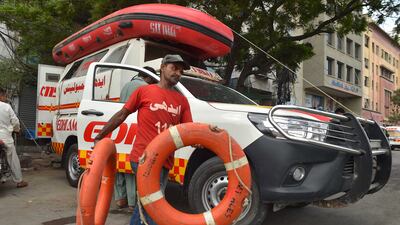
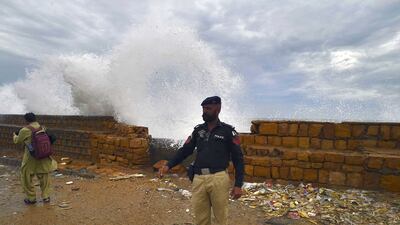
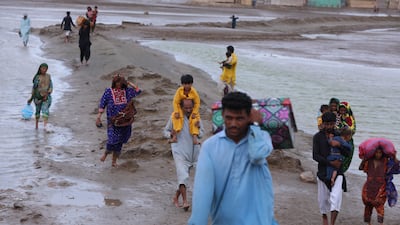
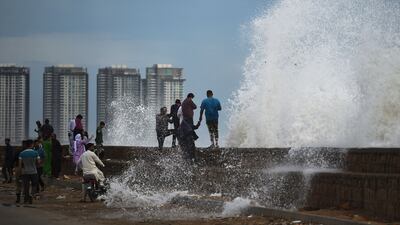
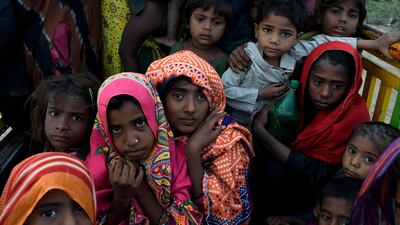
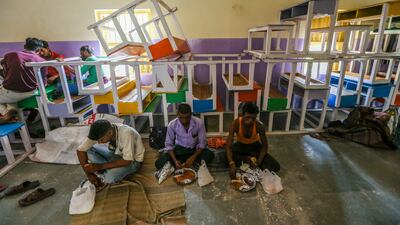
Fujairah Police have told the public to refrain from swimming due to dangerous conditions caused by the storm. Antonie Robertson / The National

Fujairah Police warn public to stay away from beaches due to waves from Cyclone Biparjoy


Salam Al Amir
  • English
  • Arabic

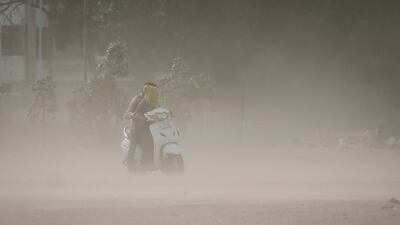
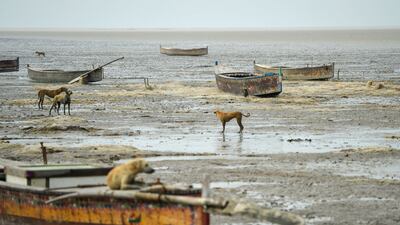
Fujairah Police have urged the public to stay away from beaches due to hazardous conditions caused by Cyclone Biparjoy.

Police also warned people against swimming off the coast due to dangerous high waves.

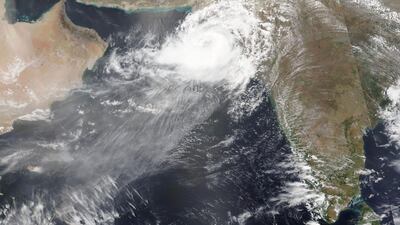
The weather changes have been attributed to Cyclone Biparjoy, which has been brewing in the Arabian Sea in the last week.

The storm is expected to make landfall in Pakistan and western India on Thursday.

Social media users have shared video footage of fierce waves sweeping the beaches in Fujairah.

“The situation is stable and well-monitored,” said Mohamed Al Afkham, director general of Fujairah Municipality.

“We are working in co-operation with the Emergency, Crisis and Disaster Management Department in the emirate.”

The amount of water that swept some beaches in the emirate was small and emergency crews responded quickly to reports of flooding, he said.

"We continue to follow up on the latest developments to the weather condition around the clock and are prepared to act promptly in the event of any emergency," Mr Al Afkham said.

The cyclone is forecast to have wind speeds between 130kph to 150kph, the National Centre of Meteorology has said.

Cyclone Biparjoy, whose name means "destruction", was declared severe by Oman on June 7.

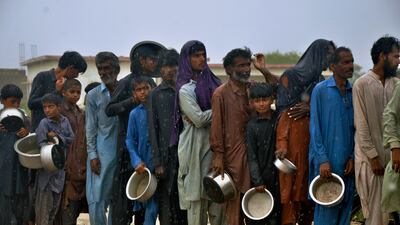
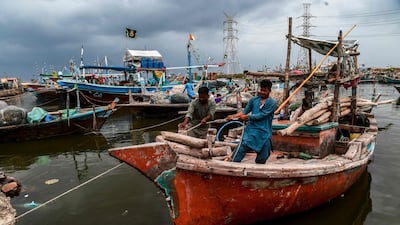
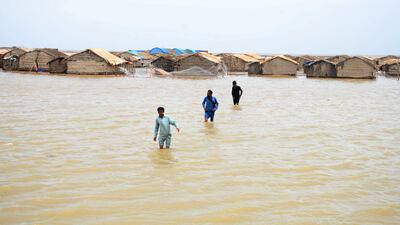
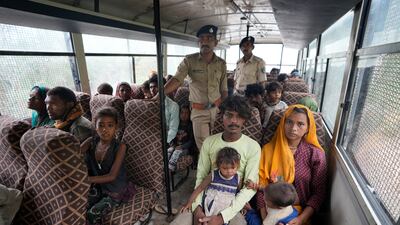
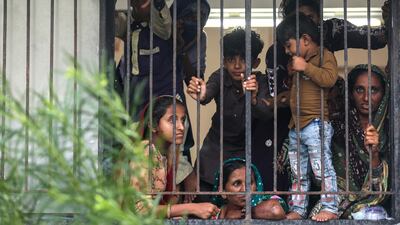
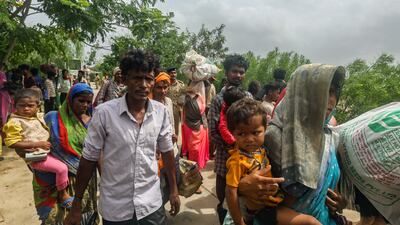
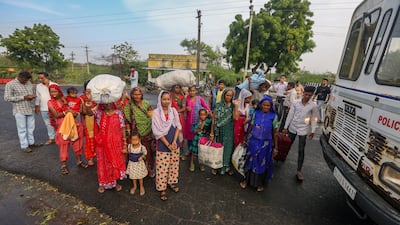
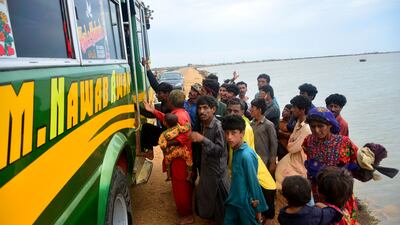
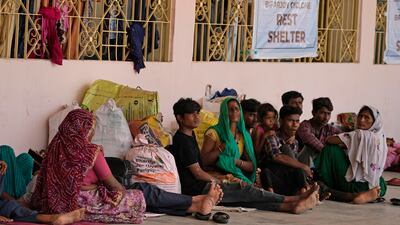
Cyclone Biparjoy – in pictures

TV: World Cup Qualifier 2018 matches will be aired on on OSN Sports HD Cricket channel

What vitamins do we know are beneficial for living in the UAE

Vitamin D: Highly relevant in the UAE due to limited sun exposure; supports bone health, immunity and mood.Vitamin B12: Important for nerve health and energy production, especially for vegetarians, vegans and individuals with absorption issues.Iron: Useful only when deficiency or anaemia is confirmed; helps reduce fatigue and support immunity.Omega-3 (EPA/DHA): Supports heart health and reduces inflammation, especially for those who consume little fish.

The specs

Engine: 6.2-litre V8

Transmission: ten-speed

Power: 420bhp

Torque: 624Nm

Price: Dh325,125

On sale: Now

Building boom turning to bust as Turkey's economy slows

Deep in a provincial region of northwestern Turkey, it looks like a mirage - hundreds of luxury houses built in neat rows, their pointed towers somewhere between French chateau and Disney castle.

Meant to provide luxurious accommodations for foreign buyers, the houses are however standing empty in what is anything but a fairytale for their investors.

The ambitious development has been hit by regional turmoil as well as the slump in the Turkish construction industry - a key sector - as the country's economy heads towards what could be a hard landing in an intensifying downturn.

After a long period of solid growth, Turkey's economy contracted 1.1 per cent in the third quarter, and many economists expect it will enter into recession this year.

The country has been hit by high inflation and a currency crisis in August. The lira lost 28 per cent of its value against the dollar in 2018 and markets are still unconvinced by the readiness of the government under President Recep Tayyip Erdogan to tackle underlying economic issues.

The villas close to the town centre of Mudurnu in the Bolu region are intended to resemble European architecture and are part of the Sarot Group's Burj Al Babas project.

But the development of 732 villas and a shopping centre - which began in 2014 - is now in limbo as Sarot Group has sought bankruptcy protection.

It is one of hundreds of Turkish companies that have done so as they seek cover from creditors and to restructure their debts.

What is blockchain?

Blockchain is a form of distributed ledger technology, a digital system in which data is recorded across multiple places at the same time. Unlike traditional databases, DLTs have no central administrator or centralised data storage. They are transparent because the data is visible and, because they are automatically replicated and impossible to be tampered with, they are secure.

The main difference between blockchain and other forms of DLT is the way data is stored as ‘blocks’ – new transactions are added to the existing ‘chain’ of past transactions, hence the name ‘blockchain’. It is impossible to delete or modify information on the chain due to the replication of blocks across various locations.

Blockchain is mostly associated with cryptocurrency Bitcoin. Due to the inability to tamper with transactions, advocates say this makes the currency more secure and safer than traditional systems. It is maintained by a network of people referred to as ‘miners’, who receive rewards for solving complex mathematical equations that enable transactions to go through.

However, one of the major problems that has come to light has been the presence of illicit material buried in the Bitcoin blockchain, linking it to the dark web.

Other blockchain platforms can offer things like smart contracts, which are automatically implemented when specific conditions from all interested parties are reached, cutting the time involved and the risk of mistakes. Another use could be storing medical records, as patients can be confident their information cannot be changed. The technology can also be used in supply chains, voting and has the potential to used for storing property records.

MATCH INFO

Uefa Champions League, Group C
Liverpool v Red Star Belgrade
Anfield, Liverpool
Wednesday, 11pm (UAE)

Reading List

Practitioners of mindful eating recommend the following books to get you started:

Savor: Mindful Eating, Mindful Life by Thich Nhat Hanh and Dr Lilian Cheung

How to Eat by Thich Nhat Hanh

The Mindful Diet by Dr Ruth Wolever

Mindful Eating by Dr Jan Bays

How to Raise a Mindful Eaterby Maryann Jacobsen

Mercer, the investment consulting arm of US services company Marsh & McLennan, expects its wealth division to at least double its assets under management (AUM) in the Middle East as wealth in the region continues to grow despite economic headwinds, a company official said.

Mercer Wealth, which globally has $160 billion in AUM, plans to boost its AUM in the region to $2-$3bn in the next 2-3 years from the present $1bn, said Yasir AbuShaban, a Dubai-based principal with Mercer Wealth.

Within the next two to three years, we are looking at reaching $2 to $3 billion as a conservative estimate and we do see an opportunity to do so,” said Mr AbuShaban.

Mercer does not directly make investments, but allocates clients’ money they have discretion to, to professional asset managers. They also provide advice to clients.

“We have buying power. We can negotiate on their (client’s) behalf with asset managers to provide them lower fees than they otherwise would have to get on their own,” he added.

Mercer Wealth’s clients include sovereign wealth funds, family offices, and insurance companies among others.

From its office in Dubai, Mercer also looks after Africa, India and Turkey, where they also see opportunity for growth.

Wealth creation in Middle East and Africa (MEA) grew 8.5 per cent to $8.1 trillion last year from $7.5tn in 2015, higher than last year’s global average of 6 per cent and the second-highest growth in a region after Asia-Pacific which grew 9.9 per cent, according to consultancy Boston Consulting Group (BCG). In the region, where wealth grew just 1.9 per cent in 2015 compared with 2014, a pickup in oil prices has helped in wealth generation.

BCG is forecasting MEA wealth will rise to $12tn by 2021, growing at an annual average of 8 per cent.

Drivers of wealth generation in the region will be split evenly between new wealth creation and growth of performance of existing assets, according to BCG.

Another general trend in the region is clients’ looking for a comprehensive approach to investing, according to Mr AbuShaban.

“Institutional investors or some of the families are seeing a slowdown in the available capital they have to invest and in that sense they are looking at optimizing the way they manage their portfolios and making sure they are not investing haphazardly and different parts of their investment are working together,” said Mr AbuShaban.

Some clients also have a higher appetite for risk, given the low interest-rate environment that does not provide enough yield for some institutional investors. These clients are keen to invest in illiquid assets, such as private equity and infrastructure.

“What we have seen is a desire for higher returns in what has been a low-return environment specifically in various fixed income or bonds,” he said.

“In this environment, we have seen a de facto increase in the risk that clients are taking in things like illiquid investments, private equity investments, infrastructure and private debt, those kind of investments were higher illiquidity results in incrementally higher returns.”

The Abu Dhabi Investment Authority, one of the largest sovereign wealth funds, said in its 2016 report that has gradually increased its exposure in direct private equity and private credit transactions, mainly in Asian markets and especially in China and India. The authority’s private equity department focused on structured equities owing to “their defensive characteristics.”

Story%20behind%20the%20UAE%20flag
%3Cp%3EThe%20UAE%20flag%20was%20first%20unveiled%20on%20December%202%2C%201971%2C%20the%20day%20the%20UAE%20was%20formed.%C2%A0%3C%2Fp%3E%0A%3Cp%3EIt%20was%20designed%20by%20Abdullah%20Mohammed%20Al%20Maainah%2C%2019%2C%20an%20Emirati%20from%20Abu%20Dhabi.%C2%A0%3C%2Fp%3E%0A%3Cp%3EMr%20Al%20Maainah%20said%20in%20an%20interview%20with%20%3Cem%3EThe%20National%3C%2Fem%3E%20in%202011%20he%20chose%20the%20colours%20for%20local%20reasons.%C2%A0%3C%2Fp%3E%0A%3Cp%3EThe%20black%20represents%20the%20oil%20riches%20that%20transformed%20the%20UAE%2C%20green%20stands%20for%20fertility%20and%20the%20red%20and%20white%20colours%20were%20drawn%20from%20those%20found%20in%20existing%20emirate%20flags.%3C%2Fp%3E%0A
NYBL PROFILE

Company name: Nybl 

Date started: November 2018

Founder: Noor Alnahhas, Michael LeTan, Hafsa Yazdni, Sufyaan Abdul Haseeb, Waleed Rifaat, Mohammed Shono

Based: Dubai, UAE

Sector: Software Technology / Artificial Intelligence

Initial investment: $500,000

Funding round: Series B (raising $5m)

Partners/Incubators: Dubai Future Accelerators Cohort 4, Dubai Future Accelerators Cohort 6, AI Venture Labs Cohort 1, Microsoft Scale-up 

Key facilities
  • Olympic-size swimming pool with a split bulkhead for multi-use configurations, including water polo and 50m/25m training lanes
  • Premier League-standard football pitch
  • 400m Olympic running track
  • NBA-spec basketball court with auditorium
  • 600-seat auditorium
  • Spaces for historical and cultural exploration
  • An elevated football field that doubles as a helipad
  • Specialist robotics and science laboratories
  • AR and VR-enabled learning centres
  • Disruption Lab and Research Centre for developing entrepreneurial skills
UAE currency: the story behind the money in your pockets
About Tenderd

Started: May 2018

Founder: Arjun Mohan

Based: Dubai

Size: 23 employees 

Funding: Raised $5.8m in a seed fund round in December 2018. Backers include Y Combinator, Beco Capital, Venturesouq, Paul Graham, Peter Thiel, Paul Buchheit, Justin Mateen, Matt Mickiewicz, SOMA, Dynamo and Global Founders Capital

Updated: June 15, 2023, 10:26 AM