Two Emiratis will be part of a space research programme that involves living in near-isolation for eight months to replicate the challenges of flights to the Moon and Mars.
The names of the two citizens — one of whom will take part in the arduous mission and the other a backup — will be announced soon, the Mohammed bin Rashid Space Centre said.
The pair have been selected from a shortlist of ten candidates announced last year.
The mission will involve an international crew of six people living inside the NEK experimental complex in Moscow for eight months.
Sirius 20/21, the official name of the project, will measure the psychological and physiological impact on humans living in the extreme environments that astronauts would face during space travel.
As space nations work towards landing humans on Mars, research into how lengthy space flights affect the human body and mind remains critical. Astronauts will have to overcome challenges such as exposure to radiation, long periods of time spent in microgravity and long periods away from family and friends.
“The mission is part of the Scientific International Research in Unique Terrestrial Station (Siruis) and will study the effects of long duration isolation and confinement,” the space centre said.
“The members of crew one will be revealed soon. The crew will join the UAE Analog Mission 1 — the first Emirati analog mission.”
After a delay caused by the Covid-19 pandemic, the experiment is expected to begin in November.
The National explains what the project will involve.
Simulation of a space-like environment
The experiment is part of a five-year-long research programme by Russia’s Institute of Biomedical Problems and Nasa’s Human Research Programme.
It involves three Sirius missions, with the first one completed in 2019 when six crew members lived in isolation for four months.
The final one is expected to be 12 months long and to be the most challenging.
Participants will be sealed inside tubular modules, with multiple cameras watching them around the clock.
The structure has its own atmosphere and air pressure to create a space-like environment.
Dedicated rooms for each participant will help with privacy, while a small living room will allow them to socialise and watch television.
Each bedroom has a tiny bed, desk and a cupboard.
They will be cut off from the world outside for the entire duration of the experiment.
What is the scientific purpose?
The crew members will be assigned simulated space missions during their stay in the facility.
“Participants will experience environmental aspects similar to those astronauts are expected to experience on future missions to Mars,” Nasa said on its website.
“A small international crew will live together in isolation for eight months conducting scientific research, using virtual reality and performing robotic operations among a number of other tasks during the lunar mission.
“Results from ground-based missions like this help Nasa prepare for the real-life challenges of space exploration and provide important scientific data to solve some of these problems and to develop countermeasures.”
Scientists will be measuring the participants’ psychological and physiological conditions during the experiment.
Why is the UAE participating?
The UAE has long-term plans to send Emiratis to the lunar surface and to build a human settlement on Mars by 2117.
The Mohammed bin Rashid Space Centre is building a Dh500 million Mars simulation city in Dubai, with construction expected to begin next year.
The design includes analog facilities that can be used by Emiratis and other international participants in the future.
“The Mars Science City will be a platform where we’re going to have our future space robotics lab, future analog facilities, a habitat and a space sustainability lab,” Adnan Al Rais, Mars 2117 programme manager, said.
“We’re currently working on the design. Then we’ll do the construction for the next two years. Hopefully, the city will be ready and operational towards the end of 2024.
“We are also working with our partners on identifying the requirements for unique analogue facilities as part of the Mars Science City.”
Remarkable images of the UAE from space — in pictures
-
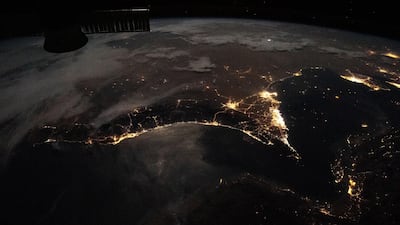
The UAE (centre-right) is well-lit during the night and is very visible from space. This image was captured from the International Space Station. Nasa -
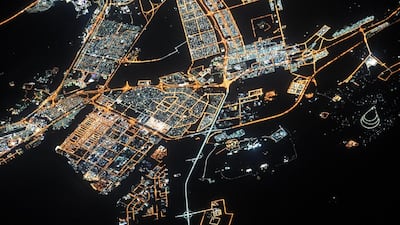
Nasa astronaut Jessica Meir shared this image of Abu Dhabi two months after Emirati astronaut Hazza Al Mansouri returned to Earth from the space station. Jessica Meir Twitter -

A stunning image of Downtown Dubai taken in 2012 by the Pleiades satellite. The Burj Khalifa is visible. European Space Agency -
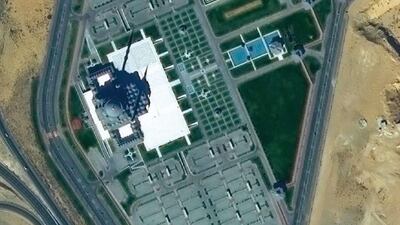
The largest mosque in Sharjah captured by Emirati satellite KhaliafSat. Mohammed bin Rashid Space Centre -
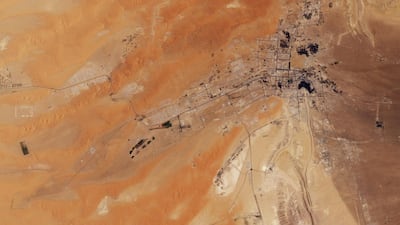
An image of Al Ain in 1984, when there was not a lot of greenery. Abu Dhabi emirate is now considered a green oasis with a major focus in agriculture. Nasa's Earth Observatory -
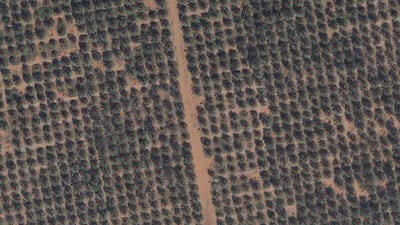
The Mohammed bin Rashid Space Centre counted 45,000 palm trees in Al Ain. The satellite images are helping to monitor the quantity and health of thousands of trees. MBRSC -

Umm Al Quwain, one of the seven emirates of the UAE, seen from space. The emirate is on a peninsula and has many attractive sites, including ancient forts. Zoom Earth -
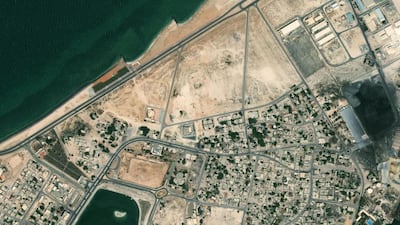
The Corniche Park in Umm Al Quwain (top) and Municipal Park on the bottom side of the image. Zoom Earth -
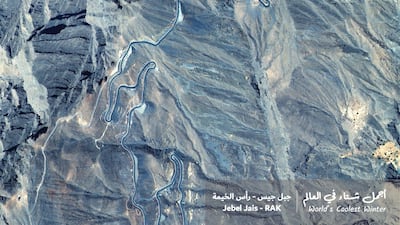
KhalifaSat captured Jebel Jais, the highest summit in the UAE which is about 2,000 metres above sea level. It also has the world’s longest zipline. MBRSC -
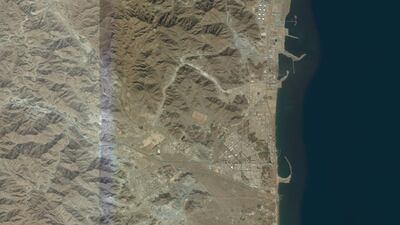
Fujairah is on the east coast of the UAE and is known for its beaches and the Hajar mountains. The mountainous areas are visible in this image, as well as the Fujairah International Airport and the Port Fujairah on the top right. Zoom Earth -
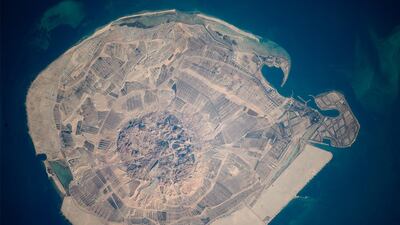
Abu Dhabi’s Sir Bani Yas Island captured from space in 2010. The island is a major tourist attract with a mix of wildlife, archaeological sites and luxury hotel retreats. Nasa -
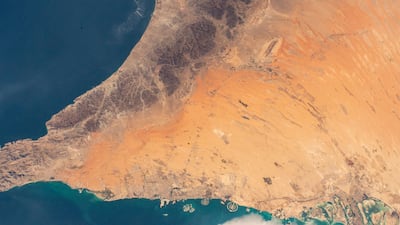
Dubai seen from the International Space Station. Nasa -
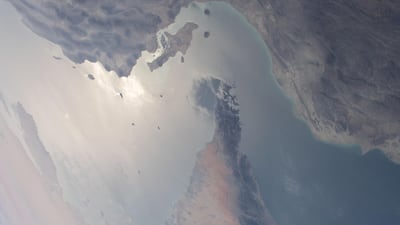
The Strait of Hormuz separates the UAE and Iran. Nasa -
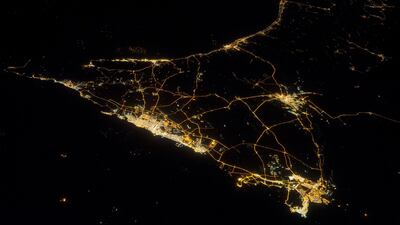
The UAE captured from space in 2013. Nasa’s Earth Observatory -
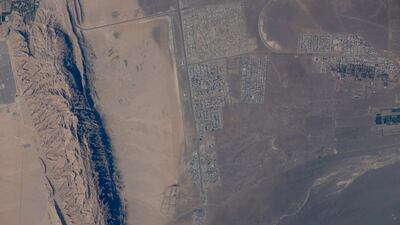
Hazza Al Mansouri took this photo of Umm Ghafa in Al Ain from the space station in 2019. It is the village where his colleague and reserve astronaut Sultan Al Neyadi grew up. Sultan Al Neyadi twitter -
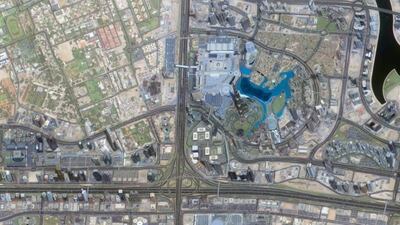
The Dubai Expo site captured by KhalifaSat in 2019. The much-anticipated event is set to begin on October 1, 2021. MBRSC -
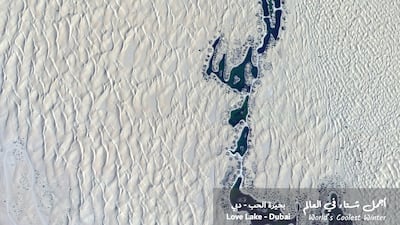
The man-made Love Lake in Dubai’s Al Qudra desert. MBRSC -
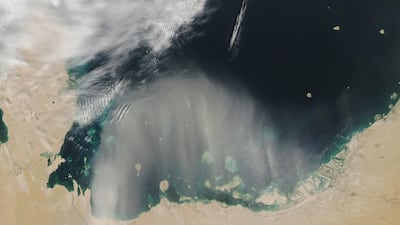
Dust blows over the Arabian Gulf in 2013. The UAE is on the right side of this image and Saudi Arabia is on the left. Nasa’s Earth Observatory -
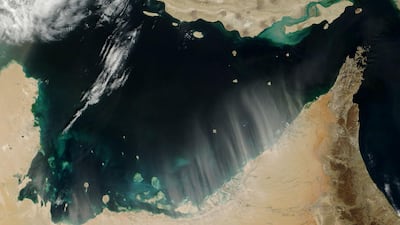
A dust plume over the UAE in 2009. Nasa -
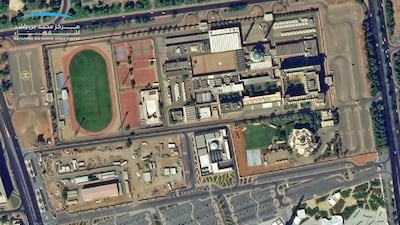
The Sheikh Khalifa bin Zayed Al Nahyan Mosque in Al Ain captured by KhalifaSat. It features a magnificent dome, which measures 86 metres in diameter. MBRSC -
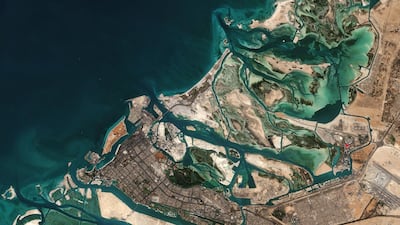
The Copernicus Sentinel 2 mission captured this striking view of Abu Dhabi from space. The dark green patch of land is the Mangrove National Park. Ferrari World can be seen in the centre-right of the image. European Space Agency -
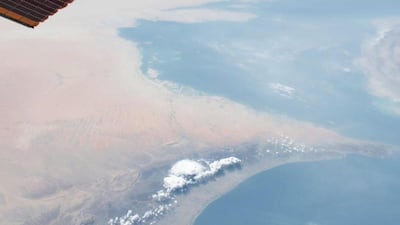
An incredible view of the UAE captured by Hazza Al Mansouri in 2019. Hazza Al Mansouri twitter -
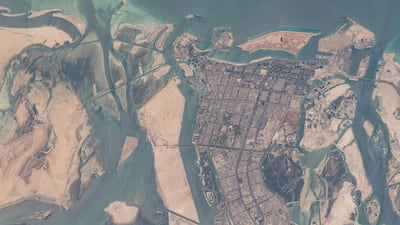
An image of Abu Dhabi taken from the International Space Station as it orbited 423 kilometres above Oman. Nasa -
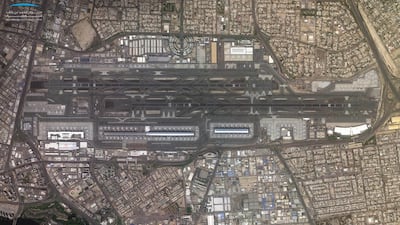
Planes can be seen parked at Dubai International Airport during the Coronavirus Pandemic in May 2020, when travel was restricted. MBRSC -
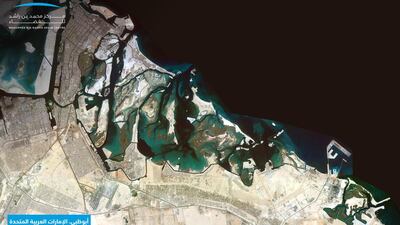
KhalifaSat captured this stunning image of Abu Dhabi in 2020. MBRSC -
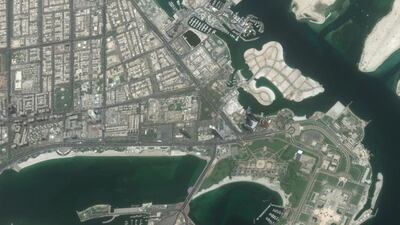
Another view of the UAE’s capital city of Abu Dhabi from space. MBRSC -
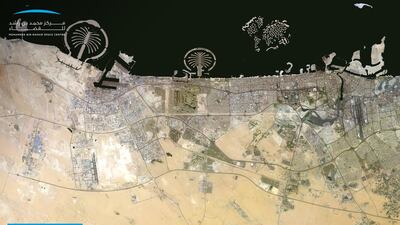
One of the most recent photos of Dubai taken in 2020 from space, showing the Palm Jumeirah, Palm Jebel Ali and the World Islands. MBRSC -
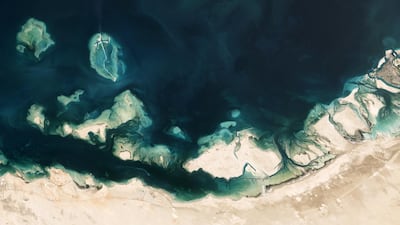
Mangroves, salt domes, salt flats and coral reefs on the south-west coast of the UAE, near Abu Dhabi, captured in 2001. Nasa’s Earth Observatory -
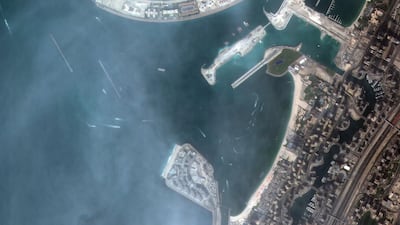
The first image captured by KhalifaSat in 2018. It is the Palm Jumeirah in Dubai. MBRSC -
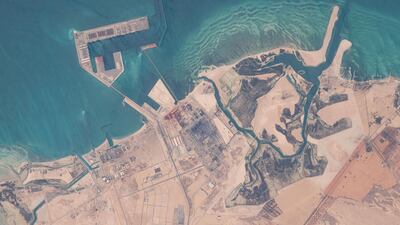
A manufacturing site on the Arabian Gulf coast of the UAE, near Abu Dhabi. Nasa