


Despite a chorus of financiers, politicians and self-satisfied pundits claiming that the Covid-19 pandemic is an unforeseen and even unforeseeable black swan, this crisis is a different beast entirely.
It is an obvious grey rhino – that is, a high-impact scenario that was always highly likely to occur. The pandemic was sending clear signals that it was getting ready to charge, and too many people with the power to head it off ignored those warnings for too long.
Unlike the black swan that appears only in hindsight, grey rhino theory is forward-looking. It is about actively seeing what’s in front of us and challenging ourselves to act.
-
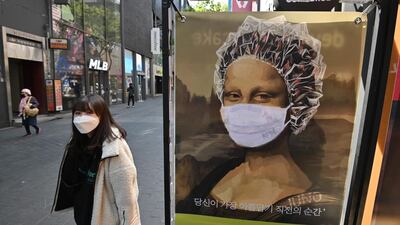
A woman wearing a face mask walks past an advertisement of a hair shop at a shopping district in Seoul. AFP -

Pacific Park's solar-powered Ferris wheel lights show a green "Earth" logo at sunset on Santa Monica Pier for Earth Day, in Santa Monica, California. AP -

A water police boat is seen as the Ruby Princess cruise ship docks at Port Kembla in Wollongong, Australia. Getty -
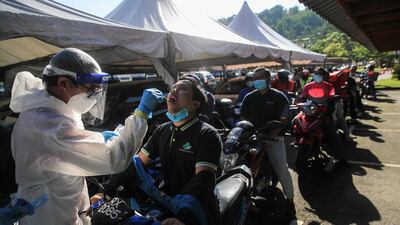
A health worker collects a sample from a man at a free coronavirus community screening service in Kuala Lumpur, Malaysia. EPA -
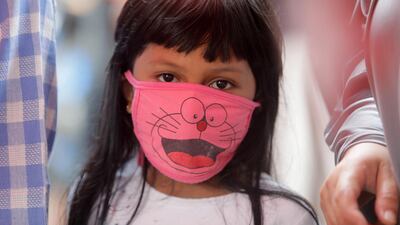
An Indonesian child wears a hand made protective mask at a temporary meat market, ahead of Ramadan in Banda Aceh, Indonesia. EPA -

A pedestrian is reflected in the window of a nail salon during a nationwide social distancing and stay-at-home order imposed due to coronavirus in Ho Chi Minh city, Vietnam. Bloomberg -
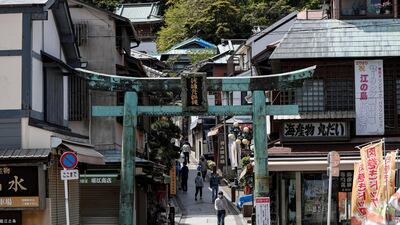
Visitors wearing protective face masks walk on a sightseeing spot on Enoshima Island after government asked citizens to be more diligent on social distancing under the state of emergency in Fujisawa, south of Tokyo, Japan. Reuters -
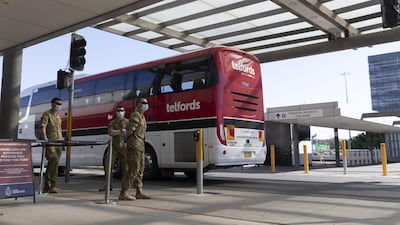
Army personnel watch as a charter bus that unloaded crew from the Ruby Princess Cruise ship departs Sydney Airport in Sydney, Australia. Getty -
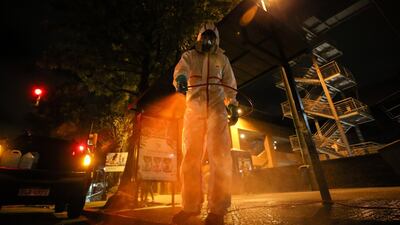
A municipality worker sprays disinfectant at a bus stop as a preventive measure against coronavirus in Montevideo, Uruguay. EPA -
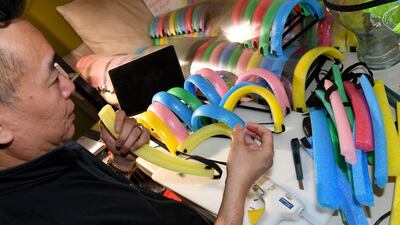
School of Nursing assistant professor Dr Rhigel Jay Tan, a licensed nurse practitioner in psychiatric mental health, makes custom-made face shields called "iCareFaceShields" at his home for health care workers amid the coronavirus pandemic in Las Vegas, Nevada. AFP -
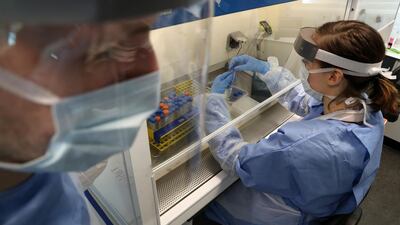
Technicians carry out a sample transfer during the opening of the new Covid-19 testing lab at Queen Elizabeth University Hospital in Glasgow, Scotland. Getty -
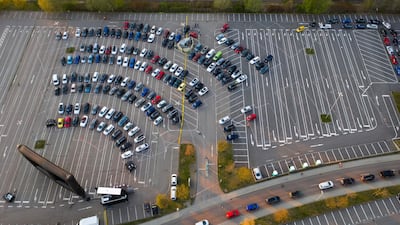
Visitors gather for a drive-in cinema event in Chemnitz, Germany. AP -

The Italian-operated cruise ship the Costa Atlantica is anchored at a port in Nagasaki, southern Japan. AP


The coronavirus crisis is a catalyst for an urgently needed reset of our global mentality, reminding us to hold both governments and ourselves as citizens responsible for stepping up to the clear and present dangers that threaten our survival.
As we move past the initial shock of the pandemic, many of us are thinking about how best to emerge from this global public health, economic and human catastrophe. We don’t want to get “back to normal” because what we accepted as normal is what got us into this mess. Rather, we should want to create a new and better reality.
How could so many leaders across society have turned such a blind eye to giant, red warning flags for so long? Once we understand that, how can we use our knowledge to switch from a passive, fatalistic mode to an active, problem-solving frame?
The alarm bells rung by experts about how poorly prepared the world has been for the pandemics have been well documented. The situation was predicted by the World Health Organisation and even gamed out in a scenario-planning exercise in the US under the Trump administration. In a widely shared TED Talk in 2015, Bill Gates made the point before carefully proceeding to outline what the world needed to do.
Those in policy circles will give you all kinds of knowing reasons why pandemic warnings went ignored: politics, “the problem is too big and expensive and complicated”, entrenched bureaucracies and so on and so forth. They’ll rub their chins to look thoughtful, but have no real answers. They are there to tell you how things are, not how to change them.
Pleading ignorance was particularly fashionable in the aftermath of the 2008 financial crisis, when leaders became too eager to call out, “Black swan! Nobody could have seen it coming!” even though many elements of that crisis were predictable, too.

Together, these attitudes have bred complacency and an accountability vacuum that have made it easy for everyone to dodge responsibility. But that is an explanation, not an excuse.
Instead of focusing mainly on why problems are not readily solvable, our priority needs to be on what it takes, from governments and civil society, to head off grey rhinos.
The solution begins with a reset of expectations. This requires building mutual trust between citizens and governments, beginning with two-way transparency involving governments sharing much more information and citizens consuming and using that information responsibly.
The uncomfortable truth is that governments often fail to make tough choices because citizens don't want them to. People don't want short-term pain even if it prevents something much worse down the road. They want to feel secure now. This toxic status quo encourages governments to drag their feet in the face of wicked problems, which in turn leads citizens to lower their expectations of what leaders expect them to do.
The coronavirus pandemic and its domino effect – the most wicked of wicked problems – has upended reality. It has exposed many other thorny and unaddressed challenges. Extreme inequality that puts the greatest burden on those who can least afford it. Deep financial fragilities, including dangerous levels of debt. Inadequate healthcare infrastructure.
When governments try to sweep problems under the rug for too long, they increase the chances of catastrophe when the dam finally breaks. That is why, as painful as it may be, it is better for governments to be open about challenges sooner rather than later.
The coronavirus also illustrates the power of regularly and publicly monitoring progress. Daily releases of epidemiological statistics provide a natural experiment in measuring how governments are doing in the fight to save lives. In every country, these figures are imprecise; because of test shortages, inconsistencies in counting and other technical challenges, they far understate the reality. But they give everyone a way to measure progress.
Contrary to the conclusions of some observers, differences in effectiveness are independent of whether a country’s political system is democratic or not. Rather, they depend upon how transparent and proactive governments are, and how much their populations both trust them to solve the problem and play their own roles in doing so.
Tracking focuses attention on issues while clarifying solutions and reassuring people that progress is possible. If a situation seems hopeless, citizens are less likely to do their part to help fix it or to approve of leaders expending resources to do so.
Hopelessness and a lack of information, moreover, leave the door open for citizens to make up their own, alternate realities. Social media has allowed everyone to become instant epidemiologists, market sages, economists and one-size-fits-all critics. Tribes assemble, picking and choosing the information that suits them.
Protesters in the US, for instance, have been endangering themselves and others by demanding that the government loosen stay-at-home orders. They see themselves as preserving their “liberty” to work and to be entertained.
Choosing one’s own reality is a way of asserting control over a situation when people feel they have none, and little in recent memory has made so many people feel so powerless as the coronavirus and the economic destruction it has wrought.

Governments ought to recognise the benefits of being upfront about the nature of the problems they face, involving citizens in building solutions and then tracking their progress. Citizens, of course, must do their part, too. They ought to heed information and consume it responsibly, differentiating between what they need to hear and what they simply want to.
The rise of open-data projects and participatory budgeting have allowed governments to invite input from citizens more directly than ever before. Through these platforms, policymakers communicate the problem and the steps they are taking to fix it, then solicit feedback from citizen stakeholders. This can change citizens’ expectations of what can and should be done, making tough decisions easier.
Governments also are benefiting from comparing their own progress to that of their peers. Performance-tracking tools like Transparency International’s Corruption Perceptions Index, the World Economic Forum’s Global Competitiveness Index and the Programme for International Student Assessment (better known as PISA) all have helped to shape government policies for the better.
Similarly, the Sustainable Development Goals provide a powerful road map for tracking initiatives to address many of the grey rhino risks the world still faces: inequality, hunger, climate and 14 other worthy efforts.
There is one final benefit to these tools that ought to appeal to anyone in a position of power: they make it easier to give credit to leaders who work toward solutions to pressing policy problems, and hold accountable those who kick the crisis down the road.
Michele Wucker is a Chicago-based strategist and author of international bestseller The Gray Rhino: How to Recognize and Act on the Dangers We Ignore

