
For decades, the Arabian Gulf was synonymous with oil and gas. Certainly, by fuelling the GCC countries’ rapid development, the significance attached to these resources is understandable. However, the assumption that hydrocarbons are the be-all and end-all of the Gulf economy is one that is looking increasingly outdated.
In an interview with The National this week, Abdulaziz Alobaidli, director general for regulatory affairs at the Department of Energy, said Abu Dhabi’s power demand is expected to double by 2050, driven by the rapid expansion of its economy, growing population and increasing digital infrastructure.
At first glance, a doubling of the emirate’s electricity demand sounds like an infrastructure headache. It is better read as a measure of how quickly the emirate’s economy is changing. In fact, Abu Dhabi’s experience is something of a test case that illustrates the profound economic and energy changes that are defining the 21st-century Gulf.
Hydrocarbons will remain vital, but the next phase of development will depend increasingly on the ability to provide large quantities of reliable and affordable electricity. Data centres need it. Desalination plants need it. Advanced manufacturing needs it. Electric transport will need more of it. The extraordinary computing requirements of AI alone are creating a new source of demand.
This paints a picture of the Gulf economy that is more complicated but also more interesting. The power required to keep Abu Dhabi’s factories operating and servers running around the clock will have to come from cleaner technologies – and the emirate is already showing how this might be done.
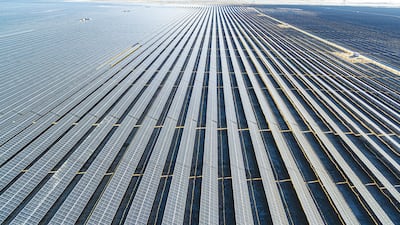
Last year, the UAE began a facility to provide renewable energy at scale. Masdar – Abu Dhabi's renewable energy company – in partnership with the Emirates Water and Electricity Company, is building the $6 billion (Dh22 billion) project that could produce one gigawatt of uninterrupted clean power when it starts next year. According to Mr Alobaidli, the contribution of clean and renewable energy “is expected to reach 60 per cent in the coming five years [from 45 per cent currently] and then we will increase it further in the coming years”.
A growing economy needs roads, ports and housing – but it also needs power. If anything, the Iran conflict has shed extra light on the UAE’s efforts to diversify its economy and trade networks. A consequence of this is increasing competitiveness. As Abu Dhabi can plan to meet a doubled demand for electricity, it is getting ahead in a rapidly changing region.
There is a balance to be struck; demand for electricity must not be allowed to outstrip capacity. This is something that requires foresight and realism, and it is clear that Abu Dhabi is thinking long term.