

Since the beginning of pandemic, Europe has had a particularly tortured relationship with Covid-19 lockdowns. That they happened at all was an early surprise of the pandemic. In an interview last December, the architect of Britain’s lockdown, Neil Ferguson, recalled seeing the early success of the policy in China. “We couldn’t get away with it in Europe, we thought,” he said. “And then Italy did. And we realised we could.”
Suddenly, governments had the confidence to impose previously unthinkable restrictions on people and their civil liberties. And with Covid-19 once again on the rise in Europe, a number of countries are facing the potential need to return to strict controls on movement.
With vaccines and improved treatment methods, much has changed since the first ones. Many find the case for restrictions a great deal weaker. People are weary, and a significant minority are very angry.
-
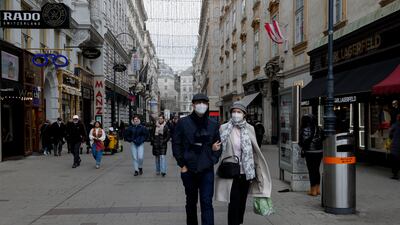
People wearing face masks walk over through a shopping street in Vienna, Austria. Austria is to enter another nationwide lockdown amid soaring infection and death rates. AP photo -
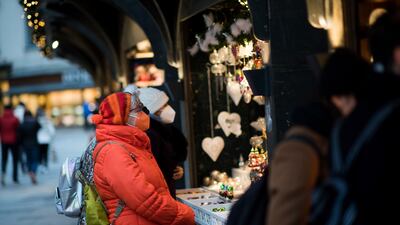
People wearing face masks visit a Christmas market in Vienna. AP -

Police officers monitor compliance with the coronavirus measures in Innsbruck's old town during the first day of a nationwide lockdown for people not yet vaccinated. Getty Images -

A student tests herself for coronavirus before starting lessons at a grammar school in Dresden, Germany. Reuters -

Voting takes place on proposed new measures to address a recent spike in coronavirus cases, at the German lower house of parliament in Berlin. Reuters -
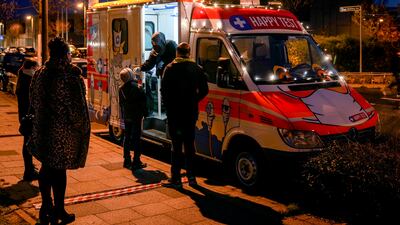
A medical worker carries out a rapid test at a mobile centre in Frankfurt. AP -
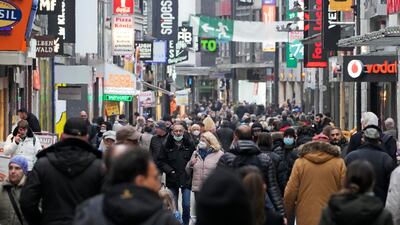
People fill the streets shopping in Cologne. AP -

An abandoned testing centre in Frankfurt. AP -
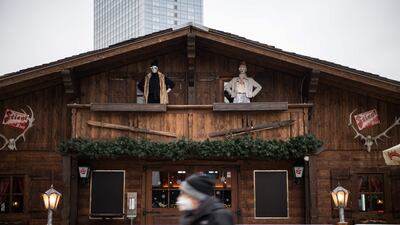
A person wearing a face mask walks past a booth of a yet to be opened Christmas market in Berlin. AFP -

Tourists arrive at the mobile vaccination point installed by Spain's Valencia Health Ministry in Benidorm. Reuters -

Emergency room staff protest against staffing shortage issues and the management of the Italian National Health Service during the Covid-19 pandemic, in central Rome. AFP -
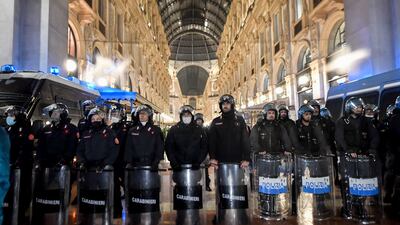
Riot police patrol the Galleria Vittorio Emanuele II shopping arcade during a protest against the Covid-19 vaccination green pass, in Milan. AP -
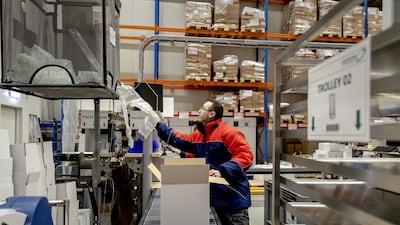
A worker prepares vaccines for shipment at the Movianto distribution centre in Oss, in the Netherlands. EPA -

Visitors to Efteling Park have their CoronaCheck App QR code scanned at the entrance of the amusement park in Kaatsheuvel. EPA -
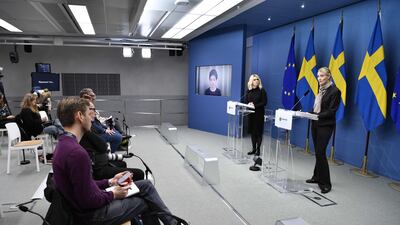
Ministers in Sweden attend a press conference on the new coronavirus restrictions, in Stockholm. Sweden will introduce Covid-19 vaccine passes for public events with more than 100 people. AFP


From November 22, Austria, which has the lowest vaccination rate in Western Europe, will implement a 20-day full lockdown. By February, the government will make it mandatory to have the vaccine, making Austria one of only four countries globally to do so. The response has been furious. Up to 35,000 people protested in the capital Vienna on Saturday. Thousands also protested across the Netherlands at the end of last week, after the announcement of a temporary and partial lockdown. In Rotterdam, several people were injured when police fired shots during a demonstration. From Northern Ireland to North Macedonia, there have been protests relating to Covid-19 policies.
Violence by demonstrators is inexcusable, and the suppression of the spread of Covid-19 must remain the priority. But with some Europeans now facing the prospect of a fourth period of lockdowns, peaceful frustration is justified, especially given the fact that other countries, most outside Europe, have made do with just one.
However, we are starting to see starkly different success rates within the continent. The UK, for example, is not facing the prospect of tightening restrictions, or at least for now. It had a very problematic start to the pandemic, but today is in a strong enough position to avoid the return of harsher measures. On the other hand, Germany, with rocketing infections, is only just moving forward with plans to introduce restrictions for the unvaccinated in areas with high rates, such as a ban on them using public transport.
As we develop more tools to deal with the pandemic, full or partial lockdowns will no longer be the blunt necessity they were at the beginning of 2020. Instead, they will be a last resort for countries that have failed to implement effective containment measures. An increasing number of countries are successfully managing this transition. Many are a great deal less wealthy that western ones.
Most governments might have been surprised to learn they had the power and popular acquiescence to impose strict measures at the beginning of the pandemic, but almost two years on, they might be reaching the end of that understanding. After the fourth time 'unlucky', leaders in countries that failed to tackle the pandemic properly need to take long-term action to stop increasingly unpopular lockdowns becoming necessary again.

