

The London Theatreland, the British capital's main theatre district, has long thrived on dramas surrounding sudden death. For years, it has been one of the pillars of the UK's soft power. But it is facing a rapid demise, with reports last week suggesting that up to 70 per cent of venues in the city could close.
The same is true of orchestras and museums. And with the Premier League club football competition scheduled to resume only in a couple of weeks' time, many people around the world have felt a huge void.
For decades, soft power has been the magic sauce of international relations. But the coronavirus pandemic has upended how people travel and how they express their interests.
For the UK this poses particular dangers. Last week, the Organisation for Economic Co-operation and Development said that Britain would be particularly hard-hit by the downturn in international travel, tourism and exports of cultural services. What is true for the economy is also valid for the nation's reputation abroad, and London's ability to attract attention – along with its many other intangible connections – contributes to the country's reputational strength.
-

The area around St Martin's theatre remains deserted following the announcement of the suspension of many performances in the West End on March 17, 2020 in London, England. Getty Images -
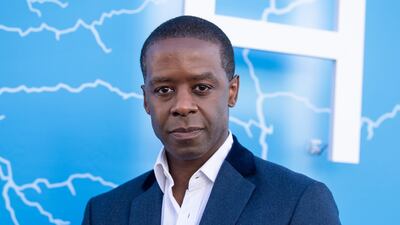
Adrian Lester attends the LA Premiere of Starz's "The Rook" at The Getty Museum on June 17, 2019 in Los Angeles, California. AFP -

Actor Matt Smith attends the World Premiere of season 2 of Netflix "The Crown" at Odeon Leicester Square on November 21, 2017 in London, England. Getty Images -

British actress Claire Foy poses on the red carpet upon arrival at the BAFTA British Academy Film Awards at the Royal Albert Hall in London on February 10, 2019. AFP -
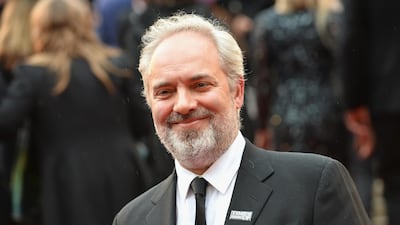
Sam Mendes attends The Olivier Awards with Mastercard at Royal Albert Hall on April 8, 2018 in London, England. Getty Images -
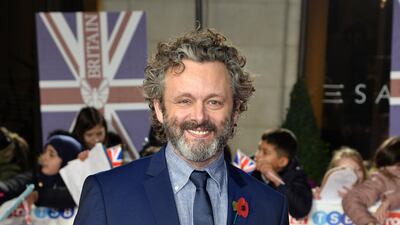
Michael Sheen attends Pride Of Britain Awards 2019 at The Grosvenor House Hotel on October 28, 2019 in London, England. Getty Images -

David Tennant attends the "Dear Evan Hansen" opening night at the Noel Coward Theatre on November 19, 2019 in London, England. Getty Images -
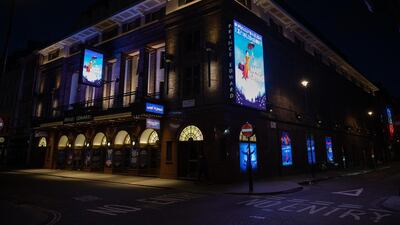
The area around the Prince Edward theatre remains deserted following the announcement of the suspension of many performances in the West End on March 17, 2020 in London, England. Getty Images -
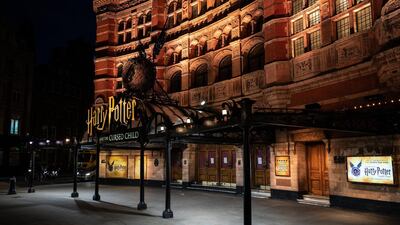
The area around the Palace theatre remains deserted following the announcement of the suspension of many performances in the West End on March 17, 2020 in London, England. Getty Images -
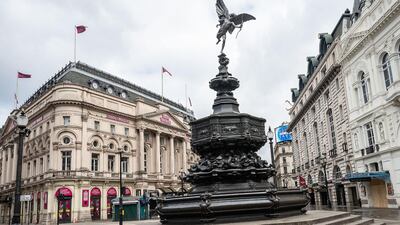
A general view of the deserted Piccadilly Circus during the coronavirus lockdown on March 30, 2020 in London, England. Getty Images


"Experience industries" around the world are facing the same problem. But perhaps because of its leading role, the issue has opened up a lively debate in Britain that is worth putting in context for a wider audience.
When the British Council formed a soft power alliance a few years ago, it set out its goals as uniting the international reach with domestic impact. “The aim of the group," it said, "is to support a more connected, attractive and trusted UK, and to protect and promote the values, diversity and integrity of UK soft power.”
Some institutions are so dependent on overseas visitors that the state will be compelled to step in. For instance, three quarters of visitors to the British Museum are from overseas. Tristram Hunt of the Victoria and Albert Museum said half its audience are from overseas. Yet, he added that the museum will have to concentrate on attracting locals for the immediate future.
Polls show that four out of five visitors to London come to the city for the cultural offer. It is therefore not clear whether locals and digital patrons can make up for the low numbers of outsiders. But Mr Hunt and his colleagues will have little option.
Last week, the Royal United Services Institute (Rusi), a UK think tank that concentrates on military and security matters, issued a note on the implications of all this. It pointed to international measures being taken in the realm of reputational diplomacy and said these were due for a shake-up. “The soft power landscape will not look the same by the end of 2020,” it said.
The paper suggested that China’s recent trajectory held lessons for others.
The country was the origin of the outbreak and yet, has not emerged as the worst hit in terms of the health impact. It has used its industrial base to supply personal protection equipment to many nations, including the UAE and the UK. When the hard-hit Italian response to Covid-19 received shipments that were not coming from other parts of Europe, Rusi pointed out that China was praised as a benefactor.
How much impact the immediate events of the pandemic will have over the long run remains to be seen.
It is certainly true that people will make new judgements about what they value and what is no longer in fashion. The institutions themselves will have to reformulate their offer with a much greater digital component.
Sports franchises may not endure. And so the pull factors implicit in soft power are changing, for the moment fairly imperceptibly, with every day.
-

Chelsea's Olivier Giroud outside Cobham Training Centre. Reuters -

Chelsea's English defender Reece James arrives at Chelsea's Cobham training facility in Stoke D'Abernon, southwest of London. AFP -

Chelsea's English midfielder Ruben Loftus-Cheek arrives at Chelsea's Cobham training facility. AFP -

Liverpool goalkeeper Alisson Becker gives a V-sign as he arrives for a training session to the Melwood training facility in Liverpool. EPA -

Liverpool's Dutch defender Virgil van Dijk arrives at Melwood. AFP -
A Liverpool fan is held up as he looks over a fence to watch training at Melwood. Reuters -
Liverpool's Jordan Henderson leaves training at Melwood. Reuters -
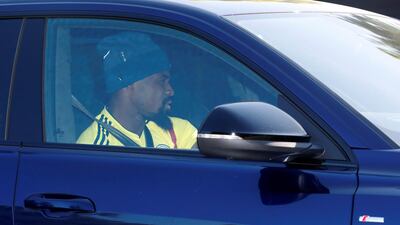
Tottenham Hotspur's Serge Aurier leaves the Tottenham Hotspur training centre after training. Reuters -
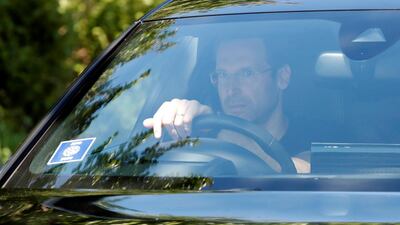
Chelsea Technical and Performance Advisor Petr Cech arrives at Cobham Training Centre. Reuters -
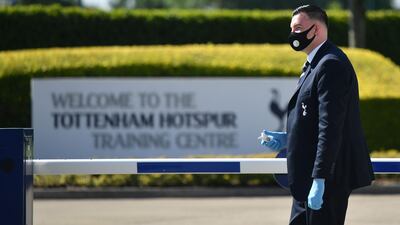
A security guard wearing a face mask patrols at the entrance to the Tottenham training ground in north London. AFP -

Tottenham Hotspur's Jan Vertonghen arrives for training at the Tottenham Hotspur training centre in north London. Reuters -

Tottenham Hotspur's English midfielder Dele Alli arrives at the Tottenham training ground in north London. AFP -
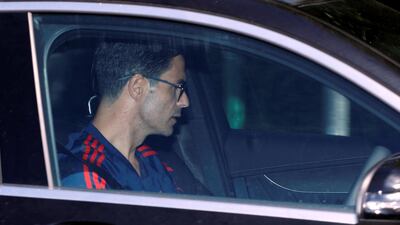
Arsenal manager Mikel Arteta arrives for training at the Arsenal Training Centre at London Colney. Reuters -

A man exercises outside Arsenal's Emirates Stadium in north London. AFP -

Arsenal's Sead Kolasinac arrives at the Arsenal Training Centre. Reuters -

Arsenal's Ainsley Maitland-Niles arrives at the English Premier League side's training complex at London Colney, near St Albans. EPA


Oliver Dowden, the UK's minister for culture, spoke last week of his determination not to see a prime "British asset" sunk by the recession triggered by the pandemic shutdown. There are no details but with the government spending tens of billions of pounds to pay wages and prop up unemployment, it seems certain that a rescue package is on the way. The creative industries – ranging from the football pitch to the mirrored stage – are something that the country cannot afford to lose, as it looks to build on its "Global Britain" policy.
The cost will not come cheaply but the tide of ideas is turning. Even veteran free-market economists are issuing reports saying the government must act as customer and investor.
It seems reasonable to include culture in a new philosophy of the role of government. The pandemic has highlighted the importance of health care and social resilience. States pursuing enlightened policies in these fields will surely be champions of the coming new soft-power order.

Technology, artificial intelligence and digital identities will also be added to existing pillars. The strength of creatives will never be more important.
I venture to suggest that there will always be a staging of The Mousetrap in London's West End district, even if the real-time audience is likely to be scattered across the globe and not just on the plush theatre seats.
Damien McElroy is the London bureau chief of The National

