For the better part of the 20th century, international diplomacy danced to the tune of superpowers. A seismic shift occurred in the early 1990s as the US became the solitary global leader. Today, as the world grapples with unprecedented challenges that demand collective efforts, the established norms of international relations are undergoing yet another transformation.
The transition from a unipolar or bipolar world to a multipolar one has thrust middle powers into a pivotal role. In an era where the solutions to global challenges demand collective action, middle powers bring their diplomatic finesse and adaptability to the fore. They can leverage their cultural and economic sway as vital bridges to champion values, promote financial stability, and ensure regional peace.
The simultaneous inclusion of six new members, including former rivals and competitors such as Argentina, Egypt, Ethiopia, Iran, Saudi Arabia and the UAE, into the Brics grouping brings substantial value to the ongoing endeavours of advancing economic diplomacy and political reconciliation in a rapidly changing global landscape.
The UAE stands at a juncture as it joins Brics. Beyond economic motives, this move signifies the UAE's ambition to amplify its geopolitical sway, encourage multilateral co-operation, and adapt to a multipolar world.
The UAE can solidify its position as a global trade and logistics hub by aligning with the Brics economies. A testament to this potential is the thriving UAE-India bilateral trade, projected to reach $100 billion by 2030, spurred by their Comprehensive Economic Partnership Agreement. China has also become the country's largest non-oil trading partner. Trade between the UAE and Brazil has also increased by a whopping 32 per cent between 2021 and 2022 and surged a further 8 per cent in the first seven months of 2023. Diversification is critical if the country is to achieve its ambition of doubling its gross domestic product by 2030, continuing to reduce its dependency on oil and fostering a knowledge-based economy.
At a time when global confrontation is on the rise, Abu Dhabi sees a long-term investment in co-operation as the best way forward. Joining Brics elevates the UAE's geopolitical clout and the Emirates recognises the importance of consolidating its relations with diverse actors such as the US, China, India, Russia and the EU. From the passage of the landmark resolution addressing hate speech and extremism to the renewal of crucial UN peacekeeping mandates during its second presidency of the Security Council, the UAE has shown that it can be a strong voice for multilateralism.
-
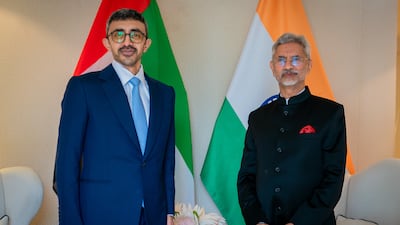
Sheikh Abdullah bin Zayed, Minister of Foreign Affairs, meets India's External Affairs Minister Subramanyam Jaishankar on the sidelines of the 'Friends of Brics' meeting in Cape Town, South Africa. All photos: Wam -
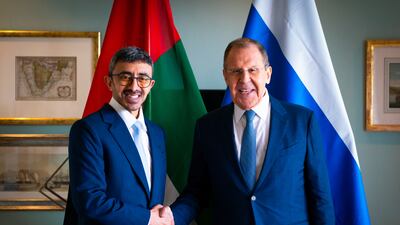
Sheikh Abdullah with Russian Foreign Minister Sergey Lavrov -
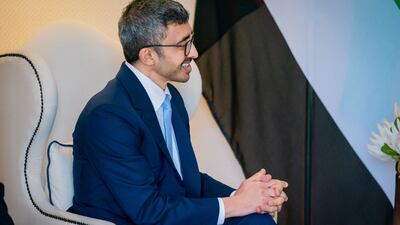
Sheikh Abdullah represented the Emirates during talks with foreign ministers from the Brics group of nations -
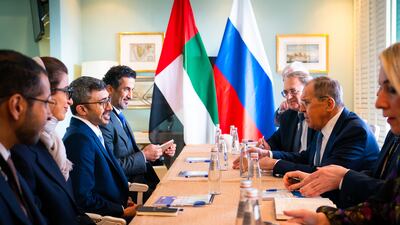
Sheikh Abdullah with Mr Lavrov and other ministers -
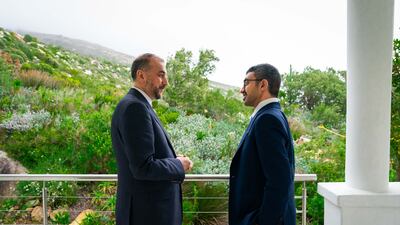
Sheikh Abdullah speaks with Hossein Amirabdollahian, Iran's Minister of Foreign Affairs, on the sidelines of the Brics meeting


The UAE's accession to Brics offers more than just economic growth or political clout; it is an opportunity to attract talent and investment through strategic partnerships. Indian IT companies already leverage the UAE as a hub to tap into nearby regional markets. More than 200 Indian companies participated in Gitex Global 2022, the world's biggest technology event. Education partnerships with Brazilian universities can contribute to the UAE's innovation landscape. In 2022, Mubadala invested in two medical universities in Brazil with about 2,000 students.
As a significant oil producer, the UAE stands to find common ground with Brics nations in energy collaboration, renewable energy, energy security and sustainable development. For instance, the UAE and India are close to a renewable energy interconnection agreement. Both countries have agreed to expand bilateral co-operation towards accelerated climate action, including public-private partnership across renewable power deployment, agriculture efficiency, green hydrogen and carbon market development.
The UAE's membership in Brics symbolises its strategic vision of diversification in a world reshaped by the dynamic interplay of multiple powers. Abu Dhabi does not see its accession to Brics as joining a bloc. On the contrary, it sees it as diversifying its partnerships and markets while preserving its traditional relations with Europe and the US. Brics membership empowers the UAE to bolster its multi-alignment strategy by fostering the diplomatic ties that it has with the US through initiatives such as I2U2 (Israel, India, the UAE and the US) and with China through the Brics grouping. The UAE's diplomatic agility, robust economic partnerships and commitment to multilateralism are a beacon of hope amid turbulent times. As the country looks to host Cop28 and the 13th Ministerial Conference of the World Trade Organisation, the UAE's contributions to Brics discussions on climate action, counterterrorism and sustainable development could prove invaluable.
In the intricate tapestry of international relations, middle powers are emerging as the linchpins of co-operation, wielding their influence to build bridges, foster peace and drive progress. The UAE's journey towards Brics membership reflects its determination to shape a brighter global future in a world yearning for collaboration.