I can’t make so much as a dentist appointment without turning to WhatsApp. It is incredibly convenient – far more than logging into a clunky online portal and navigating a slow-loading calendar of available appointments.
Daily life in the UAE, and across the Middle East in general, is often a WhatsApp-based existence.
It is useful and yet I hate it. I hate the dependency on a single piece of infrastructure that is largely unaccountable to any public authority.
And it is only on days like yesterday, when the app, along with Facebook and Instagram, which are owned by the same company, suffered a prolonged outage that my hatred starts to feel validated.
If tomorrow all the phone lines in the world went dead or GPS satellites fell from the sky, the firing of those responsible would only be the beginning. Inquiries would be held, compensation would be paid and new laws would be passed in the US, Europe and elsewhere to ensure that these things would never happen again.
It is not an entirely trivial comparison. We still don’t know the full extent of the consequences of WhatsApp going dark, but we will come to know, I’m sure, that they were many. To give just one example, reports have already emerged telling how vulnerable Afghans trying to escape the Taliban were unable to reach those trying to co-ordinate their rescue, causing potentially dangerous delays.
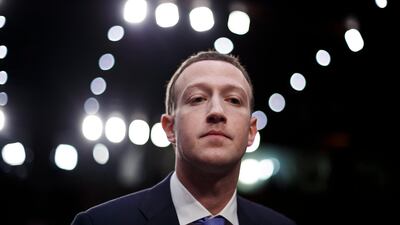
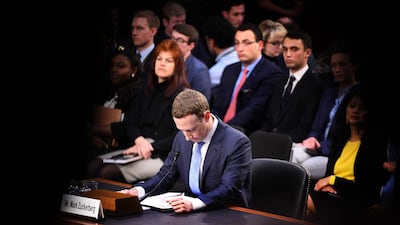
But Facebook, the company founded by Mark Zuckerberg that owns WhatsApp, is unlikely to see much in the way of lasting consequences. An executive few have heard of may be fired, the stock price will fall for a time, but not much else will happen.
The only thing we have seen so far is a simple “We’re sorry”, posted by Facebook’s official account, ironically, on Twitter.
But we ought to be past the point of dry apologies. They are not cute.
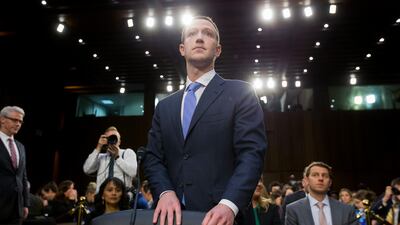
For the past decade – first running a tech-based non-profit and then as a reporter covering the industry – I have grown increasingly distrustful of Mr Zuckerberg’s social media empire. Not that I deserve a gold medal, but I deleted my Facebook and Instagram accounts years ago. Deleting WhatsApp, as most of the 600 million people who live in the Middle East know, is next to impossible.
The harm caused by social media apps and the lack of regulation and consequences for them feels like the first draft of the Digital Revolution. Like the noxious fumes and servile rhetoric many of our ancestors inhaled in factories during the Industrial Revolution, our grandchildren will be scandalised to learn about the lives we led under the Big Tech regime.
We are the first generation, the pioneers, and the reforms and protections we need have not yet arrived. So it seems wise to proceed with caution.
Instead, however, we have rushed forward. One in three people on the planet uses Facebook. And they do so without proper regulatory oversight.
This week, a whistleblower who was formerly employed as a product manager for Facebook told reporters that the company actively fails to protect users. “Facebook over and over again chose to optimise for its own interests like making more money,” she said.
One study included in documents the whistleblower revealed shows that Facebook took action on as little as 3 per cent to 5 per cent of hate speech on its platform, and on less than 1 per cent of content classified under “violence and incitement”.
So we have a platform, or series of platforms owned by a private individual, that works to monopolise communication in our lives, fails to protect us from the most harmful communication it propagates and then offers little more than an apology when it accidentally shuts down communication altogether.
What kind of regulations are needed? There are many ideas, but there is little agreement. That is why nothing has been done yet. The best ideas in concept involve treating Facebook like any other public utility, which would mean making its governance structure directly accountable to governments and putting controls in place to ensure that its profit incentives do not grow out of hand.
But this would be no ordinary public utility with obvious borders or boundaries. It is a global one, and national governments do not have much luck – or authority – in governing global phenomena. At the moment, Facebook, something many would consider to be a critical piece of infrastructure for people in the Middle East, is becoming increasingly harmful because of the failure of politicians in Washington to regulate it. But should politicians in Washington be the ones to regulate a piece of critical infrastructure in the Middle East anyway? It is a tough question, but one way or another oversight is needed. The status quo is not the right way to start the Digital Revolution.
So we have a platform, or series of platforms owned by a private individual, that works to monopolise communication in our lives, fails to protect us from the most harmful communication it propagates and then offers little more than an apology when it accidentally shuts down communication altogether.
Last month, US outlets carried a wonderful story of an indigenous Tatuyo woman, living in the middle of the Amazon rainforest, who has found viral stardom educating the world on TikTok about what life is like for her community. That is a mission that could only be achieved in the social media age. Using these platforms to broaden our horizons is the best realisation of their capabilities.
But we need to be honest: at the moment, big tech companies are not driving us in that direction. For most of us, our time using social media is not exposing us to diverse opinions or lives. It is, as Facebook’s whistleblower says, dedicated to activities and opinions that are causing us harm without us even knowing it. And the October 4 outage reminded us just how dependent we have become on that system. And it showed us, most of all, that we can expect little more from that system than an empty apology.

Profile box
Founders: Michele Ferrario, Nino Ulsamer and Freddy Lim
Started: established in 2016 and launched in July 2017
Based: Singapore, with offices in the UAE, Malaysia, Hong Kong, Thailand
Sector: FinTech, wealth management
Initial investment: $500,000 in seed round 1 in 2016; $2.2m in seed round 2 in 2017; $5m in series A round in 2018; $12m in series B round in 2019; $16m in series C round in 2020 and $25m in series D round in 2021
Current staff: more than 160 employees
Stage: series D
Investors: EightRoads Ventures, Square Peg Capital, Sequoia Capital India
Timeline
2012-2015
The company offers payments/bribes to win key contracts in the Middle East
May 2017
The UK SFO officially opens investigation into Petrofac’s use of agents, corruption, and potential bribery to secure contracts
September 2021
Petrofac pleads guilty to seven counts of failing to prevent bribery under the UK Bribery Act
October 2021
Court fines Petrofac £77 million for bribery. Former executive receives a two-year suspended sentence
December 2024
Petrofac enters into comprehensive restructuring to strengthen the financial position of the group
May 2025
The High Court of England and Wales approves the company’s restructuring plan
July 2025
The Court of Appeal issues a judgment challenging parts of the restructuring plan
August 2025
Petrofac issues a business update to execute the restructuring and confirms it will appeal the Court of Appeal decision
October 2025
Petrofac loses a major TenneT offshore wind contract worth €13 billion. Holding company files for administration in the UK. Petrofac delisted from the London Stock Exchange
November 2025
180 Petrofac employees laid off in the UAE
Syria squad
Goalkeepers: Ibrahim Alma, Mahmoud Al Youssef, Ahmad Madania.
Defenders: Ahmad Al Salih, Moayad Ajan, Jehad Al Baour, Omar Midani, Amro Jenyat, Hussein Jwayed, Nadim Sabagh, Abdul Malek Anezan.
Midfielders: Mahmoud Al Mawas, Mohammed Osman, Osama Omari, Tamer Haj Mohamad, Ahmad Ashkar, Youssef Kalfa, Zaher Midani, Khaled Al Mobayed, Fahd Youssef.
Forwards: Omar Khribin, Omar Al Somah, Mardik Mardikian.
Abu Dhabi racecard
5pm: Maiden (Purebred Arabians); Dh80,000; 1,400m.
5.30pm: Maiden (PA); Dh80,00; 1,400m.
6pm: Sheikh Zayed bin Sultan Al Nahyan National Day Cup (PA); Group 3; Dh500,000; 1,600m.
6.30pm: Sheikh Zayed bin Sultan Al Nahyan National Day Cup (Thoroughbred); Listed; Dh380,000; 1,600m
7pm: Wathba Stallions Cup for Private Owners Handicap (PA); Dh70,000; 1,400m.
7.30pm: Handicap (PA); Dh80,000; 1,600m
Conservative MPs who have publicly revealed sending letters of no confidence
- Steve Baker
- Peter Bone
- Ben Bradley
- Andrew Bridgen
- Maria Caulfield
- Simon Clarke
- Philip Davies
- Nadine Dorries
- James Duddridge
- Mark Francois
- Chris Green
- Adam Holloway
- Andrea Jenkyns
- Anne-Marie Morris
- Sheryll Murray
- Jacob Rees-Mogg
- Laurence Robertson
- Lee Rowley
- Henry Smith
- Martin Vickers
- John Whittingdale
UK’s AI plan
- AI ambassadors such as MIT economist Simon Johnson, Monzo cofounder Tom Blomfield and Google DeepMind’s Raia Hadsell
- £10bn AI growth zone in South Wales to create 5,000 jobs
- £100m of government support for startups building AI hardware products
- £250m to train new AI models
Email sent to Uber team from chief executive Dara Khosrowshahi
From: Dara
To: Team@
Date: March 25, 2019 at 11:45pm PT
Subj: Accelerating in the Middle East
Five years ago, Uber launched in the Middle East. It was the start of an incredible journey, with millions of riders and drivers finding new ways to move and work in a dynamic region that’s become so important to Uber. Now Pakistan is one of our fastest-growing markets in the world, women are driving with Uber across Saudi Arabia, and we chose Cairo to launch our first Uber Bus product late last year.
Today we are taking the next step in this journey—well, it’s more like a leap, and a big one: in a few minutes, we’ll announce that we’ve agreed to acquire Careem. Importantly, we intend to operate Careem independently, under the leadership of co-founder and current CEO Mudassir Sheikha. I’ve gotten to know both co-founders, Mudassir and Magnus Olsson, and what they have built is truly extraordinary. They are first-class entrepreneurs who share our platform vision and, like us, have launched a wide range of products—from digital payments to food delivery—to serve consumers.
I expect many of you will ask how we arrived at this structure, meaning allowing Careem to maintain an independent brand and operate separately. After careful consideration, we decided that this framework has the advantage of letting us build new products and try new ideas across not one, but two, strong brands, with strong operators within each. Over time, by integrating parts of our networks, we can operate more efficiently, achieve even lower wait times, expand new products like high-capacity vehicles and payments, and quicken the already remarkable pace of innovation in the region.
This acquisition is subject to regulatory approval in various countries, which we don’t expect before Q1 2020. Until then, nothing changes. And since both companies will continue to largely operate separately after the acquisition, very little will change in either teams’ day-to-day operations post-close. Today’s news is a testament to the incredible business our team has worked so hard to build.
It’s a great day for the Middle East, for the region’s thriving tech sector, for Careem, and for Uber.
Uber on,
Dara
THE POPE'S ITINERARY
Sunday, February 3, 2019 - Rome to Abu Dhabi
1pm: departure by plane from Rome / Fiumicino to Abu Dhabi
10pm: arrival at Abu Dhabi Presidential Airport
Monday, February 4
12pm: welcome ceremony at the main entrance of the Presidential Palace
12.20pm: visit Abu Dhabi Crown Prince at Presidential Palace
5pm: private meeting with Muslim Council of Elders at Sheikh Zayed Grand Mosque
6.10pm: Inter-religious in the Founder's Memorial
Tuesday, February 5 - Abu Dhabi to Rome
9.15am: private visit to undisclosed cathedral
10.30am: public mass at Zayed Sports City – with a homily by Pope Francis
12.40pm: farewell at Abu Dhabi Presidential Airport
1pm: departure by plane to Rome
5pm: arrival at the Rome / Ciampino International Airport
if you go
The flights
Etihad and Emirates fly direct to Kolkata from Dh1,504 and Dh1,450 return including taxes, respectively. The flight takes four hours 30 minutes outbound and 5 hours 30 minute returning.
The trains
Numerous trains link Kolkata and Murshidabad but the daily early morning Hazarduari Express (3’ 52”) is the fastest and most convenient; this service also stops in Plassey. The return train departs Murshidabad late afternoon. Though just about feasible as a day trip, staying overnight is recommended.
The hotels
Mursidabad’s hotels are less than modest but Berhampore, 11km south, offers more accommodation and facilities (and the Hazarduari Express also pauses here). Try Hotel The Fame, with an array of rooms from doubles at Rs1,596/Dh90 to a ‘grand presidential suite’ at Rs7,854/Dh443.
Takreem Awards winners 2021
Corporate Leadership: Carl Bistany (Lebanon)
Cultural Excellence: Hoor Al Qasimi (UAE)
Environmental Development and Sustainability: Bkerzay (Lebanon)
Environmental Development and Sustainability: Raya Ani (Iraq)
Humanitarian and Civic Services: Women’s Programs Association (Lebanon)
Humanitarian and Civic Services: Osamah Al Thini (Libya)
Excellence in Education: World Innovation Summit for Education (WISE) (Qatar)
Outstanding Arab Woman: Balghis Badri (Sudan)
Scientific and Technological Achievement: Mohamed Slim Alouini (KSA)
Young Entrepreneur: Omar Itani (Lebanon)
Lifetime Achievement: Suad Al Amiry (Palestine)
Banned items
Dubai Police has also issued a list of banned items at the ground on Sunday. These include:
-
-
-
-
-
-
-
-
-
Political flags or banners
-
Bikes, skateboards or scooters
Generational responses to the pandemic
Devesh Mamtani from Century Financial believes the cash-hoarding tendency of each generation is influenced by what stage of the employment cycle they are in. He offers the following insights:
Baby boomers (those born before 1964): Owing to market uncertainty and the need to survive amid competition, many in this generation are looking for options to hoard more cash and increase their overall savings/investments towards risk-free assets.
Generation X (born between 1965 and 1980): Gen X is currently in its prime working years. With their personal and family finances taking a hit, Generation X is looking at multiple options, including taking out short-term loan facilities with competitive interest rates instead of dipping into their savings account.
Millennials (born between 1981 and 1996): This market situation is giving them a valuable lesson about investing early. Many millennials who had previously not saved or invested are looking to start doing so now.
Mercer, the investment consulting arm of US services company Marsh & McLennan, expects its wealth division to at least double its assets under management (AUM) in the Middle East as wealth in the region continues to grow despite economic headwinds, a company official said.
Mercer Wealth, which globally has $160 billion in AUM, plans to boost its AUM in the region to $2-$3bn in the next 2-3 years from the present $1bn, said Yasir AbuShaban, a Dubai-based principal with Mercer Wealth.
“Within the next two to three years, we are looking at reaching $2 to $3 billion as a conservative estimate and we do see an opportunity to do so,” said Mr AbuShaban.
Mercer does not directly make investments, but allocates clients’ money they have discretion to, to professional asset managers. They also provide advice to clients.
“We have buying power. We can negotiate on their (client’s) behalf with asset managers to provide them lower fees than they otherwise would have to get on their own,” he added.
Mercer Wealth’s clients include sovereign wealth funds, family offices, and insurance companies among others.
From its office in Dubai, Mercer also looks after Africa, India and Turkey, where they also see opportunity for growth.
Wealth creation in Middle East and Africa (MEA) grew 8.5 per cent to $8.1 trillion last year from $7.5tn in 2015, higher than last year’s global average of 6 per cent and the second-highest growth in a region after Asia-Pacific which grew 9.9 per cent, according to consultancy Boston Consulting Group (BCG). In the region, where wealth grew just 1.9 per cent in 2015 compared with 2014, a pickup in oil prices has helped in wealth generation.
BCG is forecasting MEA wealth will rise to $12tn by 2021, growing at an annual average of 8 per cent.
Drivers of wealth generation in the region will be split evenly between new wealth creation and growth of performance of existing assets, according to BCG.
Another general trend in the region is clients’ looking for a comprehensive approach to investing, according to Mr AbuShaban.
“Institutional investors or some of the families are seeing a slowdown in the available capital they have to invest and in that sense they are looking at optimizing the way they manage their portfolios and making sure they are not investing haphazardly and different parts of their investment are working together,” said Mr AbuShaban.
Some clients also have a higher appetite for risk, given the low interest-rate environment that does not provide enough yield for some institutional investors. These clients are keen to invest in illiquid assets, such as private equity and infrastructure.
“What we have seen is a desire for higher returns in what has been a low-return environment specifically in various fixed income or bonds,” he said.
“In this environment, we have seen a de facto increase in the risk that clients are taking in things like illiquid investments, private equity investments, infrastructure and private debt, those kind of investments were higher illiquidity results in incrementally higher returns.”
The Abu Dhabi Investment Authority, one of the largest sovereign wealth funds, said in its 2016 report that has gradually increased its exposure in direct private equity and private credit transactions, mainly in Asian markets and especially in China and India. The authority’s private equity department focused on structured equities owing to “their defensive characteristics.”
The specs
Engine: 3.8-litre twin-turbo flat-six
Power: 650hp at 6,750rpm
Torque: 800Nm from 2,500-4,000rpm
Transmission: 8-speed dual-clutch auto
Fuel consumption: 11.12L/100km
Price: From Dh796,600
On sale: now
Russia's Muslim Heartlands
Dominic Rubin, Oxford
The specs
Engine: 4.0-litre, six-cylinder
Transmission: six-speed manual
Power: 395bhp
Torque: 420Nm
Price: from Dh321,200
On sale: now
Read more from Aya Iskandarani
Defence review at a glance
• Increase defence spending to 2.5% of GDP by 2027 but given “turbulent times it may be necessary to go faster”
• Prioritise a shift towards working with AI and autonomous systems
• Invest in the resilience of military space systems.
• Number of active reserves should be increased by 20%
• More F-35 fighter jets required in the next decade
• New “hybrid Navy” with AUKUS submarines and autonomous vessels
COMPANY%20PROFILE
%3Cp%3E%0D%3Cbr%3E%3Cstrong%3ECompany%20name%3A%20%3C%2Fstrong%3EClara%0D%3Cbr%3E%3Cstrong%3EStarted%3A%20%3C%2Fstrong%3E2019%0D%3Cbr%3E%3Cstrong%3EFounders%3A%20%3C%2Fstrong%3EPatrick%20Rogers%2C%20Lee%20McMahon%2C%20Arthur%20Guest%2C%20Ahmed%20Arif%0D%3Cbr%3E%3Cstrong%3EBased%3A%20%3C%2Fstrong%3EDubai%0D%3Cbr%3E%3Cstrong%3EIndustry%3A%20%3C%2Fstrong%3ELegalTech%0D%3Cbr%3E%3Cstrong%3EFunding%20size%3A%3C%2Fstrong%3E%20%244%20million%20of%20seed%20financing%0D%3Cbr%3E%3Cstrong%3EInvestors%3A%20%3C%2Fstrong%3EWamda%20Capital%2C%20Shorooq%20Partners%2C%20Techstars%2C%20500%20Global%2C%20OTF%2C%20Venture%20Souq%2C%20Knuru%20Capital%2C%20Plug%20and%20Play%20and%20The%20LegalTech%20Fund%3C%2Fp%3E%0A
Thank You for Banking with Us
Director: Laila Abbas
Starring: Yasmine Al Massri, Clara Khoury, Kamel El Basha, Ashraf Barhoum
Rating: 4/5