

UN Secretary General Antonio Guterres on Thursday called for action to limit the effects of heatwaves fuelled by climate change, saying humanity is suffering from an “extreme heat epidemic”.
Over the past 100 days, a deadly heatwave hit the Sahel, leading to a sharp rise in hospital admissions and deaths.
Countries from Saudi Arabia to India have reported heat-related deaths, heatstroke warnings have been issued across Japan, and schools have been closed for about 80 million children in Africa and Asia.
“Billions of people are facing an extreme heat epidemic, wilting under increasingly deadly heatwaves, with temperatures topping 50°C around the world,” Mr Guterres said in a speech in New York.
“That's … halfway to boiling.”
The US has also witnessed new temperature records.
While 2023 was the hottest year ever recorded, and 2024 could set another high, temperatures well above 40°C are increasingly common.
According to the European Copernicus network, July 21, 22 and 23 were the three hottest days ever recorded worldwide.
“The climate crisis is driving crippling heat everywhere,” said Mr Guterres. “Climate change is delivering a hotter and more dangerous world for all of us.”
He called on the world’s wealthiest nations to eliminate fossil fuel subsidies, stop new coal projects, and provide support to developing and vulnerable countries facing climate effects including heatwaves, flooding and droughts.
“Leaders across the board must wake up and step up,” Mr Guterres said.
Data from the International Labour Organisation, published on Thursday, estimates that 70 per cent of the global workforce – or 2.4 billion people – are now at high risk of extreme heat.
Workers in Africa, the Arab states, and Asia and the Asia-Pacific are most exposed to excessive heat.
In Africa, nearly 93 per cent of the workforce is exposed to excessive heat, and 84 per cent of the Arab states' workforces, the ILO report found.
“The good news is that we can save lives and we can limit its impact,” Mr Guterres said.
He called for measures to protect workers and on governments to make meaningful decreases in fossil fuel emissions, the driver of climate change.
“We must respond by massively increasing access to low-carbon cooling; expanding passive cooling, such as natural solutions and urban design; and cleaning up cooling technologies while boosting their efficiency,” Mr Guterres said.
Between 2000 and 2019, extreme heat claimed about 489,000 lives a year, with 45 per cent of these deaths occurring in Asia and 36 per cent in Europe, according to the UN.
The effects of climate change on the Middle East region – in pictures
-

Flooding in the Al Barsha area of Dubai. Chris Whiteoak / The National -
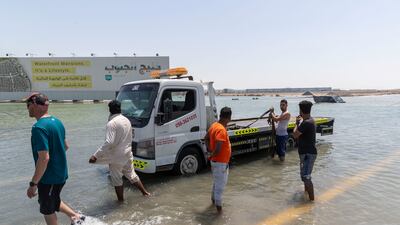
Vehicles being recovered near Al Maktoum airport in Dubai. Antonie Robertson / The National -

Flooding in the Al Barsha area of Dubai. Chris Whiteoak / The National -
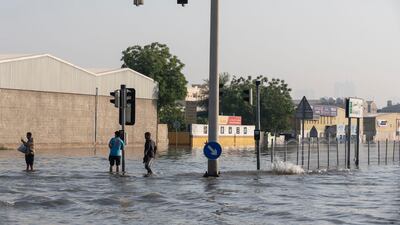
Flooding along Sheikh Zayed Road in Dubai. Antonie Robertson / The National -
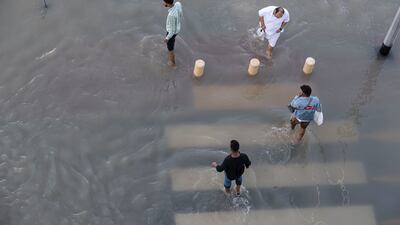
Flooding along Sheikh Zayed Road in Dubai. Antonie Robertson / The National -

Cars move through floodwater in Al Qudra, Dubai. Chris Whiteoak / The National -

Flooding on Dubai's Al Khail Road. Chris Whiteoak / The National -
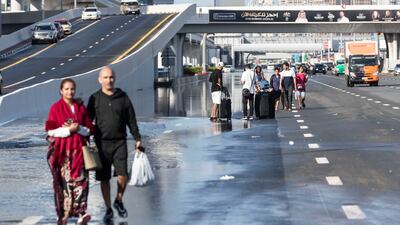
People abandon their cars on Sheikh Zayed Road due to heavy rain. Antonie Robertson/The National -

Flooding on Al Khail Road. Chris Whiteoak / The National -
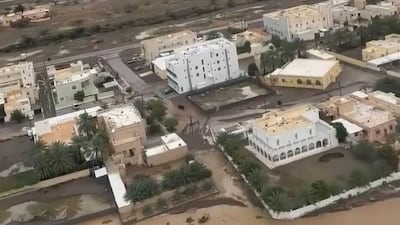
Flooding in Oman. Photo: Royal Oman Police -

A damaged car in Derna, Libya. Reuters -
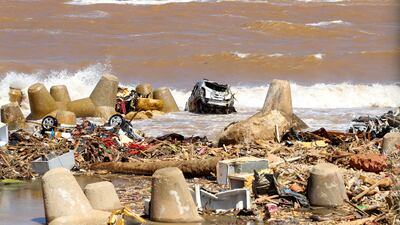
A destroyed vehicle in Derna. AFP -

Abdul Salam Ibrahim Al-Qadi walks on rubble in front of his house, searching for his missing father and brother, in Derna. Reuters -

An aerial view of the destruction in Derna. Reuters -
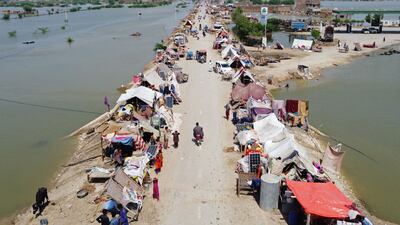
Flood-affected people taking refuge in a makeshift camp after heavy monsoon rains in Jaffarabad district of Balochistan province. AFP -
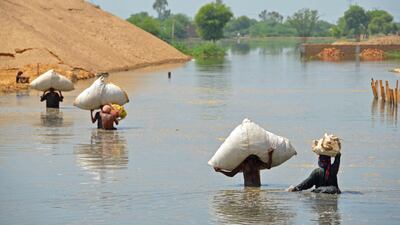
Internally displaced flood-affected people shift husk for their animals in a flood-hit area following heavy rains in Dera Allah Yar in Balochistan. AFP -
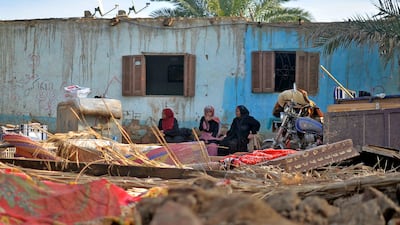
The aftermath of flooding in Egypt's southern city of Aswan, 920 kilometres south of the capital. AFP -

The Nile River from the top of Famine Stela, or Rock of Starvation, Egypt. Reuters -

Volunteers search for people in need following heavy rainfall in east Mosul, Iraq, in March 2020. Reuters -

People clean up after floods in Duhok, Iraq, on March 19. Reuters



