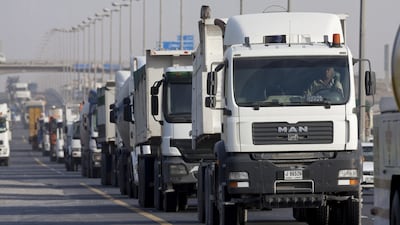

Road safety experts and transport industry leaders have called for stricter monitoring of heavy vehicles, better driver training and tougher enforcement of safety regulations after two deadly accidents involving lorries in the UAE in as many weeks.
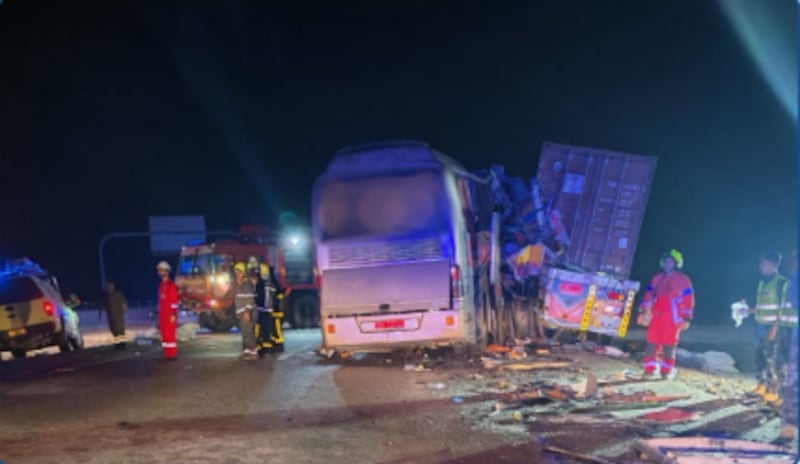
It comes after a collision between a lorry and a bus in Ras Al Khaimah on Tuesday that killed 13 people and left 26 others injured and a fatal multi-vehicle accident involving a lorry in Fujairah on Sheikh Khalifa bin Zayed Road on November 12, in which 14 people died and about 30 were injured.
Experts said preventing similar incidents requires a comprehensive approach involving drivers, vehicle operators, regulators and other road users, warning that legislation alone would not be sufficient without effective monitoring and enforcement.

Steve Burnell, chief executive of STS Group, a private bus operator, highlighted the need for a unified nationwide heavy-vehicle safety programme covering all seven emirates, with mandatory standards, consistent enforcement and clear accountability.
“While we should not speculate on the causes of individual accidents, two areas require particular attention: vehicle roadworthiness and driver fatigue management,” Mr Brunell told The National.
He said limiting driving hours was not enough, arguing that authorities and operators needed a measurable framework covering total duty hours, driving time, mandatory rest periods and cumulative working hours.
He said this should be supported by technology, independent auditing and greater accountability among transport operators.
Vehicle inspections and preventive maintenance programmes should also follow consistent national standards, with appropriate testing frequencies, he added.
“Safety must never be compromised by commercial pressures, operating margins or an operator’s willingness to invest,” Mr Burnell added.
In Oman, four people were killed and 17 injured in a road crash involving a bus and two lorries on Monday.
UAE taking action
Drivers of heavy lorries and buses are to face tougher rules from the start of next year, including limited driving hours and tighter cargo safety regulations, as authorities seek to reduce accidents and improve road safety.
Drivers cannot drive more than nine hours in any 24-hour period, unless the Federal Traffic Council changes this limit. This rule applies to all drivers but will most likely affect long-distance lorry and bus operators.
Another important change is how heavy vehicles are defined. Now, a heavy goods vehicle must weigh more than 3.5 tonnes when empty, rather than the old limit of 2.5 tonnes.
Thomas Edelmann, founder of Road Safety UAE, told The National that improving lorry safety required attention to three areas: the driver, the vehicle and the enforcement of regulations.
He called for psychological and behavioural assessments of prospective lorry drivers, including psychometric testing, before they begin professional driving training.
“Truck drivers must receive proper and real-life-related education both at driving institutes and from their respective employers on an ongoing basis,” he said.
Training should also cover drivers' wellbeing, including adequate sleep, healthy diets and regular medical check-ups, to ensure drivers are fit to operate heavy vehicles.
Integrating technology
Mr Edelmann said technology such as telematics and in-vehicle monitoring systems could help fleet operators monitor driver behaviour, fatigue and vehicle performance.
He also highlighted the importance of the new maximum nine-hour daily driving limit, which is due to come into effect on January 1, 2027.
Tachographs would be important in tracking driving hours and supporting enforcement, he said, while lorries must be maintained in excellent technical condition, particularly their tyres.
Traffic safety expert Dr Eng Mustafa Aldah told The National that organising the movement of lorries, buses and pick-up vehicles should be a priority to avoid tragic accidents, with clearer rules governing which lanes heavy vehicles can use.
He said that although heavy vehicles account for a smaller proportion of traffic, accidents involving them can have particularly serious consequences.
“The UAE built a great road network, and there is a need to put rules for dedicated lanes for heavy vehicles and all road users,” he said.
“By updating regulations for this important sector of the economy, we can make their movements and the roads safer for everyone.”
Dr Aldah pointed to Abu Dhabi's use of dedicated right-hand lanes for lorries, saying similar arrangements should be considered in other emirates.
He also called for greater use of technology to monitor lorry and bus drivers' behaviour, rest periods and sleeping hours, alongside speed limiters to prevent heavy vehicles from exceeding designated speeds.
“Trucks must stay in the right lane and are prohibited from overtaking other vehicles dangerously,” he said, urging all motorists to maintain safe distances and concentrate on the road.
Khalid Javed, director of operations at Excellence Driving Centre, said professional heavy-vehicle training must go beyond teaching drivers how to operate a vehicle.
He said accident case studies and real-life road incidents should be incorporated into training programmes to help drivers understand how speeding, insufficient following distances, fatigue and poor hazard perception can lead to serious consequences.
He also recommended mandatory defensive driving courses for professional heavy vehicle drivers, focusing on blind spots, braking distances, hazard anticipation and safe manoeuvres.
“Passing a driving test does not necessarily make someone a safe professional driver; developing the right attitude, judgment and safety awareness is equally important,” he said.
Sridhar Srinivasalu, HSEQ manager at Dubai-based logistics company, Tristar Group, said technology, driver selection and continuous training were central to the company's approach to managing its fleet of more than 700 fuel-lorry drivers in the UAE.
He said its lorries were equipped with systems to monitor vehicle and driver behaviour, including fatigue detection technology.
“We also make sure that our truck drivers are carefully selected and trained, both upon joining and on an ongoing basis,” he said.
“We have implemented a fatigue-management policy limiting driving hours, alongside training and safety controls designed to protect drivers and ensure their well-being.”
He said Tristar organises quarterly road-safety events for its drivers, involving external speakers from Dubai Police, the Roads and Transport Authority and other organisations working in road safety and driver well-being.