The UAE has launched a global initiative to curb digital acts of violence against women.
The SAFE-T Initiative was unveiled during the 15th UN Congress on Crime Prevention and Criminal Justice in Abu Dhabi on Tuesday, and aims to combine legislation, improved digital literacy and international co-operation.
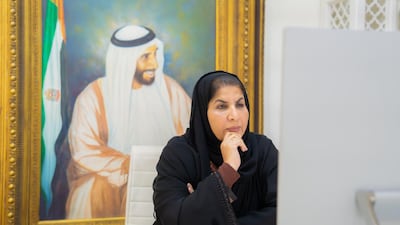
The programme is being implemented under the patronage of Sheikha Fatima bint Mubarak, chairwoman of the General Women's Union, through a partnership between the GWU, the Ministry of Justice and the UN Office on Drugs and Crime.

Digital violence against women and girls poses a growing challenge that extends beyond individual harm and affects social and economic participation, Sheikha Fatima said.
She warned that threats, abuse, blackmail and defamation through digital channels restricted women's ability to express themselves and participate fully in public life.
Sheikha Fatima called for an integrated response involving governments, international organisations, technology companies and civil society.
“We do not view women merely as beneficiaries of digital transformation, but as partners in leading it and shaping its future,” Sheikha Fatima said.
She highlighted the Cyber Pulse Initiative for Women and Family, launched by the GWU in co-operation with the UAE Cyber Security Council, as a national model that had expanded into the international Cyber Pulse Academy for Women and Family.
Narrowing digital divide
The SAFE-T blueprint begins by building basic digital infrastructure. This first phase is driven by a digital safety toolkit, a Global Coalition for Digital Safety, and the UN Women Strategy on Technology-Facilitated Violence Against Women and Girls.
The core of the plan is the Upstander model. It co-ordinates nine linked strategies, which include narrowing the digital divide, empowering law enforcement, holding the tech sector accountable, and standardising how data is collected
Noura Al Suwaidi, secretary general of the GWU, said the organisation was committed to harnessing technology to safeguard women's digital rights.
“At the General Women’s Union, we believe that protecting the security and sustainability of the family and society requires joint action and genuine integration among local and international stakeholders,” she said.
“Through our continued co-operation with partners and organisations, we seek to establish a safe and equitable digital environment in which every woman and girl can contribute effectively and confidently to sustainable development and human progress.”
Taking digital safety seriously
Natasha Hatherall-Shawe, founder of That Group, a network of online communities for women across the GCC, welcomed the news. She said it was a sign that the UAE was taking the digital safety of women seriously.
“I've spent years building and managing online communities and safe spaces for women so this news really resonated with what I know and believe to be important,” Ms Hatherall-Shawe told The National.
“I've seen it first-hand: a woman posts something honest, or builds a following, or simply becomes visible, and the abuse starts – threats, blackmail, defamation, the ugly comments. And more often than not, she doesn't fight it publicly. She just goes quiet. Posts less. Steps back. We lose her, and the community loses her voice, and nobody outside that space ever really sees it happen.
“That's why I think the SAFE-T Initiative is necessary and essential, not just well-intentioned. It's built for exactly that quiet disappearing act.”
Ms Hatherall-Shawe, who is also the founder and chief executive of TishTash Group, said that reporting a post had never been enough.
“The damage can run far deeper than that, plus many far greater digital threats that exist today, sadly,” she added.
“I've built communities on the belief that women should be able to show up online and in an authentic way without paying a price for it. It's great to see that belief now backed by policy and not just good intentions.”