
A major sustainability project has been launched across the UAE to help tackle the increasing number of clothes going to waste.
About 220,000 tonnes of textile waste are produced each year in the country, state news agency Wam reported.
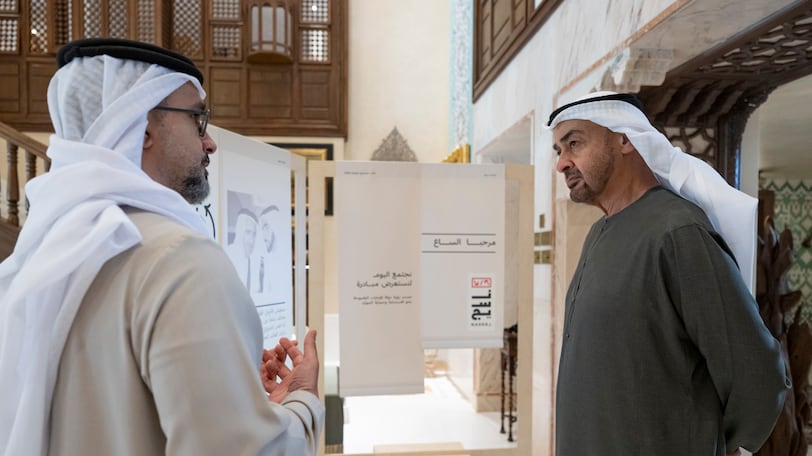
President Sheikh Mohamed has directed the launch of Naseej, the National Initiative for Textile Circularity, which is to serve as a "national platform co-ordinating policy, industry action, research, and public engagement across the textile value chain", Wam added.
“Naseej reaffirms the UAE’s commitment to sustainability as a shared national responsibility," said Sheikha Mariam bint Mohamed, Deputy Chairwoman of the Presidential Court for National Projects.
'Conscious consumption'
"It reflects a forward-looking vision that transforms challenges into lasting opportunities by driving positive behavioural change, encouraging responsible resource use and empowering community participation and volunteering. The initiative lays the foundation for resilient, future-ready development that benefits generations to come.”

The rise of fast fashion has become a major environmental issue. Estimates suggest the fashion industry is responsible for about 10 per cent of global emissions, with dyes and chemicals contributing to pollution. At the same time, the past decade has seen a sharp increase in ever-cheaper fashion choices.
How to support project
Naseej is to host its inaugural community activation, The Fabric of Possibility, from June 5 to 7 at Yas Mall in Abu Dhabi. Designed as an immersive experience, the activation invites people to reflect on the impact of textile waste.
Naseej will introduce a series of national programmes to support sustainable textile practices, strengthen collection and recycling infrastructure and advance research. The UAE project will "foster a culture of conscious consumption aligned with circular economy principles", Wam said.
"Through Naseej, we are establishing a national framework that aligns policy, industry action and public participation under this shared vision for a circular economy," said Abdulla bin Touq, Minister of Economy and Tourism.
UAE's green vision
The initiative is the latest step in a broader government drive to cut waste and boost the environment.
In May 2025, the UAE launched a nationwide campaign to measure food loss and waste among households, the agriculture sector and businesses in an effort to promote more responsible production and consumption.
The UAE's national food loss and waste initiative, Ne'ma, has set a target to halve food waste by 2030, in line with the UN sustainable development goals.
Ne'ma has said nearly 40 per cent of food is wasted in the UAE each year, at a cost of Dh6 billion ($1.63 billion).
The Emirates has also taken significant strides to reduce plastic waste over recent years.
Abu Dhabi banned single-use plastic bags on June 1, 2022, while a UAE-wide prohibition came into force at the start of 2024. Other emirates across the country have implemented similar measures.
The government expanded this strategy in January by prohibiting the import, manufacture and trade of a wide range of other single-use plastics, including beverage cups and lids; cutlery, such as spoons, forks, knives and chopsticks; plates; straws; stirrers; and food containers and boxes made from Styrofoam.