Commuters across the UAE had to contend with heavy fog on Tuesday morning, after the National Centre of Meteorology issued a weather warning.
Heavy fog significantly reduced visibility on key commuter roads in both Abu Dhabi and Dubai, with Abu Dhabi Police issuing a warning and urging drivers to exercise caution. Some drivers complained of “zero visibility”. The alert remained in effect until 10am.
Abu Dhabi Police reduced speed limits to 80kph on the emirate's roads during the adverse weather and some Emirates flights at Dubai International Airport were delayed while there were also delays at Sharjah Airport.
The temporary speed limits were posted on electronic road signs. The force regularly sends out alerts to mobile phones to advise of the changes. Drivers face fines if they fail to abide by the variable speed limits, which are lifted when hazardous conditions ease.
It follows weeks of foggy conditions in the country, with heavy fog blanketing much of the Emirates on February 10 and 11. This doubled commuter times and led to a spate of flight cancellations.
More is forecast this week, with the NCM saying that fog or mist would form over some coastal and internal areas until at least Thursday.
-
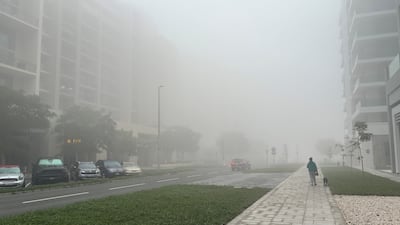
Fog shrouds a street in Al Zeina, Abu Dhabi -
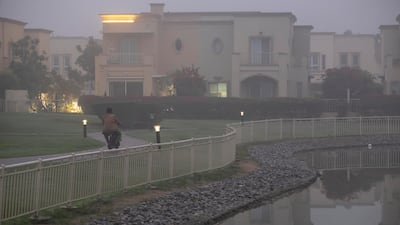
Early morning fog blankets Dubai. Antonie Robertson / The National -
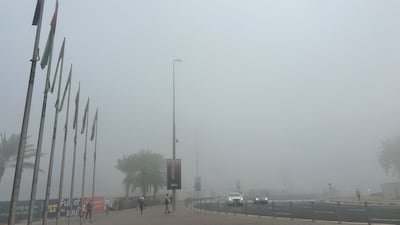
JLT in Dubai is obscured by thick fog -
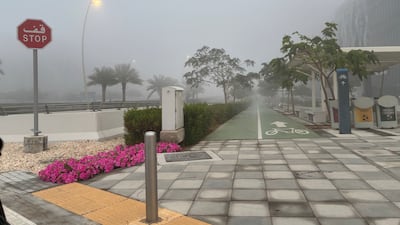
Fog in Al Zeina. The weather is expected to affect the UAE until Thursday -
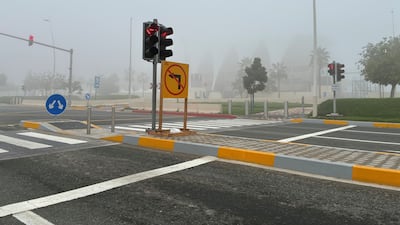
Early morning fog in Al Zeina. Motorists have been urged to exercise caution on the roads -
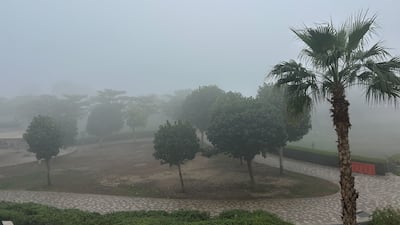
Morning fog rolls across JLT. Coastal and internal areas of the UAE have been affected -

Early morning fog in Dubai. Antonie Robertson / The National -
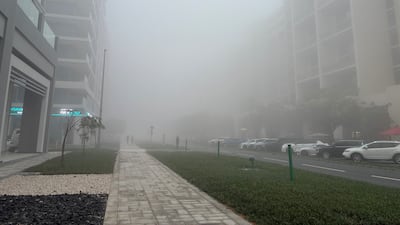
Authorities have urged the public to be careful during reduced visibility -
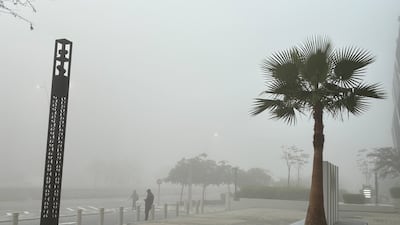
Visibility has been hampered across Abu Dhabi -
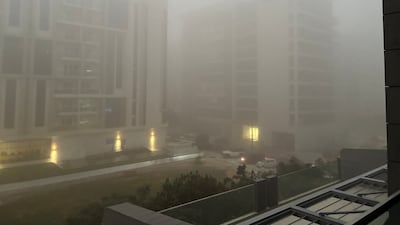
Residential buildings in Al Zeina are obscured by the fog -
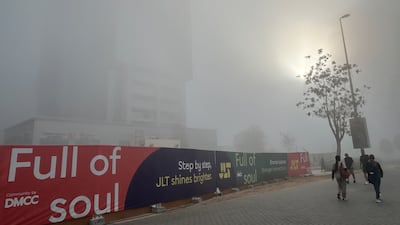
Fog blankets JLT. The weather has caused travel disruption -
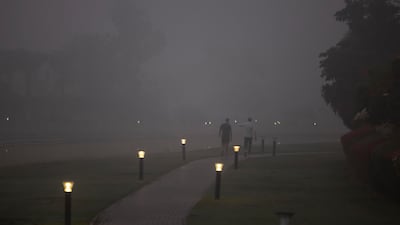
Early morning fog in Dubai. Antonie Robertson / The National


Commute time doubled
The fog doubled the time on the road for many commuters and poor visibility slowed down traffic for all.
Subhra Karmakar, a Dubai resident who travels daily for work to Abu Dhabi’s Mussasfah area, told The National it was among the worst visibility days this season.
“I’ve seen thicker fog in the past but this was certainly one of the worst this season,” said Mr Karmakar, who has been doing the drive from Dubai to Abu Dhabi almost daily for the past decade.
“Today was really bad because when I left my home at 5.45am at Dubai Production City, the fog was so dense I could not see the road. I drove really slowly as soon as I realised visibility was so poor. The good thing was that people were visibly slowing down and keeping a safe distance. There were only two cars where the drivers were rushing and changing lanes too fast.”
Mr Karmakar said his primary concern when the fog descends is about other motorists not taking basic safety precautions.
“It takes me 45 minutes to reach work, today it took an hour-and-a-half but that’s OK as we all need to take care of our safety because of the fog. In fact, I left 45 minutes earlier this morning because my company sent out an email and I read in the news that it would be a very foggy morning,” he said.
“My worry was there were cars that did not have their headlights switched on. Your car needs to be visible to other drivers to prevent a mishap.”
For Abu Dhabi resident Nermin Shehadeh, the drive to work from Musaffah to Baniyas early on Tuesday took the same amount of time but the roads were packed with traffic due to new traffic barriers.
“There was a lot of fog, people were driving safely but there was so much traffic that people had to slow down especially near the Mahwai roundabout,” Ms Shehadeh said.
“They have put up some new construction barriers but, since it was foggy and the barriers are new, people didn’t know these were put up so everyone was slowing down and the traffic built up. When anything new shows up on a road you are accustomed to driving on and it’s foggy, then you need to be more careful.”
The Abu Dhabi resident said she is more cautious when visibility is low. “I use the lane on the right, I stay there and take my time driving when there is so much fog. That’s the safest thing to do,” Ms Shehadeh said.
How to drive safely in fog
Dubai Police issued a warning for driving in dense foggy weather. Brig Jumaa bin Suwaidan, director of the General Department of Traffic at Dubai Police, said the weather this week has caused very low visibility which can result in pile-up accidents.
“It is important to check conditions before commuting especially during this time of year when fog formation is frequent,” he said.
“Accidents in foggy weather result in deaths and injuries. Accidents can happen due to failing to maintain a safe distance between vehicles, speeding and stopping on the roadside when visibility drops.”
He added that Dubai Police increase traffic patrols on external roads during foggy weather to prevent vehicles from stopping on hard shoulders and to move stalled vehicles away from traffic lanes to prevent accidents.
Thomas Edelmann, managing director of Road Safety UAE, told The National this month that people drive too fast when it is foggy. The organisation recommends that drivers slow down in poor visibility and Mr Edelmann said drivers should allow longer for their journey.
“Maybe they're going too fast because their initial planning is not good. It's all about being extra careful, about the time considerations,” he said. “When we know it will take longer, normally we have to start earlier. We have to plan our trip better. Maybe we try to stay off the roads altogether, we wait until the forecast [for fog has] disappeared, or we ask our boss if we can work from home.
“People have a tendency to run late and they try to catch up on lost time on the roads, and this is especially dangerous in foggy conditions.”
He said that when visibility is good, the safe time from the vehicle in front is two seconds, but when it is poor, drivers should leave at least five seconds. “It goes without saying, no hazard lights. Hazard lights are only for stationary vehicles, not for vehicles that are moving,” Mr Edelmann said.
In bad weather, Road Safety UAE recommends drivers use low-beam headlights and front and rear fog lights.