
The US and Iran are quietly engaging in talks in New York to find common ground as a prelude to fully fledged negotiations to end seven months of conflict, sources briefed on the matter told The National on Tuesday.
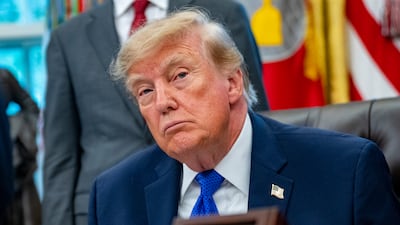
US President Donald Trump has said he offered Iran nothing to end the war. “This is untrue. I offered them nothing,” Mr Trump wrote on Truth Social on Monday. He was responding to reports by Axios and CNN that he was willing to release Iranian funds as part of a final deal on the condition Iran showed “concrete progress” on the nuclear issue.
Mr Trump has cited preventing Tehran from acquiring a nuclear bomb as a key goal of the war, along with ending its ability to attack its neighbours and creating conditions for Iranians to topple their leadership.

Iran does not have atomic weapons and denies it wants to develop them, but it argues that it has the right to a civilian nuclear programme.

The sources who spoke on Tuesday, however, said Iran may have softened its position on two key issues – reopening the Strait of Hormuz and its nuclear programme – in exchange for a relaxation of the US blockade of the country and the release of funds frozen under a sanctions regime.
The National last week cited sources familiar with the Iranian position as saying Tehran had proposed transferring its stockpile of uranium enriched to 60 per cent to a third country, as part of its latest plan to break the diplomatic deadlock with the US.
On Friday, Iranian Foreign Minister Abbas Araghchi said his country had conveyed to the US through Qatar a concrete seven-day plan aimed at resolving the stand-off over the Strait of Hormuz, with the waterway expected to reopen on the sixth day if the agreed steps were implemented.
The seven-day timetable would begin as soon as Washington accepts the plan, he said at the UN. “If the necessary conditions are met, the strait could be reopened,” he said. “The choice now is with the US.”
The proposal, one of the sources said, envisaged a phased process in which the stockpile would first be diluted before being transferred abroad under mechanisms recognised by the UN's International Atomic Energy Agency.
The third-party transfer goes beyond comments made recently by Iranian President Masoud Pezeshkian that Tehran was prepared to dilute its 60 per cent-enriched uranium and submit the process to verification.
The offer forms part of a broader Iranian road map presented to Washington in New York that seeks to resolve the immediate confrontation and reopen the Strait of Hormuz before negotiations resume over Iran's nuclear programme and other pending issues.
However, the sources who spoke to The National on Tuesday said Mr Trump wanted the US to take delivery of the enriched uranium. Previous reports had suggested Iran had Russia in mind if it were to hand the material to a third country.
The US leader also wanted Iran to provide a precise timeframe for the transfer of the uranium, the sources said.
There was no immediate confirmation from the Trump administration or Tehran on the new details divulged by the sources on the substance of the US-Iran contacts in New York.

In an interview with CBS, Iranian President Masoud Pezeshkian said Tehran was ready for talks on its nuclear programme and other issues, but would not accept “bullying or coercion”.
“Iran is not seeking war but will defend itself against pressure, threats and attacks,” Mr Pezeshkian said. It had already agreed that “we're not supposed to develop nuclear weapons”, he added.
US and Iranian officials spoke separately with mediators on Monday as part of the renewed effort to end their conflict, according to officials of both countries, Reuters reported.
Mr Trump on Saturday rejected the plan and argued that desperation was driving Iran's push for an agreement on the key waterway. “They want to make a deal to open the Hormuz Strait immediately because they're losing so badly,” he said.
Mr Araghchi said mediators enabling Tehran's talks with Washington had not officially relayed a US rejection of his country's latest offer. “We are waiting for the mediators to convey the definitive views to us, and we will make a decision based on them,” he said.
The war, which the US launched alongside Israel in February, has killed thousands, severely disrupted global energy supplies, pushed up oil prices and fuelled global inflation.
Iran and its regional allies have responded by extending the conflict throughout the region, striking its Arab neighbours with drones and missiles, while its Houthi allies in Yemen have hit Saudi interests.