The Salameh Papers: Special report into allegations against former Lebanon banking chief
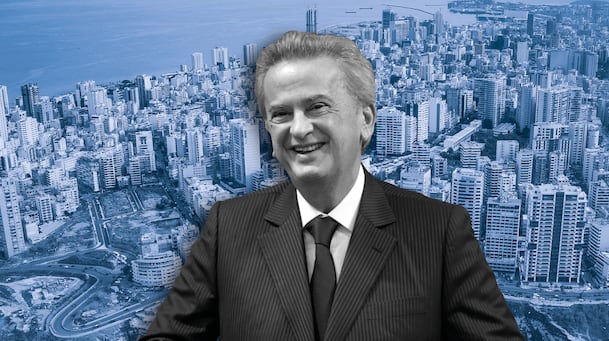
Riad Salameh was arrested on Friday at Bhannes Hospital, north of Beirut, after failing to appear before a judge for questioning the previous day. The former central bank governor is accused of financial wrongdoing relating to Banque du Liban transactions and securities purchases involving companies in which Bank Audi held shares.
Mr Salameh had been summoned for questioning on Thursday by Samaranda Nassar of the Court of Cassation. The questioning concerned a complaint filed by the current governor of Lebanon's central bank, Karim Souaid.
Before Thursday's hearing, Wassim Ghawi, Mr Salameh's lawyer, submitted a medical excuse for his client's absence. Prosecutors later said they could not verify that he had been admitted to hospital. His personal doctor also reportedly could not confirm whether he had gone to hospital.
After a police search of his three known addresses, Judge Ahmad Rami Al Hajj concluded that Mr Salameh was refusing to appear before the judiciary and issued a search and arrest warrant. He was subsequently arrested at Bhannes Hospital.
"Riad Salameh has been evading justice in many ways," Fouad Debs, a lawyer with the Depositors Association, which helps advocate for those who lost money during the financial crisis, told The National. "To a large extent, these bankers who have created this financial crisis – which is still ongoing – have been doing anything in their capacity to sabotage any recovery plan."
The real test will be what happens next and whether Mr Salameh remains under arrest and faces trial, Mr Debs added.
It is unclear whether the former central bank chief will remain at the hospital or be moved to another location by the Lebanese authorities.
Mr Salameh, who led the central bank for 30 years from 1993 to 2023, faces investigations in Lebanon and abroad. The best-known case concerns Forry Associates, a company controlled by his brother Raja. Lebanese and European prosecutors have alleged that hundreds of millions of dollars were diverted from the central bank through commissions paid to Forry.
There are also proceedings concerning French real estate, including the central bank's rental of premises on the Champs-Elysees. In that case, known as the Optimum Invest case, an arrest warrant was issued against Mr Salameh in October 2024 over allegations of money laundering, embezzlement and fraud, between 2015 and 2018. He was indicted in July 2025 and released on $20 million bail.
The Salameh clan's real estate empire in Europe includes luxurious mansions in the most expensive areas of several capitals and a portfolio of industrial and commercial buildings that generate substantial rental income. The properties, valued at about $92 million, have been seized by authorities.
Mr Salameh was one of Lebanon's most influential and powerful figures for three decades. He was widely regarded as one of the region's leading central bankers, but his reputation deteriorated sharply after Lebanon's financial collapse in 2019.
Critics accused him of helping shape the financial policies that contributed to the crisis, which has been blamed on decades' worth of corruption and financial mismanagement by the Lebanese elite, including Mr Salameh.
He stepped down in July 2023, after years of growing public distrust and criticism. He has consistently denied any wrongdoing.
"The whole issue with the Riad Salameh case, as well as that of other bankers involved in this crisis, is that in Lebanon, justice and accountability are very slow, if they ever happen," Mr Debs said. "But we cannot say [the arrest] is not a good thing, even if it is just a facade. That's how little trust and confidence we have in the local judiciary."