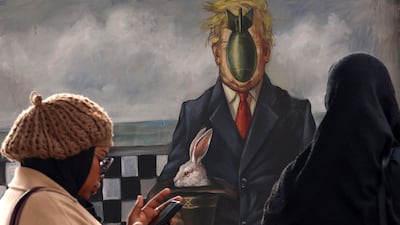

Americans will vote on Tuesday in midterm elections that could shape the next phase of the war with Iran, as US President Donald Trump considers whether to resume a major military campaign, with diplomacy yet to produce a breakthrough.
The war has become an increasingly heavy political burden for the White House, as the conflict is blamed for higher prices of fuel, housing and groceries that have affected millions of voters.
Analysts say a Republican loss of either the Senate or House of Representatives would constrain Mr Trump's options, making it harder to secure funding and sustain political support for renewed military action, although he could still order further strikes.

Israeli Prime Minister Benjamin Netanyahu is pressing Mr Trump to resume military action against Iran after the midterms, including strikes on its underground nuclear infrastructure at Pickaxe Mountain.
Washington is meanwhile limiting military action while pursuing negotiations.
The US military struck Iran’s Qeshm Island overnight into Tuesday, reports said, quoting American officials.
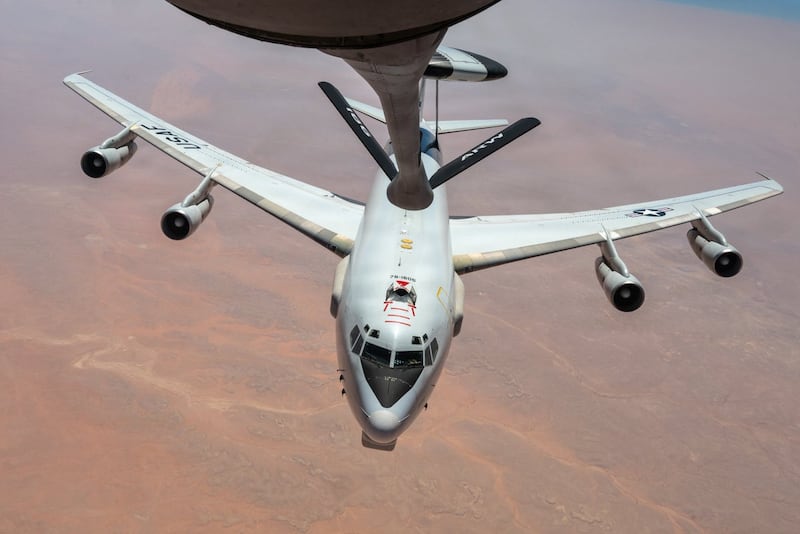
The attack in the Strait of Hormuz appeared limited in scope, involving a single US fighter jet that destroyed an Iranian surface-to-air missile launcher, and came after Iran claimed to have shot down an American MQ-9 Reaper drone east of the strait.
The developments underline the dilemma facing Mr Trump on election day: whether limited military pressure can strengthen Washington’s negotiating position, or if such a move would lead to another escalation without delivering a peace settlement.
The timing has also raised questions.
Sina Toossi, a senior fellow at the Centre for International Policy, asked why US officials were publicising supposedly “secret” strikes just as Mr Trump was touting diplomatic progress and falling oil prices, and whether the disclosures were an attempt to “project toughness for political optics” before the vote.
Election pressure
Iran may also be calculating that prolonging the conflict will increase the political cost for the US President.
“Iran has made a big gamble by dragging out the war until the US midterm elections, hoping to buy time,” Omid Memarian, senior Iran analyst at the democracy and human rights organisation Dawn, told The National.
Rising living costs could leave Mr Trump facing a steep political price if Republicans lose control of either chamber of Congress. “That would make it harder for him to continue the war, secure funding for it, and justify further military attacks,” he said.
He warned that Mr Trump was not a conventional president and could still take unexpected decisions. Nevertheless, losing the House would create serious domestic problems. The election could therefore increase pressure on Mr Trump to end the conflict, although that does not rule out further military action.

There are differing views within the administration. CIA director John Ratcliffe is advising Mr Trump to maintain the “no war, no deal” status quo and allow the economic pressure campaign to continue, Axios reported. His assessment is that prolonged economic pain could force Tehran to make further concessions or generate enough domestic instability to provoke an uprising.
Diplomatic opening
The latest contacts have produced a draft proposal, but no agreement. Iranian negotiators left Doha after three days of discussions, while Qatari mediators have returned to Tehran to continue consultations.
Mr Trump has said a deal remained possible. “It could happen,” he told reporters on Monday, without providing details.
US Secretary of State Marco Rubio said the President had set no deadline for negotiations and had made no decision on further strikes. “If there is a diplomatic solution, we would be open to it,” Mr Rubio said. He added that any agreement must address Washington’s core security concerns and that the US retained the military capability to act if diplomacy failed.
A letter from Vice President JD Vance to Mohsen Rezaei, secretary of the Supreme National Security Council of Iran, has also opened another channel, although Tehran has yet to send a formal reply.
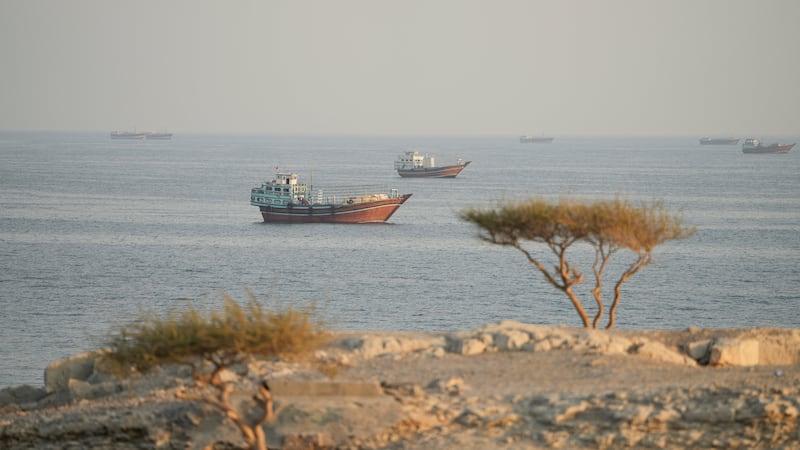
The Qatari initiative centres on a draft agreement based on Iran’s seven-step proposal to end the war. Under its terms, Washington would end its blockade of Iranian ports, Tehran would reopen the Strait of Hormuz and the US would ease restrictions on Iranian oil sales and impose no new sanctions. Discussions on other issues would follow.
The gaps remain substantial. Iran wants sanctions relief and an end to the blockade before substantive nuclear negotiations, while Washington wants verifiable concessions on Tehran’s nuclear programme and wider security concerns.
Military options carry wider costs
US weapons inventories have been depleted, with reports that stocks of Thaad interceptors have fallen by as much as 80 per cent and Patriot interceptors by up to 65 per cent. Tomahawk cruise missile inventories have also been significantly reduced. Further fighting would add to the financial cost of a conflict estimated at about $47 billion.
Iran, meanwhile, does not need to match American military capabilities to impose costs. Missile and drone attacks, threats to US installations and disruption of commercial shipping could force Washington and its regional partners to expend expensive defensive weapons, and could threaten energy infrastructure and trade.
A renewed campaign could hit remaining nuclear sites, missile and drone capabilities or other military infrastructure. But destroying sites would not necessarily eliminate Iran’s nuclear expertise, secure its remaining enriched uranium or prevent it from rebuilding capabilities elsewhere.
Unresolved threat
The stakes for regional governments were underlined by Amos Hochstein, a senior adviser in former US president Joe Biden’s administration, who warned that Washington could leave the Iranian regime “angry and vengeful” and a continuing threat to its Gulf allies unless the conflict is brought to a clear end.
Speaking in Abu Dhabi on Sunday to Hadley Gamble’s On the Record, which airs on The National and Sky News Arabia, he urged the Trump administration to pursue a negotiated settlement. He said he had supported Mr Trump’s June 2025 strikes on Iranian nuclear facilities but opposed the current war.
Military analyst Lynette Nusbacher also questioned whether air strikes could achieve a lasting political outcome.
“They will not cause people to change their government, and we’ve seen that the Iranian state is configured precisely to withstand this kind of attack,” she told The National.
For Gulf states, the continued disruption of shipping through the Strait of Hormuz is threatening energy exports and trade, while attacks on infrastructure could undermine the region’s ambitions as a centre for investment, trade, aviation and finance.