French President Emmanuel Macron has said “the coming weeks will be tough” for the Bordeaux region with raging wildfires as a fourth heatwave begins.
Firefighters were seeking to capitalise on more favourable weather on Tuesday before a new wave of higher temperatures settles in from Wednesday.
“We must hold on,” Mr Macron told emergency workers at a response centre during a visit to the forest region. “I know that some have lost everything. We will win this battle against this fire together.

“We have a situation that is more difficult than at any time since the Second World War.
“We must be realistic: the coming weeks will be tough, and we must persevere. The key is urgency, resilience,” Mr Macron said.
With a multinational response failing to contain the fire fronts, he said the country would “replant and rebuild a different kind of forest”.
Beyond the current crisis, he said: “The structural challenges of climate change will no longer be the same.”
The forest fires have forced 220,000 people, including tourists, in south-western France to relocate and created their own microclimate, with rising heat and smoke forming towering storm clouds.
These clouds can sometimes produce strong winds and lightning, which can stoke new fires. The phenomenon, known as a pyrocumulonimbus, has been observed in several countries that experience major wildfires, including Australia and Canada.
“We fight against a monster,” French firefighters association spokesperson Eric Brocardi said, adding that such phenomena were likely to become more frequent.
-
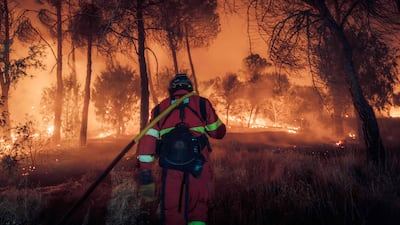
Spain's Military Emergencies Unit personnel fight a wildfire near Navas del Rey, 55km south-west of Madrid. AFP -
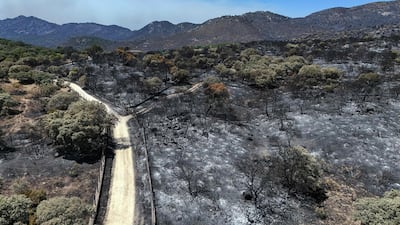
Scorched ground in the Camino de Navahonda area, following a wildfire near Robledo de Chavela, 60km west of Madrid. AFP -

A man and his dog look out over a wildfire in a mountain in Onda, Spain, on July 27. Reuters -
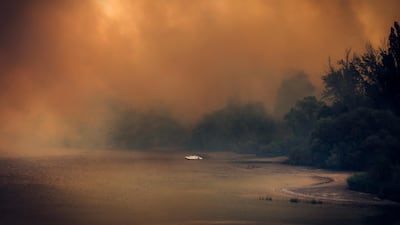
Pedalo boats on a reservoir shrouded in smoke from a wildfire near Navas del Rey. AFP -

Burnt buildings in an area affected by a wildfire, in Le Porge, Gironde, amid drought conditions following a heatwave and water shortages across much of France. Reuters -
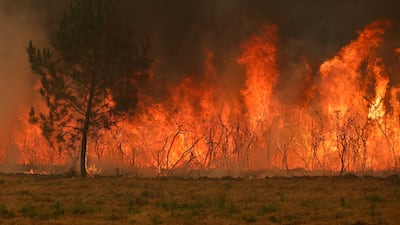
The wildfire ravaging the forest north of the Arcachon Basin since July 22 is also threatening the outskirts of Bordeaux, France. AFP -
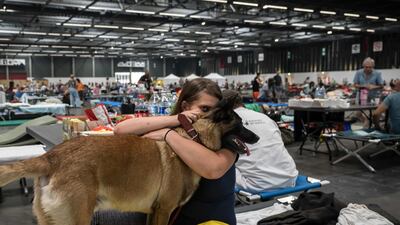
People displaced by the wildfires are being housed at an exhibition centre in Bordeaux. AFP -
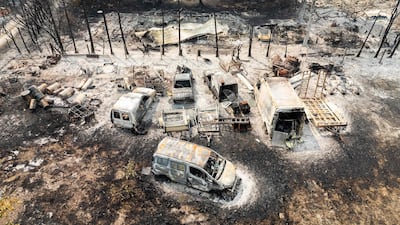
Burnt cars following a wildfire in Gironde's Le Porge commune in France. AFP -
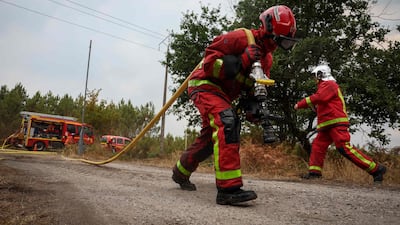
The Paris Fire Brigade in action at Marcheprime, west of Bordeaux. AFP -
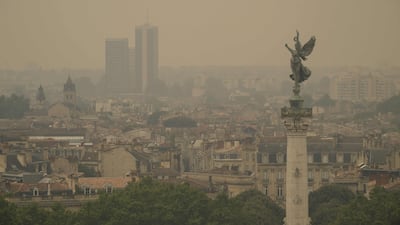
Smoke from nearby 'unpredictable' wildfires cover the Bordeaux city skyline on July 26. AFP -
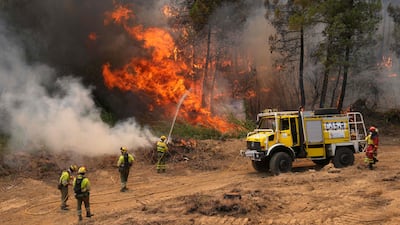
Wildfires also broke out across parts of Spain from July 24, with firefighters from the Castilla-y-Leon Military Emergencies unit battling blazes in a forest next to La Atalaya residential area, 80km west of Madrid. AFP -
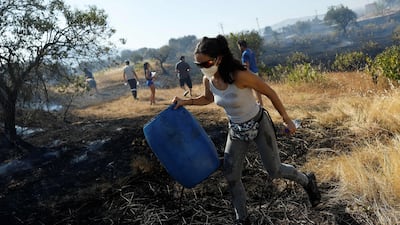
In western Madrid, two wildfires merged into a massive blaze with residents helping to water the soil in the industrial area of San Martin de Valdeiglesias. AFP -
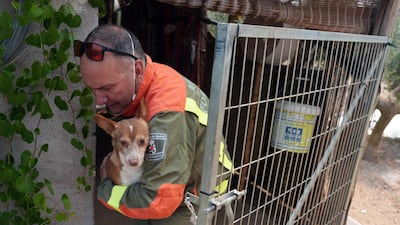
A Community of Madrid forest ranger rescues a dog from a house evacuated due to the San Martin de Valdeiglesias wildfire. AFP -
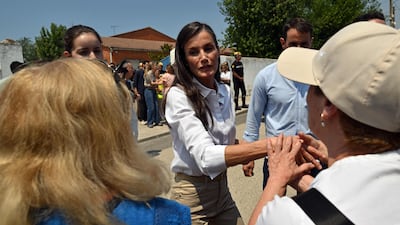
Queen Letizia of Spain visits evacuees from the Madrid wildfire who are sheltered at La Chopera sports centre in Villamanta. AFP -
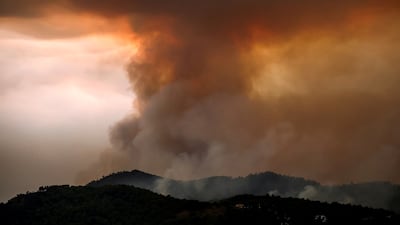
Smoke rises from a wildfire progressing in Betxi, Spain. Reuters -
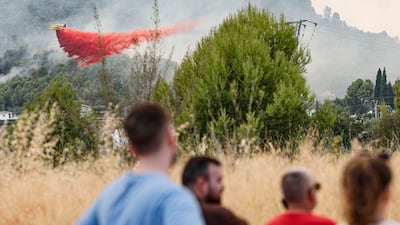
A hydroplane sprays water to extinguish a fire in Betxi, Castellon. EPA -
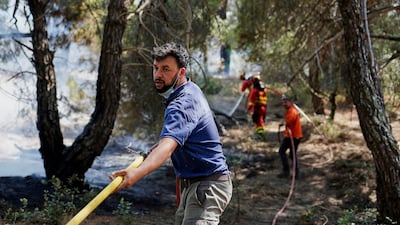
Martin de Valdeiglesias residents help Spain's Military Emergencies unit tackle the wildfire in wooded areas. Reuters


Wednesday heatwave
France and neighbouring Spain are bracing for the fourth heatwave of the summer from Wednesday. The risk of fire is expected to reach extreme levels due to high temperatures, southerly winds and low humidity. This could mean many of the contained fires jumping out of control and old embers reigniting in other danger spots.
Spain's national weather service warned of “extreme” fire risks due to intense heat and dryness across the country, where eight major wildfires are active.
“Significant” flare-ups were seen at Lege-Cap Ferret in south-western France on Tuesday, causing an extra 4,000 people to be evacuated, authorities said.
The firefighting progress made so far is vulnerable to heatwave setbacks, said Nathalie Delattre, senator for Gironde, which covers the city of Bordeaux.
“Everything will depend on how the firefighters on the ground get on,” she said.
National weather service Meteo France also expects the heat to peak on Wednesday, when temperatures in Paris could hit 38°C. It added that the duration of the heatwave “will be determined in the coming days”.
City limits
Late on Monday, the Mayor of Bordeaux, Thomas Cazenave, warned that the fire was 15km from the city limits. A yellow fire alert was imposed as temperatures were expected to rise to 40°C. No rain is forecast for the area until at least Saturday.
“We are preparing to accommodate a large number of people should further evacuations be ordered,” Mr Cazenave said.

The fires have destroyed 42,000 hectares of forest since last week and razed hundreds of houses. Overall, this early fire season has destroyed 116,000 hectares across France.
“It is an unprecedented fire that defies known patterns,” Gironde Prefect Sophie Brocas said on Monday, adding that it “creates its own wind and jumps more than a kilometre”.
With peak fire season yet to come, this year's blazes in the Gironde region look set to exceed the record of 66,000 hectares destroyed in 2022.
Airborne response

France is increasing its response by using A400M military transport aircraft refitted for firefighting. Last week, the French army sent in 1,500 military personnel to help firefighters, including with evacuations and opening roads for tanker lorries in forested areas. Military surveillance drones are monitoring the fires.
France and Spain have asked the European Commission to activate its civil defence procedure that allows the pooling of resources with other EU states and neighbouring countries, including Turkey and Norway. In Spain, about 100,000 people have been told to leave their homes or seek shelter.
“No country should ever have to face a disaster of this scale alone,” said EU Commissioner for crisis management Hadja Lahbib. “To the people of France and Spain: Europe will stand with you until the fires are out.”
Czechia, Croatia and Germany are among the countries that have sent planes and helicopters to France. Greece, Italy, Portugal and Turkey have sent planes, personnel and vehicles to Spain, where fires are moving towards areas west of the capital Madrid.
Wildfires rage around the world - in pictures
-
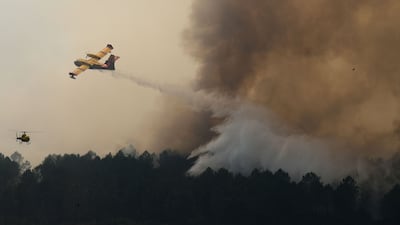
Water is dropped near Saint-Jean-d'Illac, south-western France. AFP -
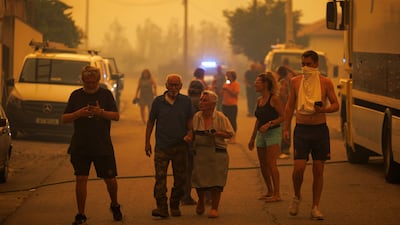
People on the streets during a fire in the village of Fradizela, in Portugal's Mirandela municipality. EPA -
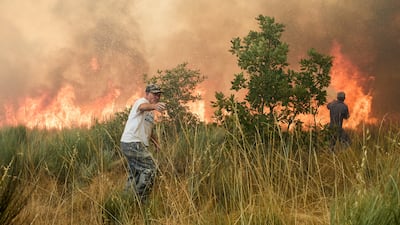
A fire raging in Guarda, Portugal. EPA -

Damage in Pelayos de la Presa as wildfires continue to affect the provinces of Avila and Madrid in Spain. Reuters -

A blaze near Formariz in Zamora province, Spain. Reuters -
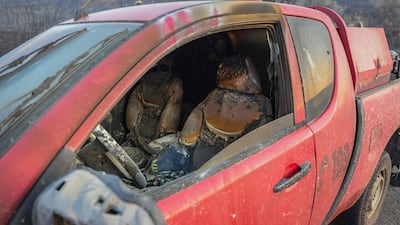
A burnt firefighting vehicle on the Greek island of Crete. AFP -
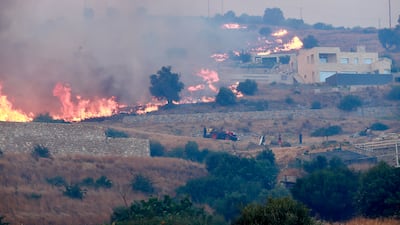
Krya Vrysi, Crete. More than 150 firefighters are tackling the blaze. EPA -
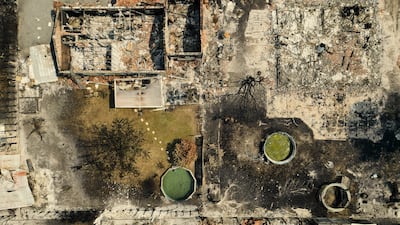
Burnt-out homes in Le Porge, France. Getty Images -
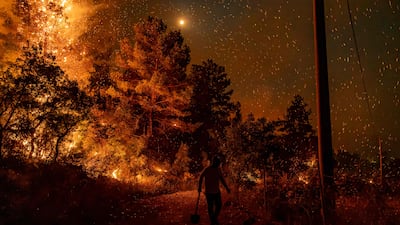
Trees on fire in Seydikemer district, in Turkey's Mugla province. AFP -
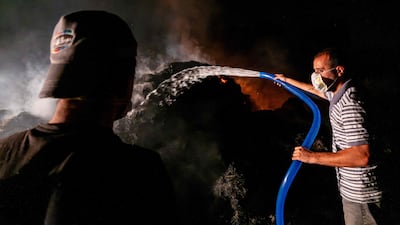
Volunteers use a hose to douse the flames as a wildfire takes hold in Mugla, Turkey. AFP -
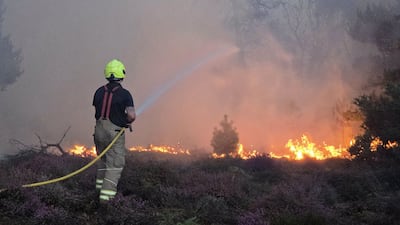
A firefighter tackling a blaze on at Dunwich Heath, eastern England. Up to 70 firefighters were working through the night as the flames spread. AFP -
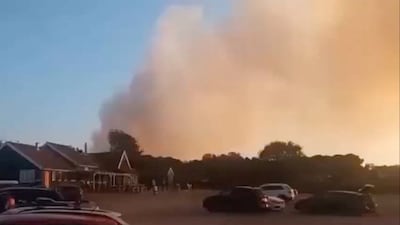
Smoke billows from a wildfire at a location given as Suffolk, Britain. Reuters