Two men have been pulled out alive from a tunnel linked to a hydropower station in Nepal, nine days after the flash flood that killed more than 1,250 people.
Dramatic video footage shows the moment Sanjaya Shah and Kabir Maharjan were rescued from the tunnel at the Upper Trishuli 3A Hydropower Station where they worked before being airlifted to an army hospital in Kathmandu. The body of a third person has been found.
At least 39 other people are reported to be trapped in the same tunnel, with more than 100 still missing across a network of tunnels at hydropower sites along Trishuli River.

Mr Maharjan, a mechanical supervisor at the power station, is in critical condition and cannot move his hands and legs, authorities said. Injuries suffered by Mr Shah, a mechanical foreman, do not appear severe, they added.
Mr Shah told rescuers he spent time reciting mantras while he was trapped, according to the Kathmandu Post. He said three or four more people could be alive in the same area, and possibly more in the tunnel's deeper reaches.
-
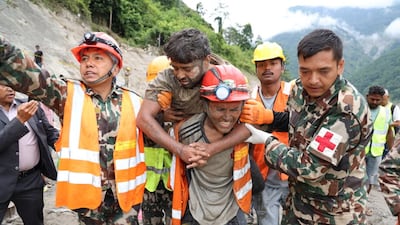
Emergency workers carry a survivor found in a tunnel at the Trishuli-3A hydropower project in Nepal. Reuters -
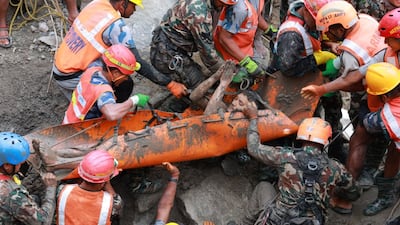
A survivor is rescued from a tunnel at a hydropower plant, after the devastating flash flood in Nepal. EPA -
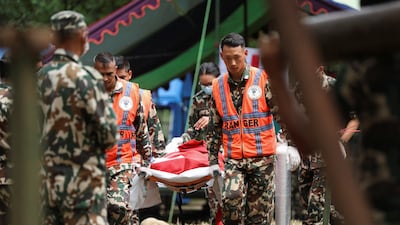
The Nepali search operation has been focused on tunnels at the country's hydropower sites. Reuters -
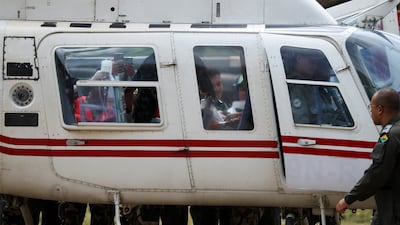
A hydropower tunnel survivor is flown to Kathmandu to receive treatment. Reuters -
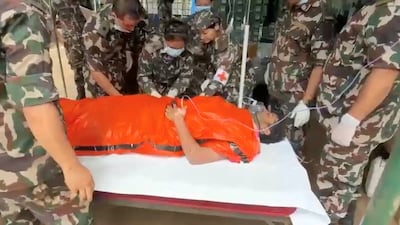
A survivor found at the the Trishuli-3A hydropower site. Thousands of people are still missing in Nepal. Reuters -
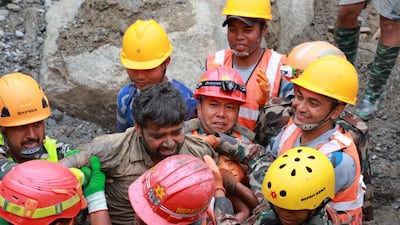
A worker rescued from a hydropower tunnel in the flood-hit Rasuwa district of Nepal. EPA -
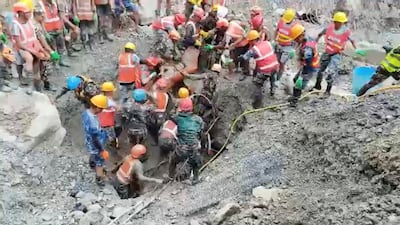
A survivor is carried to safety at a tunnel in the Rasuwa district. Reuters -
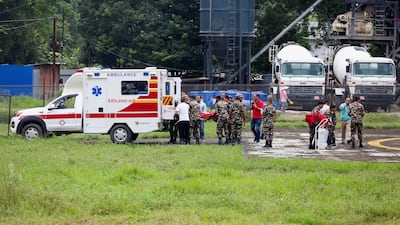
Nepali authorities are searching for survivors after the flash flood that has left more than 1,300 dead. Reuters -
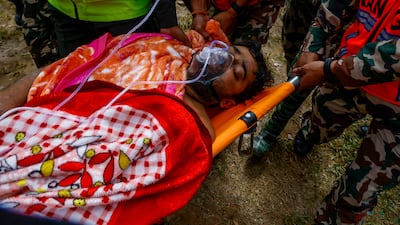
A rescued worker is treated outside a tunnel at the hydropower site in the Rasuwa district, which was devastated by the flood. EPA -
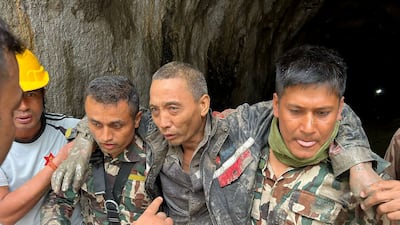
Security personnel carry a Chinese national rescued from Audit Tunnel 4 of the Upper Trishuli-1 hydropower project site in Rasuwa. AFP -
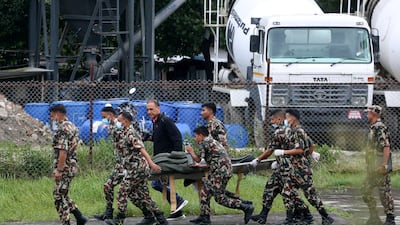
Nepal Army soldiers carry Chandika Shrestha after she was rescued live from Betrawati, 11 days after her house was swept away. Reuters


Suresh Raut, a deputy manager at the Nepal Electricity Authority, said the body found inside the tunnel has yet to be identified. He said it “appears that the person died after being caught in floodwater while trying to flee from the tunnel”.
Friday's rescue came after the collapse of a glacier on August 26 sent a flood of ice, rock and mud hurtling down Trishuli River in Nepal's border region with China, wiping out towns and villages.
At least 1,250 people were killed as houses, streets and schools were swept away. More than 4,200 people are still missing and thousands more displaced. China has put the death toll in Tibet at 21, with 541 others listed as missing.
A team of experts in a WhatsApp group has been guiding rescue workers in the search for survivors at the hydropower sites in what has become a valuable tool alongside helicopters and heavy machinery.
More search and rescue operations are continuing around the Upper Trishuli 3A project. Rescue efforts are being led by the army and police, with assistance from experts from India, South Korea and China.
Col Jhabindra Reshmi of the Nepali Army said his teams have rescued more than 400 Nepali nationals and 270 foreign citizens following last week's disaster. Troops have been deployed in seven tunnels in the valley, he added, with ground troops in 19 other areas.
Dhan Bahadur Tamang, who earlier escaped from a tunnel linked to the Upper Trishuli 1 Hydropower Project, upriver from where the two men were pulled out, said their rescue was extraordinary and raised hopes of finding more survivors.
Amshu Kiran Shahi, a board member of the Nepal Electricity Authority, said rescue workers took almost six days to reach the Upper Trishuli 3A Hydropower Station tunnel from which the workers were rescued because the entrance was buried. He said they had tried to pipe oxygen into cavities in case anyone else was trapped.
At the Rasuwagadhi Hydropower Plant, rescue workers reached 250 metres into one tunnel before finding it blocked, but they have not given up the search.
“We are trying to reach inside again to look for people,” said Mr Shahi, who added up to 46 people may be trapped in a chamber where they might have access to food and water.
A UAE relief mission has travelled to Nepal to provide aid and support. The specialist team includes experts in disaster relief, medical evacuation and first aid. Australian disaster response specialists left for Nepal on Friday to join the search for survivors.
Meanwhile, at least 22,000 children urgently need safe drinking water, sanitation and hygiene support, the UN Children’s Fund said.
Water systems have been damaged across affected districts, while many toilets and other sanitation facilities have been damaged or destroyed, raising the risk of infectious waterborne diseases.
“Every parent in these districts is now making the same calculation several times a day: 'where can I get water and is it safe to give to my child?',” said Unicef's Nepal representative Alice Akunga.
Unicef estimates at least 19 schools have been damaged, including eight that were destroyed, while more than 10,000 school-age children need immediate psychosocial support as well as access to safe learning spaces.
Property, housing and infrastructure worth at least $2.56 billion has been wiped out in the disaster, according to Nepal's disaster authority chief. Dharmaraj Upreti said Nepal will need to rebuild about 20,000 houses in flood-ravaged areas.