New Delhi's water carriers: Bhisti community keep tradition alive - in pictures
-
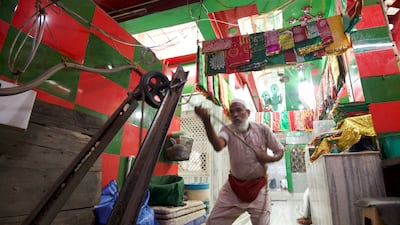
Khaleel, who uses one name, is one of the last remaining traditional water carriers in India, known as mashakwala. He draws water from a well at a Delhi shrine, fills it into containers known as mashaks, and then sells it to nearby eateries and shops. On Fridays, he offers water to devotees for free. All Photos: Taniya Dutta / The National -
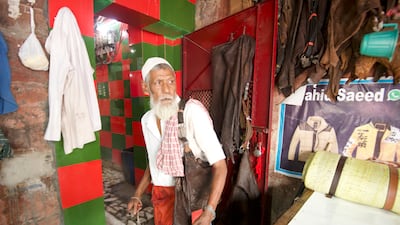
Mohammed Umar, Mr Khaleel's older brother, gives him a helping hand on Fridays. The brothers were born to Muslim parents hailing from the community of Bhistis, a corruption of the Persian word bahishti, meaning those who live in paradise. The community sells water in goatskin bags -
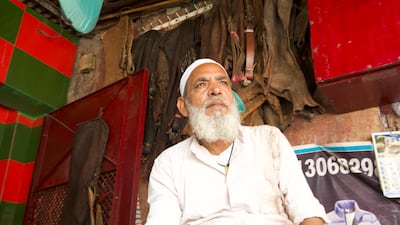
Mr Khaleel, 67, has been selling water since he was 14 -
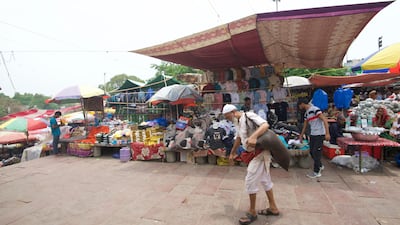
In the old days, the mashakwala would fetch water from the wells, carry it in their goatskin leather bags, and roam the labyrinthine alleyways of Old Delhi. They were saviours, particularly for travellers and commuters, on hot summer days -
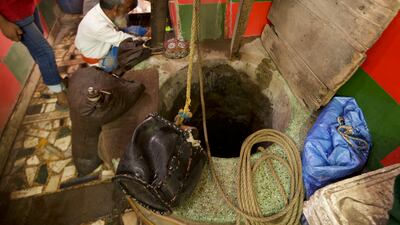
Mr Umar filling his mashaks with water from the well at the shrine in Delhi -
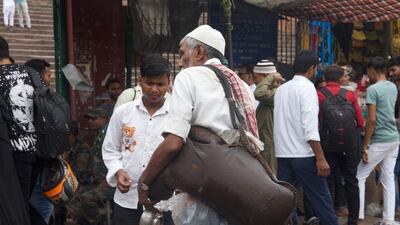
Bishtis have been supplying water since the Mughals ruled India, but the introduction of piped water has made their trade almost obsolete -
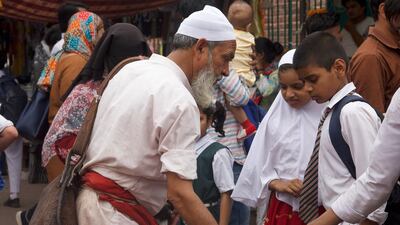
Mr Khaleel offering water to pupils in Delhi -
The mashaks are goatskin leather bag that can carry up to 40 liters of water. They keep the water cool -
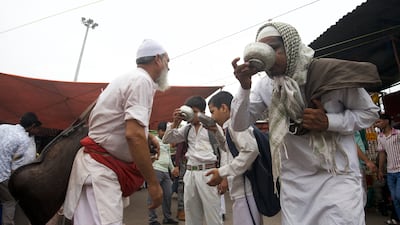
Mr Khaleel says the job is exhausting -
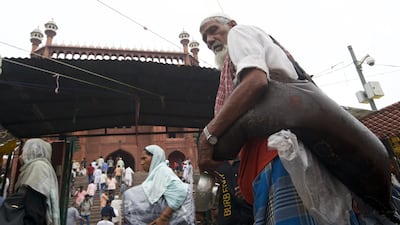
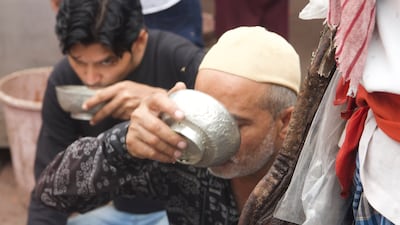
Mr Umar offers free water to devotees on Fridays after prayers outside Jama Masjid in Delhi


Most popular today

