
No progress has been made in talks between Iran and the UN nuclear watchdog on outstanding safeguard issues, including unexplained uranium traces at undeclared sites, according to two reports by the agency.
The International Atomic Energy Agency said Iran has slowed its enrichment of uranium at nearly weapons-grade levels.
Iran's stock of uranium enriched to up to 60 per cent purity – close to weapons grade – continued to grow compared with the previous quarter, but at a far slower rate than in earlier counts, one of the IAEA's confidential reports to member states said. Some of the material has been diluted, the report said.
The IAEA report said Iran has 121.6kg of uranium enriched to 60 per cent. In May, a report put the stockpile of 60 per cent uranium at about 114kg. It had 87.5kg in February.
It is a technical step away from weapons-grade levels of 90 per cent.
The nuclear watchdog has a number of agreements with countries to monitor their nuclear programmes and ensure they are for civilian purposes only, or for existing nuclear powers, to ensure their technology is not transferred to military programmes.
These are known as safeguard agreements.
The IAEA also has not been able to access surveillance camera video since February 2021 under Iranian restrictions, while the only recorded data since June 2022 has been from cameras at a workshop in the city of Isfahan.
Iran and the IAEA announced an agreement in March on reinstalling surveillance cameras introduced under a deal with six world powers in 2015, but removed by Iran last year.
A fraction of the number of cameras and other monitoring devices the IAEA wanted to set up have been installed.
Iran insisted its programme is peaceful, but IAEA director general Rafael Grossi said Tehran has enough enriched uranium for “several” nuclear bombs if it chose to build them.
-
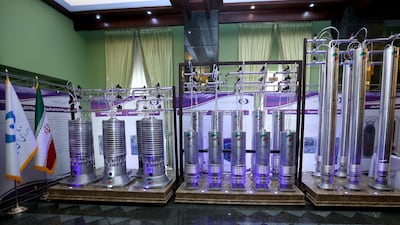
New generation Iranian centrifuges on display for Iran's National Nuclear Energy Day in Tehran, in April 2021. Iranian Presidency Office / Wana -

President Ebrahim Raisi, second right, is accompanied by Atomic Energy Organisation of Iran chief Mohammad Eslami, at Nuclear Technology Day in Tehran in April 2022. Iranian presidency / AFP -
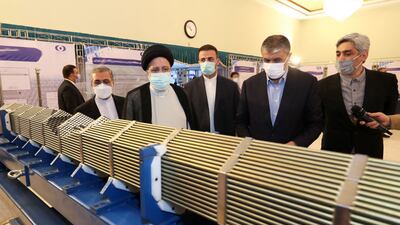
Mr Raisi and Mr Eslami at the April 2022 event. Iranian presidency / AFP -
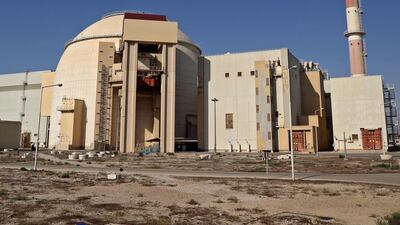
The Bushehr Nuclear Power Plant during a visit by Mr Raisi in October 2021. Iranian Presidency / AFP -
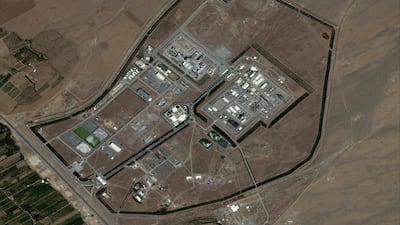
Iran's Arak Heavy Water Reactor complex, south of the capital Tehran in January 2020. Maxar Technologies / AFP -
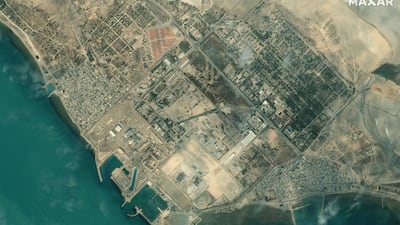
A satellite image of Iran's Bushehr Nuclear Power Plant in January 2020. Maxar Technologies / AFP -
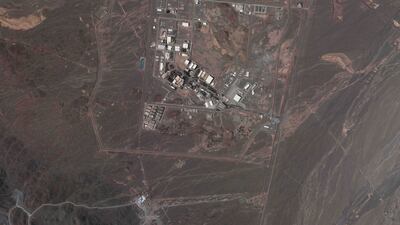
A satellite image of Iran's underground Natanz nuclear site in May 2022. Planet Labs PBC / AP -
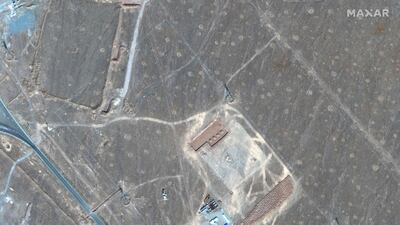
A satellite image in January 2020 of Iran's Fordow Fuel Enrichment Plant, north-east of the city of Qom. Maxar Technologies / AFP -
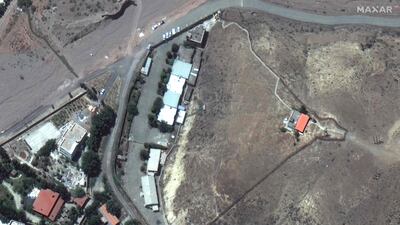
The Sanjarian nuclear centre, east of Tehran, in May 2021. Maxar Technologies / AFP


World powers struck a deal with Iran in 2015 to prevent it from developing atomic weapons. Iran agreed to limit enrichment of uranium to levels necessary for nuclear power in exchange for the lifting of economic sanctions.
UN inspectors were given the responsibility of monitoring Iran's nuclear programme.
Former US president Donald Trump unilaterally pulled Washington out of the accord in 2018, saying he would negotiate a stronger deal, but that did not happen. Iran began breaking the terms a year later.
Iran is likely to require months of enrichment to reach weapons grade.
American intelligence agencies said in March that Tehran “is not currently undertaking the key nuclear weapons-development activities that would be necessary to produce a testable nuclear device”.
The IAEA, the West and other countries claim Iran had a secret military nuclear programme it abandoned in 2003.

