• The Boeing CST-100 Starliner capsule lands at the White Sands Space Harbour in New Mexico on May 25, 2020. EPA / Nasa
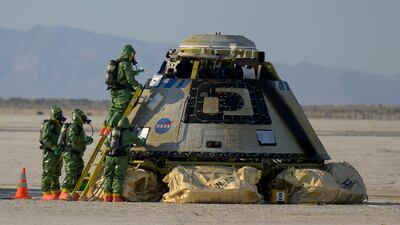
    The Boeing CST-100 Starliner capsule lands at the White Sands Space Harbour in New Mexico on May 25, 2020. EPA / Nasa
  • Boeing completed a key test of its CST-100 Starliner spacecraft for Nasa in 2020, after it successfully docked with the International Space Station and landed back on Earth safely. Photo: NASA via AP
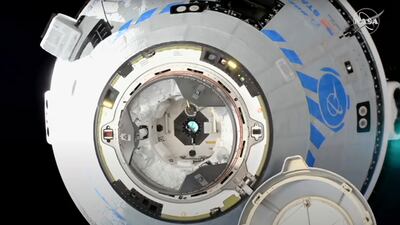
    Boeing completed a key test of its CST-100 Starliner spacecraft for Nasa in 2020, after it successfully docked with the International Space Station and landed back on Earth safely. Photo: NASA via AP
  • Boeing's Starliner capsule docks with the International Space Station on May 20, 2022. AFP PHOTO / NASA TV
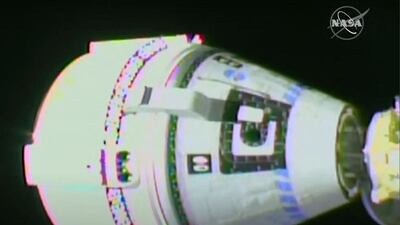
    Boeing's Starliner capsule docks with the International Space Station on May 20, 2022. AFP PHOTO / NASA TV
  • Boeing’s Starliner capsule landed back on Earth after a successful docking with the International Space Station. Photo: NASA via AP
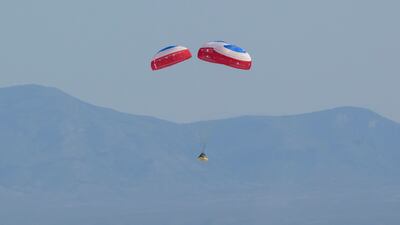
    Boeing’s Starliner capsule landed back on Earth after a successful docking with the International Space Station. Photo: NASA via AP
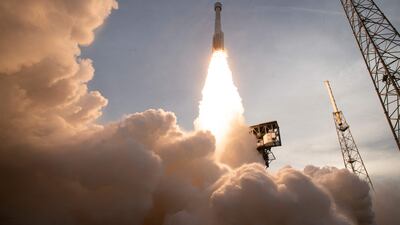
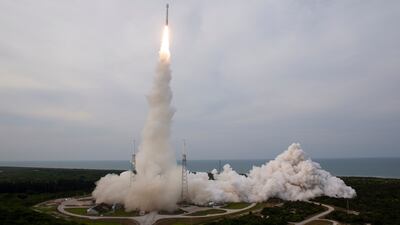
  • A United Launch Alliance Atlas V rocket with Boeing’s CST-100 Starliner spacecraft aboard launches from Space Launch Complex 41, Thursday, May 19, 2022, at Cape Canaveral Space Force Station in Florida. Photo: AFP / Nasa
    A United Launch Alliance Atlas V rocket with Boeing’s CST-100 Starliner spacecraft aboard launches from Space Launch Complex 41, Thursday, May 19, 2022, at Cape Canaveral Space Force Station in Florida. Photo: AFP / Nasa
  • With this recent test, it means Boeing could be launching astronauts for Nasa by end of this year. The company is contracted by the US space agency to send its astronauts to the space station, in a deal similar to Nasa’s arrangement with Elon Musk's SpaceX. Photo: AFP / Nasa
    With this recent test, it means Boeing could be launching astronauts for Nasa by end of this year. The company is contracted by the US space agency to send its astronauts to the space station, in a deal similar to Nasa’s arrangement with Elon Musk's SpaceX. Photo: AFP / Nasa
  • This was the company’s second flight test, after the first one in 2019 failed to dock with the orbiting laboratory due to software glitches. Photo: Nasa
    This was the company’s second flight test, after the first one in 2019 failed to dock with the orbiting laboratory due to software glitches. Photo: Nasa

Boeing capsule placed on top of rocket for company's first astronaut launch


Sarwat Nasir
  • English
  • Arabic

Boeing is a step closer to launching humans into space after placing its Starliner CST-100 capsule on top of a rocket, with a blast-off scheduled from Florida on May 6 (May 7, UAE time).

It will carry experienced Nasa astronauts Butch Wilmore and Suni Williams to the International Space Station at 10.34pm Eastern (6.34am, UAE time) for a planned stay of up to two weeks.

If the mission is successful, it will help Boeing begin commercial operations and offer the US space agency a second "taxi" option to the orbiting laboratory, after SpaceX's Dragon capsule.

"The first CST-100 Starliner to fly astronauts rolled out of its factory early in the morning on Tuesday, April 16, with teammates and astronauts there to wish the spacecraft farewell," Boeing said in a statement.

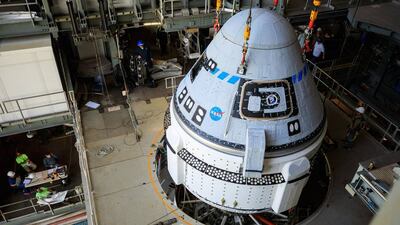
"The spacecraft now sits atop an Atlas V rocket."

A Boeing CST-100 Starliner spacecraft is rolled out in the pre-dawn hours past the Vehicle Assembly Building at the Kennedy Space Centre in Cape Canaveral, Florida, on April 16. AFP

Boeing completed an uncrewed test flight in 2022 when a Starliner capsule docked at the ISS and returned to Earth successfully.

The launch came almost three years after a failed test flight in 2019 that foiled the spacecraft's ability to reach the station due to a software glitch.

The company is part of Nasa's Commercial Crew Programme (CCP), which means it was contracted to safely send and bring back astronauts for the space agency.

Nasa had to rely on Russia's Soyuz capsule from 2011 to 2020, after it shut down its Space Shuttle programme, so it launched the CCP to partner with American companies that can help send astronauts from US soil once again.

An evolving space race

Boeing has been trying to develop a commercial capsule for about a decade, with a launch that has been plagued with delays owing to technical problems.

Meanwhile, SpaceX started operating flights under the CCP in 2020, with a mission called Nasa/SpaceX Crew-1.

Since then, the company, owned by billionaire Elon Musk, has carried out seven more flights for Nasa, with several international astronauts who have also taken part in missions.

UAE astronaut Sultan Al Neyadi, and now the Minister of Youth, flew on the SpaceX Crew-6 flight last year, helping him to become the first Arab to go on an extended mission and to perform a spacewalk.

Even though Boeing is a few years behind SpaceX, a second ride to the space station would still be welcomed by Nasa, as it would increase access to the laboratory.

It would also reduce its dependency on a single spacecraft for missions, which would help in case one is grounded for technical reasons.

Starting commercial operations would also allow Boeing to carry out private missions to the space station.

Axiom Space, a Houston-based space infrastructure company, has been helping arrange trips to the station by selling seats on private missions.

Two Saudi astronauts, for example, launched on a private mission to the ISS aboard a SpaceX rocket last year after the Saudi Space Agency struck a deal with Axiom. Boeing could carry out similar deals.

Boeing's space ambitions - in pictures

  • The Boeing CST-100 Starliner capsule lands at the White Sands Space Harbour in New Mexico on May 25, 2020. EPA / Nasa
    The Boeing CST-100 Starliner capsule lands at the White Sands Space Harbour in New Mexico on May 25, 2020. EPA / Nasa
  • Boeing completed a key test of its CST-100 Starliner spacecraft for Nasa in 2020, after it successfully docked with the International Space Station and landed back on Earth safely. Photo: NASA via AP
    Boeing completed a key test of its CST-100 Starliner spacecraft for Nasa in 2020, after it successfully docked with the International Space Station and landed back on Earth safely. Photo: NASA via AP
  • Boeing's Starliner capsule docks with the International Space Station on May 20, 2022. AFP PHOTO / NASA TV
    Boeing's Starliner capsule docks with the International Space Station on May 20, 2022. AFP PHOTO / NASA TV
  • Boeing’s Starliner capsule landed back on Earth after a successful docking with the International Space Station. Photo: NASA via AP
    Boeing’s Starliner capsule landed back on Earth after a successful docking with the International Space Station. Photo: NASA via AP
  • A United Launch Alliance Atlas V rocket with Boeing’s CST-100 Starliner spacecraft aboard launches from Space Launch Complex 41, Thursday, May 19, 2022, at Cape Canaveral Space Force Station in Florida. Photo: AFP / Nasa
    A United Launch Alliance Atlas V rocket with Boeing’s CST-100 Starliner spacecraft aboard launches from Space Launch Complex 41, Thursday, May 19, 2022, at Cape Canaveral Space Force Station in Florida. Photo: AFP / Nasa
  • With this recent test, it means Boeing could be launching astronauts for Nasa by end of this year. The company is contracted by the US space agency to send its astronauts to the space station, in a deal similar to Nasa’s arrangement with Elon Musk's SpaceX. Photo: AFP / Nasa
    With this recent test, it means Boeing could be launching astronauts for Nasa by end of this year. The company is contracted by the US space agency to send its astronauts to the space station, in a deal similar to Nasa’s arrangement with Elon Musk's SpaceX. Photo: AFP / Nasa
  • This was the company’s second flight test, after the first one in 2019 failed to dock with the orbiting laboratory due to software glitches. Photo: Nasa

    This was the company’s second flight test, after the first one in 2019 failed to dock with the orbiting laboratory due to software glitches. Photo: Nasa

Updated: April 18, 2024, 11:04 AM