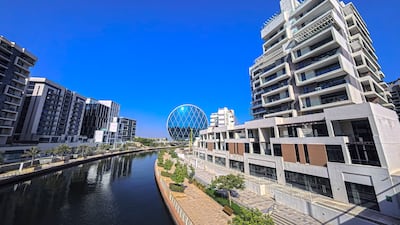

The value of Abu Dhabi's real estate transactions jumped by more than three quarters in the first nine months of 2026, as the sector maintains its momentum amid the uncertainties caused by the war in Iran.
Transactions worth Dh171.26 billion ($46.6 billion) were recorded in the period through the end of September, which is a more than 76 per cent annual growth, the Abu Dhabi Real Estate Centre said on Saturday.
Total transactions rose by nearly a third to 38,483, with sales more than doubling to nearly Dh120 billion on transactions that grew by almost 50 per cent to 23,749, Adrec said. Fifty-four new developments were approved during the period, while licences issued to real estate professionals increased by a third.
Mortgage activity generated revenue of about Dh46 billion, a more than 30 per cent year-on-year increase, as transactions grew by 13.2 per cent.
Al Reem Island posted the highest transaction value at Dh29.86 billion, followed by Al Hudayriyat Island (Dh28.62 billion), Al Saadiyat Island (Dh18.69 billion), Yas Island (Dh13.4 billion) and Zayed City at (Dh5.36 billion). These five districts, plus Khalifa City, are expected to account for 77 per cent of incremental real estate supply through 2030, Adrec said.
Additionally, foreign investment in Abu Dhabi’s investment zones rose by 131 per cent annually to Dh86.11 billion in the nine-month period, comprising 81 per cent of total investment value. Adrec approved eight new investment zones in the first half of 2026, it said in a previous report.
Foreign direct investment by non-resident individuals in the capital's real estate sector hit Dh17.22 billion, which already surpasses the Dh8.2 billion for the entirety of 2025, the agency said.
The scale of investment reflects the growing number of investors, people and businesses, that are making a long-term commitment to Abu Dhabi, Adrec director general Rashed Al Omaira said in a statement.
"That commitment extends well beyond the transaction itself. Buyers expect projects to be delivered, businesses need space to grow, and residents want communities that work well over time," he said.
The property sector is an integral part of the economies of Abu Dhabi and the wider UAE, with projects continuing to attract investors and buyers and withstanding the effects of the conflict.
To support the market, Adrec announced in July that rents for residential, commercial and industrial properties would not increase until further notice, apart from communities managed by Abu Dhabi’s financial centre, ADGM, such as Al Maryah Island and Reem Island.
Analysts have also said that Abu Dhabi's off-plan mortgage framework is expected to help buyers and developers by providing clarity on mortgages and boost investor confidence in the emirate's property market.
In the wider real estate market, Abu Dhabi’s apartment and villa prices increased in the third quarter amid continued economic momentum in the UAE capital, ValuStrat reported last month, citing accelerating residential capital growth and resilient commercial property fundamentals reinforcing the emirate's positive market trajectory.
"Our responsibility ... is to make sure the rules governing the market reflect those expectations, from how property is sold to how developments are managed after handover," Mr Al Omaira said.