
Oil is on track to post its first weekly gain this month as attacks on energy infrastructure in the Middle East and vessels transiting the Strait of Hormuz fuel concerns over global crude supplies.
Brent, the benchmark for two thirds of the world’s oil, was up 0.95 per cent to $97.49 a barrel at 11.30 am UAE time, while West Texas Intermediate, the gauge that tracks US crude, was trading 2.98 per cent higher at $86.17 a barrel.
Both benchmarks are expected to end the week much higher.

“Brent rose 2.1 per cent to $96.57 per barrel [on Thursday] after a strike temporarily disrupted Saudi Arabia’s Jazan refinery, taking its three-session gain to roughly 8 per cent,” said Daniel Richards, senior economist at Emirates NBD.
Oil markets remained on edge amid renewed hostilities that could further disrupt supplies from the region. Two Italian citizens died from injuries sustained after an Iranian attack on Kuwait, the country's Defence Ministry said on Thursday.
Iranian Foreign Minister Abbas Araghchi spoke by phone with Italian Foreign Minister Antonio Tajani and dismissed the accusations. Mr Araghchi offered to co-operate with the governments of Kuwait and Italy on the incident.
Meanwhile, a Nepalese worker was killed after an attack on the Jazan refinery in south-western Saudi Arabia near the Red Sea. The kingdom blamed the Iran-backed Houthis for the attack.
The Saudi Energy Ministry said an assessment of the damage was under way and authorities were checking the safety of the refinery’s facilities.
Saudi Arabia’s Ras Tanura site, which has a refining capacity of 550,000 barrels per day, also came under attack this week.
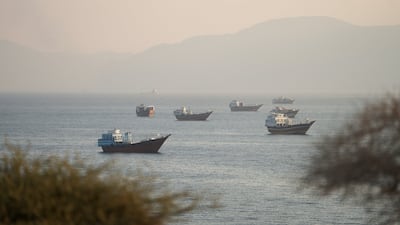
Attacks on ships in the Strait of Hormuz are also continuing, with a projectile exploding near a tanker about 93km west of Dubai on Thursday. Kpler data shows total Hormuz clearance averaged 9.25 million barrels per day over the seven days to November 24. That is about 54 per cent of the prewar level of 17.14 million bpd.
“Supply risks dominate ahead of Sunday’s Opec+ meeting, where delegates are considering unchanged January quotas despite disagreement over capacity assessments," Mr Richards said.
Opec+ members will meet on Sunday to decide their future production policy and adjustments to their monthly output. They are expected to stick to the current policy.