
Fitch has kept the UK's sovereign credit rating at a healthy grade, but warned that high energy prices would curb economic growth and stoke inflation.
The UK, the second-biggest economy in Europe, maintained its AA- rating owing to its "high-income, large, diversified and flexible economy" and its versatile financial markets amid the pound's status as an international reserve currency, the New York-based credit rating agency said.
An AA- rating is the fourth-highest on Fitch's scale, only three notches below the top prime grade. An investment grade makes it easier to access capital markets and raise funding when the need to borrow arises.
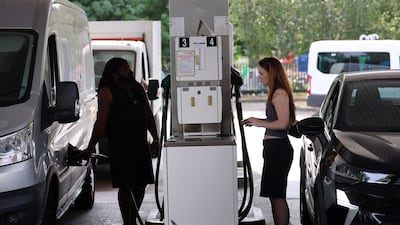
But higher energy prices, which have remained volatile as tensions continue to flare in the Middle East amid the Iran war, are expected to affect the UK economy.
Real gross domestic product growth is expected to be 0.9 per cent this year and 1.2 per cent in 2027, slower than Fitch's February projections, with tighter funding conditions and a weak labour market also noted as factors. Britain's economy recorded a surprise 0.3 per cent increase in June despite the ripple effects of the Iran war.
"Risks to trend growth are balanced, with moderate upsides from faster progress on public investment plans, artificial intelligence adoption, or more far-reaching EU trade integration than currently being negotiated," Fitch said.
Inflation, on the other hand, would rise from a 2.6 per cent reading in June to 3.7 per cent by the end of the year, also mainly due to high energy costs. It is then to retreat to 2 per cent by the end of 2028, in line with the central bank's target.
The Bank of England last month kept its key interest rate at 3.75 per cent, then warned that inflation would hit 4 per cent at the start of 2027. Fitch expects the same rate for the rest of 2026, before a series of cuts to bring it down to 3 per cent by 2028.
Fitch also noted Britain's "credible" macroeconomic policy framework, which is not expected to substantially change under Prime Minister Andy Burnham, who took over from Keir Starmer last month.
"Fitch does not anticipate a significant near-term change to fiscal rules or macro-policy, consistent with statements by the new Prime Minister and Chancellor [John Healey], although we see somewhat greater fiscal policy uncertainty closer to the next election," analysts at Fitch said.
Mr Burnham is the UK's sixth prime minister in the past decade. The start of his tenure was marked by questions about how he would handle the economy, including how to ensure fiscal discipline.
"Our expectation that fiscal policy will not be markedly loosened largely reflects financial market constraints, given the potential for a rise in already elevated gilt yields to damage the economic credibility of the new leadership," the Fitch analysts said.
"There is heightened focus on the fiscal rules to anchor policy, partly as a bulwark against higher spending pressures from elements of the Labour Party. It also reflects some improvement in the credibility of the rules ... which moderately reduces the scope to delay fiscal adjustment needed to meet them."