Bahrain's private companies will be able to resume the process of hiring foreign workers this month as the kingdom reopens its economy.
The Labour Market Regulatory Authority said it will begin accepting applications for new work permits from August 9, it said in a statement.
The development comes after a directive was issued by the Government Executive Committee that is chaired by Crown Prince Salman bin Hamad.
The authority said it had altered the private sector's hiring process to give priority to the recruitment of Bahrainis and expatriates living in the country.
Job vacancies will be advertised in local newspapers to give citizens and residents a two-week head start to apply.
The issuance of work permits was suspended in March due to the coronavirus outbreak.
Bahrain was among the first Gulf countries to unveil strict measures to curb the spread of virus. The kingdom had 41,536 infections, 147 deaths and 38,666 recoveries as of Monday, according to Worldometer.
Some companies in the country believe the decision signals a return to normality as the economy reopens.
"It's absolutely a huge help," said Amjad Puliyali, founder and chief executive of groceries delivery app Get Baqala.
"A lot of the hiring and bringing workers from abroad was put on hold because we didn't have that option, so we're looking into it in the third quarter."
The start-up, which employs delivery staff and technology experts, said the decision was good news for companies interested in hiring foreign workers.
However, the pandemic has normalised the practise of working remotely and that has changed hiring patterns, Mr Puliyali said.
"There's a mindset shift towards working remotely, so you can get talent from outside or you can have people working remotely from other parts of the world," he said.
About 70 per cent of Get Baqala's employees work from home.
Foreign workers make up about half of Bahrain's population.
Arqaam Capital's head of research Jaap Meijer said the move would allow private companies to hire employees from abroad.
The LMRA's step to alter the private sector’s hiring process "should help prioritise local hiring by assisting Bahrainis and expatriates currently residing in the kingdom", he said.
The kingdom has taken various measures to cushion Covid-19's blow on its private sector. In July, the government said it will pay 50 per cent of the salaries of Bahrainis working in the most adversely affected sector, according to state-run Bahrain News Agency.
Citizens insured under the National Employment Programme will receive up to half their pay from the Unemployment Insurance Fund for three months. The payments began last month.
The sectors most affected by the pandemic include the services industry and travel and aviation, according to Jameel Ali Humaidan, Bahrain's Minister of Labour and Social Development.
Transportation, non-food retail, administrative services, real estate and contracting, engineering and technical offices, and local newspapers and magazines, have also been impacted.
To ease the burden on the private sector, Bahrain is reducing the fees imposed by the LMRA to issue and renew all types of work permits for one year. This entails a 50 per cent reduction for a period of three months starting from July.
Segments such as transport, non-food retail, administrative services, property and contracting, engineering and the media were also affected.
To ease the burden on the private sector, Bahrain reduced the fees charged by the authority for the issuance and renewal of all one-year work permits. This entails a 50 per cent reduction for three months, beginning July.
_______________
Gallery: Coronavirus around the Middle East
-
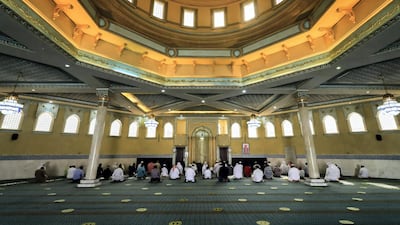
Worshippers at the Bani Hashim Mosque in Abu Dhabi pray. Restrictions have been eased to allow 50 per cent occupancy in places of worship. Victor Besa /The National -
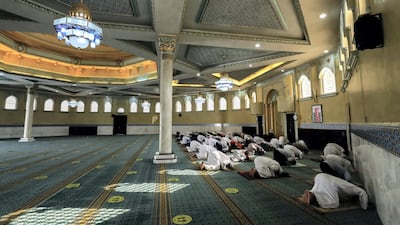
Worshippers at the Bani Hashim Mosque in Abu Dhabi pray. Restrictions have been eased to allow 50 per cent occupancy in places of worship. Victor Besa /The National -
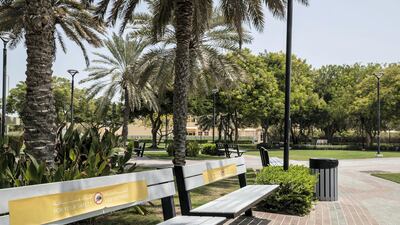
Public parks are open and allows use of facilities now in Dubai. Antonie Robertson / The National -
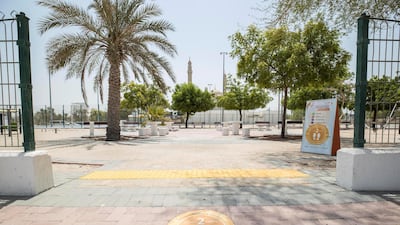
Public parks are open and allows use of facilities now in Dubai. Antonie Robertson / The National -
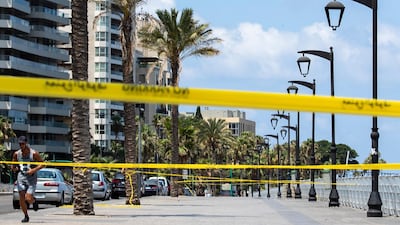
A man jogs near a cordoned off area which is almost empty of residents and tourists, officially closed following the government's measures to help stop the spread of the coronavirus, in Beirut, Lebanon. AP Photo -
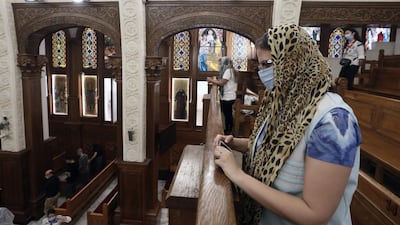
People wear face masks and observe social distance during a mass at Virgin Mary Church in Dokki district in Cairo, Egypt. EPA -
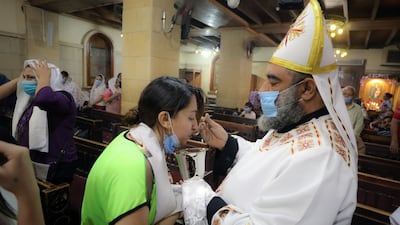
Priest Abdel Masseh Baset of the Historical Church of Blessed Virgin Mary gives Sacramental bread to coptic at Mostorod district in Cairo, Egypt. EPA -

People soak in the sun at the Menekse beach amid the ongoing pandemic of coronavirus on sunset in Istanbul, Turkey. AFP -
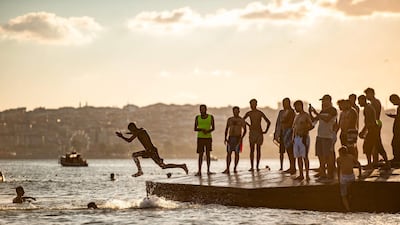
People jump into the Sea of marmara during sunset in Istanbul, Turkey. AFP -

'Mozo', a robot waiter at Kimbo Restaurant & Cafe in Cairo, Egypt. Reuters -
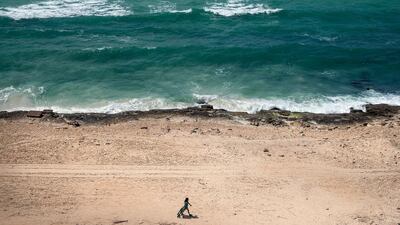
A girl walks by a close public beach, amid the ongoing coronavirus COVID-19 pandemic, in the northern coast near Alexandria, Egypt . EPA