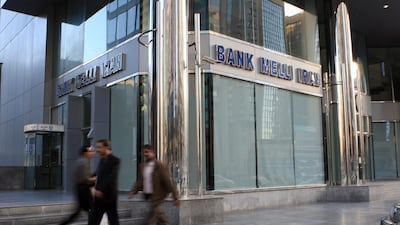
The UAE Central Bank has barred Bank Melli Iran from conducting any financial transactions between its UAE branches and Iran after investigations found the Tehran-based lender had failed to comply with anti-money laundering regulations.
The ban, announced on Wednesday as part of the regulator's “strict enforcement” measures, covers trade finance and fund transfers to and from Iran.
Bank Melli Iran is the country's biggest lender. It has eight branches in the UAE, including a regional office, according to its website.

The decision was made “as a result of violations related to non-compliance with the regulations, laws and supervisory decisions in force in the UAE” covering money laundering, terrorism financing and proliferation financing, the Central Bank said.
“Based on the results of the examinations … it has been decided to prohibit all branches of Bank Melli Iran operating in the UAE from conducting any financial transactions to and from Iran, including trade finance and fund transfers,” it said.
The move follows last month's decision by the UAE to suspend “all trade, commercial exchange and financial transactions with Iran” due to the threat it poses to the region, after a spate of attacks on UAE-owned tankers and Tehran's rejection of talks with the US.
That announcement represented a notable shift in the economic relationship between the two neighbours, which have maintained substantial commercial ties despite long-standing regional political tensions.
Trade between the two countries has remained significant, with the UAE serving as an important trading partner for Iran. According to Iranian customs data, bilateral non-oil trade was worth tens of billions of dollars in recent years, with the UAE accounting for a substantial share of Iran's imports and exports.
The UAE has introduced initiatives to regulate the financial sector and passed strict laws to prevent money laundering and the financing of terrorism. Two years ago, a nationwide action plan was announced with the introduction of the 2024-2027 National Strategy for Anti-Money Laundering, Countering the Financing of Terrorism and Proliferation Financing.
In 2023, the central bank unveiled AML/CFT guidelines for licensed financial institutions, including banks, finance companies, exchange houses, insurance companies, agents and brokers. The guidelines focus on the use of digital identification systems to address customers' due diligence obligations.
The regulator has been cracking down heavily on financial bodies that violate UAE laws and regulations.
Last month, the UAE Central Bank said it would conduct a “special and urgent examination” into the activities of Egypt's Banque Misr in the country after the US warned of money-laundering concerns.
In June, the branch of a foreign bank in the UAE was fined Dh20 million ($5.44 million) for breaking anti-money laundering rules – one of the biggest financial penalties imposed. The central bank said the branch was found to have committed “significant, repeated failures” under its AML/CFT and illegal organisations and sanctions framework.