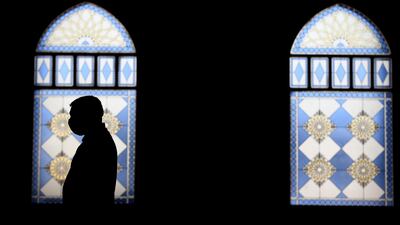

Ramadan triggers both excitement and trepidation among Muslims. Trepidation at the physical challenge of not eating and drinking during daylight hours – anywhere from 12 hours, in places near or on the equator, to 18 hours, where I am in London, and even longer, 21 hours, for people who live further north. And excitement because despite physical challenges, it is a joyous month, centred on congregation, togetherness and spiritual reflection.
Last year, when Ramadan began, we were all reeling. It was a strange time. The Covid-19 pandemic was spreading fast. Lockdowns around the world were just starting. And not everyone understood the severity of the virus or how to deal with having to stay put at home.
Suddenly the trepidation went into overdrive – how would we purchase supplies for iftar, what of the people who were sick, how would we cope being locked in together with nowhere to go, having to work and homeschool?
The usual solace and counterbalances to the physical challenges were gone, removing – at least to start with – the excitement. No iftars together, no Ramadan tents, no suhoor parties, no nightly meals with loved ones, no mosques in which to congregate – the traditions, the customs, the memories, nothing seemed to help us navigate this new terrain. For some, the loneliness was intense. This was not Ramadan as we knew it. But slowly a change started to occur.
Instead of Instagram-ready designer outfits and rushing from office to home for iftar, to the mosque, then for suhoor, people started to wonder: could we find the true meaning of Ramadan? The mood lifted and at least people I knew – friends, family, loved ones, colleagues – started drawing on Ramadan’s energy to find light in the darkness.
-
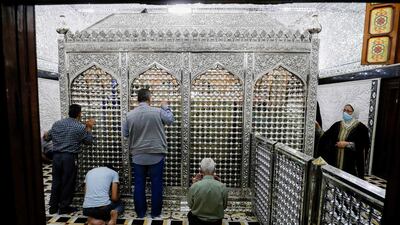
Iraqi men pray at the shrine of Abdel Kader Gilani in central Baghdad, during the month of Ramadan. AFP -
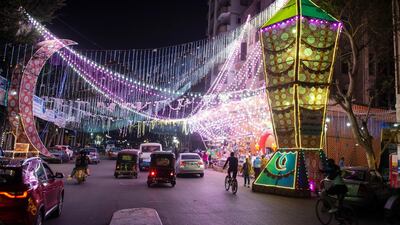
A view of a 20-metre fanous (lantern) in Shoubra district, Cairo, Egypt, made by a Coptic man, in celebration of Ramadan. EPA -
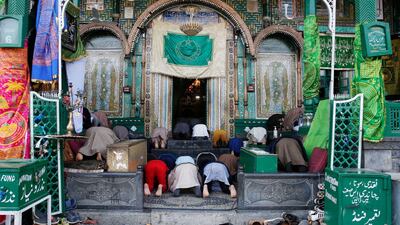
Men offer prayers outside a shrine in Srinagar, the summer capital of Indian Kashmir. EPA -
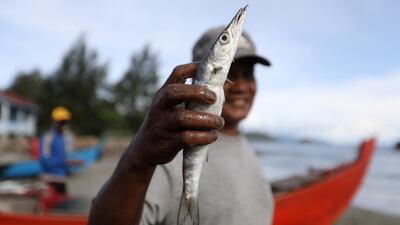
A man shows his catch after fishing in the sea, during a Ramadan morning, in Banda Aceh, Indonesia. EPA -
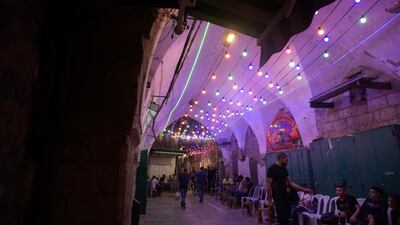
Colorful lights are strung above a cafe where Palestinians smoke water pipes in the Old City of Jerusalem, during the month of Ramadan. AP Photo -
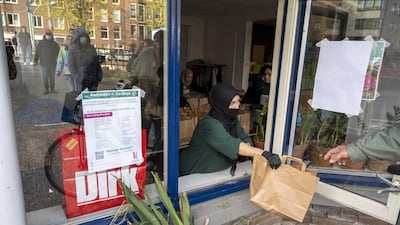
A volunteer from the Samen Sterk Vrouwen West foundation hands out a meal in Amsterdam, The Netherlands. EPA -
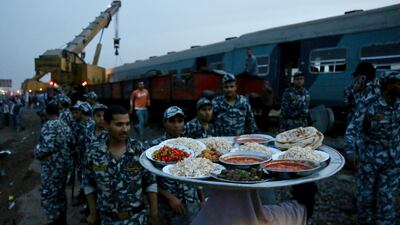
A woman takes food for security forces to break their fast during Ramadan at the site of a passenger train accident near Banha, Qalyubia province, Egypt. AP -
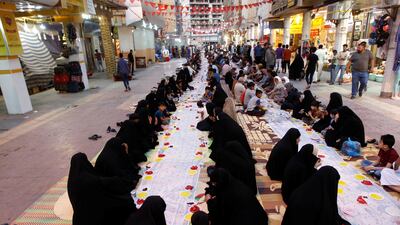
Muslims gather to break their fast on a street in Najaf, Iraq. Reuters -
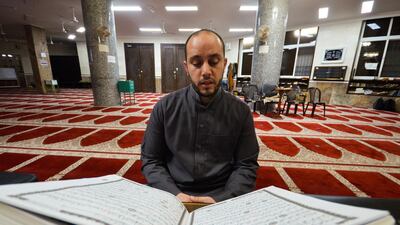
Jordanian imam Eyyas Hajibi reads the Quran inside a mosque in Amman, Jordan. Reuters -
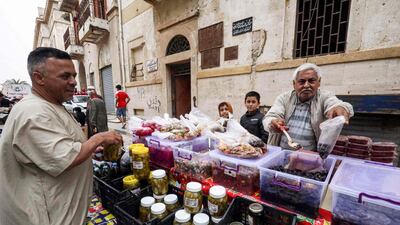
A pickle seller packs merchandise for a customer at his stall at the Souq Al Hout (Whale Market) district of Libya's eastern city of Benghazi during Ramadan. AFP -
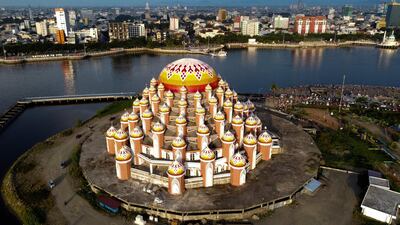
A view of the 99 Domes Mosque in Makassar, Indonesia, during Ramadan. AFP -
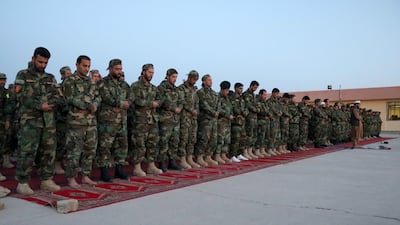
Soldiers of the Afghan National Army pray after ending their fast in Herat, Afghanistan. EPA -
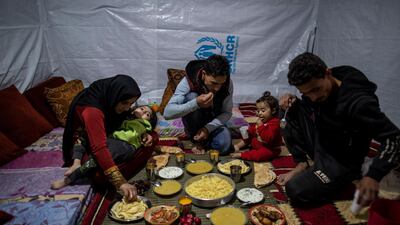
Syrian refugees - Raed Mattar, 24, centre, his wife Ayesha Al Abed, 21, and daughters Rahaf, 6, Rayan, 18 months, and a friend - end their fast at a refugee camp in Tripoli, Lebanon. AP -
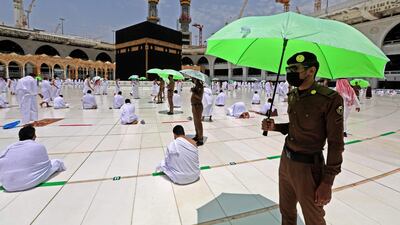
Members of the Saudi security forces with parasols stand guard as worshippers pray around the Kaaba in Makkah. AFP -
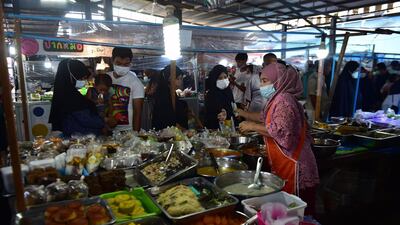
People shop at a market during Ramadan in Thailand's southern province of Narathiwat. AFP -
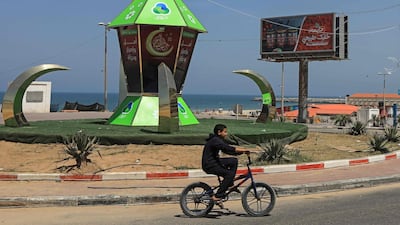
A Palestinian boy rides past a giant traditional lantern known as fanous in Gaza city. AFP -
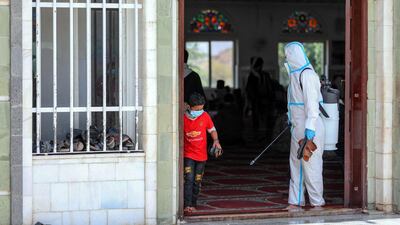
A worker sprays disinfectant as people gather for noon prayers inside a mosque in the Yemeni city of Taez. AFP -
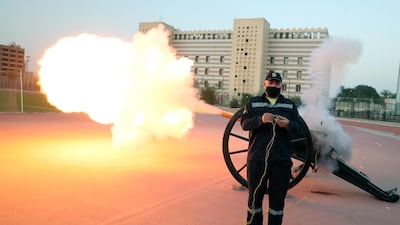
Egyptian policeman Mohamed Nasser fires a Ramadan cannon, traditionally used to announce the time to break fast, in Cairo, Egypt. EPA -
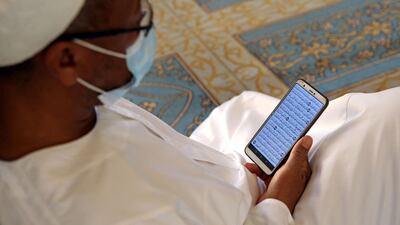
A man reads the Quran on his mobile phone during afternoon prayers at Abu Bakr Al Siddiq Mosque in Oman's capital, Muscat. EPA -
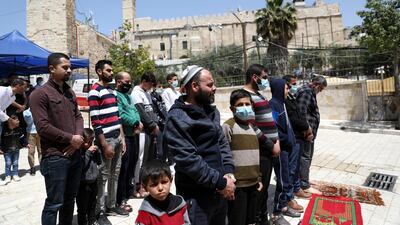
Palestinians attend Friday prayers during Ramadan outside the Ibrahimi Mosque in the West Bank city of Hebron. EPA -
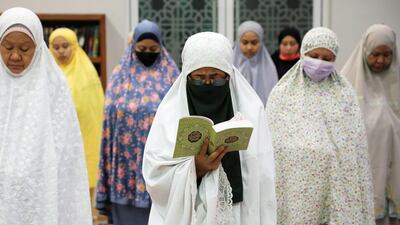
Women at prayer in Kuala Lumpur, Malaysia. Reuters -
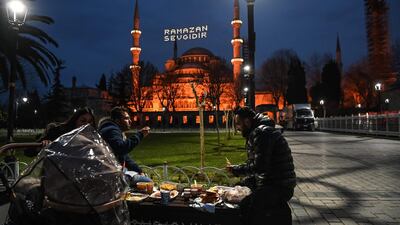
Iftar on the first evening of Ramadan in Istanbul's Sultanahmet Square, with the Blue Mosque in the background. AFP -
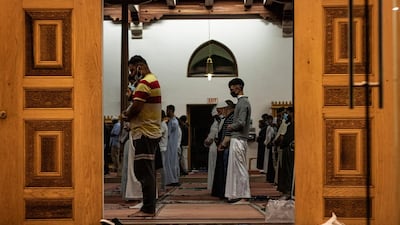
Worshippers offer taraweeh prayers at a mosque in Johannesburg, South Africa. AP Photo -
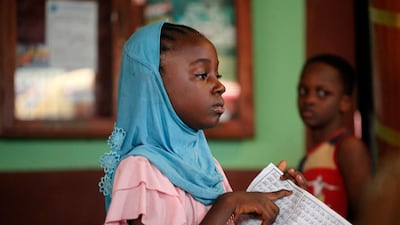
A girl at a prayer meeting at Wasimi Central Mosque in the Oyingbo district of Lagos, Nigeria. EPA -
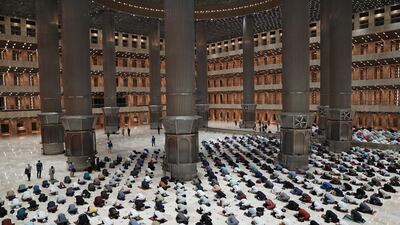
Worshippers perform taraweeh prayers while complying with physical-distancing rules at the Istiqlal Mosque in Jakarta, Indonesia. Bloomberg -
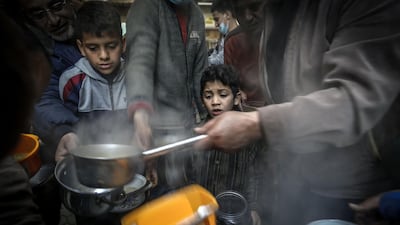
A boy waits as Palestinian Walid Al Hattab, right, distributes soup to people in need during Ramadan in Gaza city. AFP -
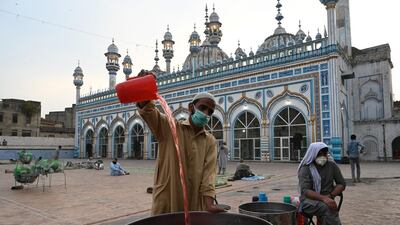
A volunteer prepares sweet drinks for devotees before they break their fast at the Jamia Mosque in Rawalpindi, Pakistan. AFP -
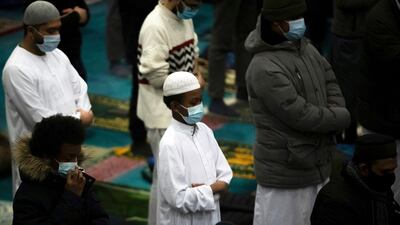
People pray at the East London Mosque Muslim Centre, UK. AP Photo -
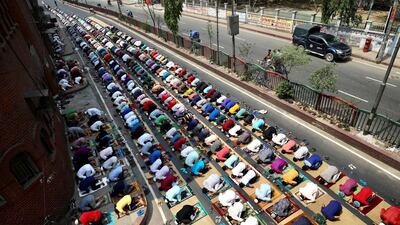
Muslims pray on the street in front of a mosque in Dhaka, Bangladesh. Reuters -
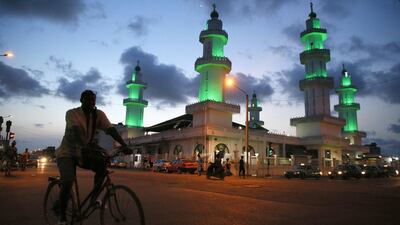
A cyclist passes the Great Koumassi Mosque in Abidjan, Ivory Coast. EPA


Instead of congregational prayers at the mosque, photos appeared of people forming lines of prayer, divided by their garden fences. Instead of communal Ramadan tents, neighbours pitched their own small tents in back gardens.
There were no more large iftar gatherings. Instead, mosques – like one London mosque – created lists of vulnerable people who were shielding and marshalled local restaurants to cook for them and convened an army of volunteers and drivers to deliver those fresh hot iftar meals every night for a month to the front doors of the people most at risk.
Zoom iftars became a thing. And one of the great joys was that those who had previously been unable to attend iftars due to disability, isolation or other challenges were included.
Community members took it upon themselves to prioritise mental health needs of their fellow citizens. The Muslim Youth Helpline in the UK launched a #HeroesInHeadphones campaign, highlighting how calls from young Muslims had increased during the pandemic.
One Muslim game developer hosted a virtual suhoor in Nintendo’s Animal Crossing. The Open Iftar project – that usually hosts large tents for anyone and everyone to experience iftar – went online and hosted large scale virtual iftars, along with a #MyOpenIftar pack with a toolkit to create beautiful iftar experiences of their own at home.
Elsewhere in the world, remarkable things were happening. Drive-through Eid celebrations took place in Oslo, Texas and Toronto. As cars queued up, volunteers in full protective kits handed gifts through car windows to children.
Washington’s Muslim community repurposed a car park for people to congregate for socially distanced prayers. Whether this fulfilled the specifics of the rituals of prayer is not the question. It was about how people found a way to be together safely and recreate the joy and community which are so central to Ramadan and Eid.

In the German city of Wetzlar, local Muslims asked Ikea for permission to use their car park for Eid prayers, which the company allowed, bringing joy to many beyond the Muslim community. As one person on Twitter commented, tongue in cheek: “Big up Ikea. Even the mosques are DIY”.
This humour that emerged from dark times was part of the reinvention of Ramadan. Eid clothes for babies were emblazoned with “My first Cov-Eid” and “Cov-Eid Mubarak!” Organisers at mosques played on words to tell people to stay home rather than go for Eid prayers with hashtags like #QuarantEID.
With everyone at home during Ramadan, humour was also used to point out the struggle women usually face, bearing the lion’s share of housework and preparatory cooking. One tweet said: “No taraweeh this year, so we’re leaving the dishes for the men". There were cheeky complaints about not being able to visit grandparents to collect annual cash gifts or ‘eidi’ah. One person joked “Eid is literally my only source of income. How am I going to survive this year?"
The lack of formality, the virtual mingling, the sense of ‘keeping it real’ and the experience of the patience and struggle remain with us this year. While countries are now at different stages of dealing with the pandemic, the extra challenges, the compromised togetherness, the sense that the pretty pictures of food and the glamorous clothes and the Insta-ready iftar tables still feel irrelevant for the most part. It is as tough this year as it was in 2020, with fatigue and despair having built up over the last 12 months.
But we learnt last year and it still holds true: pandemic or no pandemic, there is immense joy and creativity to be found in Ramadan.
Shelina Janmohamed is an author and a culture columnist for The National